With The Society Archive, the stylist and consultant brings new life to overlooked brands.
If Italy perfected louche tailoring and France mastered effusive couture, America—ever pragmatic, ever prosaic—built the mall. A temperature-controlled, suburban shopping center just outside of Boston is where Marcus Allen’s taste was shaped as he worked at the mass teen brand Abercrombie & Fitch during the company’s early 2000s heady heyday. “I loved it so much,” says Allen with a grin from his glass-walled office in New York’s Financial District.
“It was literally myself, and my friends from school, in a dark-ass store,” he recalls. Allen is sporting a beat-up camouflage hat and weathered red plaid flannel, looking like an Abercrombie model himself. “I was definitely the one picking up that spray bottle of cologne every five minutes and spritzing it on the racks and the mannequins, and myself,” he says, referring to the fragrance-permeated air in Abercrombie’s notoriously loud, nightclub-like stores. “It was such a vibe. There’s really nothing like that now that you can experience in retail.”
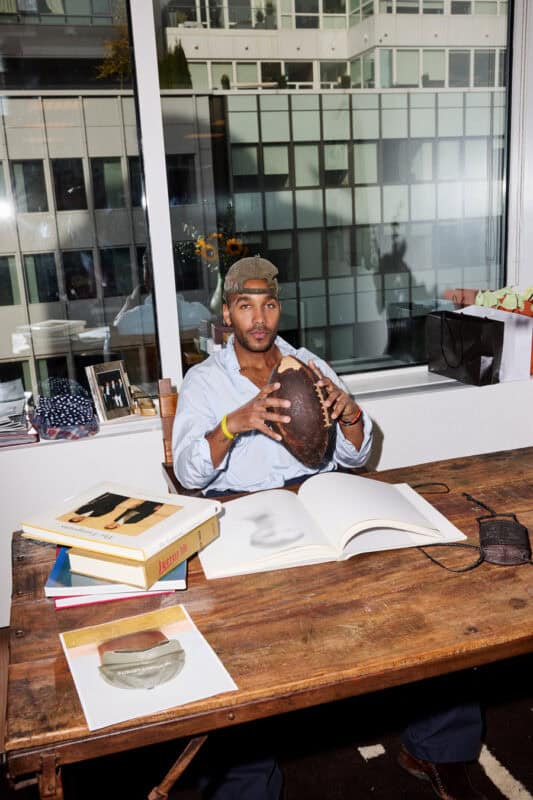
Marcus Allen at his office
Today, Allen runs The Society Archive, a collection of more than a thousand vintage garments that are lent out for photoshoots or to companies seeking design inspiration. He’s become a sort of vintage Svengali for the fashion set, partnering with brands like Banana Republic and Frame Denim, helping them source pieces from their own backlog and giving them new life. While his collection varies widely and includes many garments from high-end labels like Prada or Tom Ford-era Gucci, his specialty has been to focus on the oft-overlooked market of accessible mall brands of the Y2K era, including Abercrombie & Fitch, Gap, Ralph Lauren, Banana Republic, and Hollister. In doing so, he’s reminded fashion insiders of the power and influence of more accessible retailers, ones often popular with teenagers, and how they were as emblematic of American style, and in many cases more so, as any luxury brand.
Allen received a degree in fine art photography from the Massachusetts College of Art and Design, but his real education may have been gained during his days at Abercrombie and, later, through his college job working at Ralph Lauren as a sales associate to make extra cash. There, he met a mentor who tapped his photography skills, asking him to take pictures of store displays for corporate purposes. That led him to a position at the RRL East Hampton location immediately following his graduation (he drove straight to the tony enclave from dinner with his parents to celebrate his degree). There, he was immersed in the brand’s infamous world-building prowess and even met Ralph Lauren himself. “I got a lot of face time with him,” Allen says. “He was such a nice guy and just so inspiring. Even in the way he put himself together, the way he was so gracious with both the employees and, if there were any around, the clients. It was a super cool experience.”
He later transferred to Lauren’s Manhattan location on the Upper East Side, famously styled as a mansion, before taking other jobs, including freelance photography work and a position on the creative team at Brunello Cucinelli. He would eventually become the styling director for another teen retailer, Urban Outfitters. For photoshoots there, he would make the unorthodox move of pairing items from the brand with his own collection of vintage in a way that he felt would best highlight them. The Urban concept teams, who helped guide the design, would often ask him about these garments. “It turned into something that felt more in the consulting space,” he says.
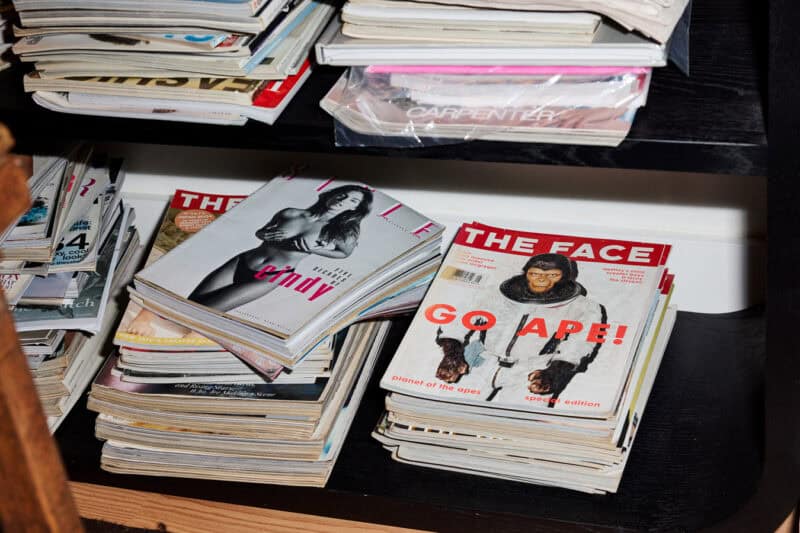


During the pandemic, he started an Instagram account and built a website for The Society Archive. He could use it as a creative outlet of sorts, styling and photographing the vintage pieces he had collected over the years, from military garments to designer pieces. It wasn’t until a friend, the stylist Yashua Simmons, tapped into his collection that he started to see more clearly the inherent value of the clothes he had amassed over the years. “He’d pull pieces and then I’d see them in a magazine, credited to The Society Archive,” Allen says. Influencers like Devon Lee Carlson or models he had worked with would borrow clothes. Magazines like GQ and brands like Supreme came knocking.
“I don’t know that a lot of people were championing a Gap V-neck tee from 1999,” he says. “Finding those special but really basic items, and having a strong, solid group of them… I don’t come across that. Being able to see these otherwise ‘ordinary’ items in a space like this is unique and of interest. But also seeing it with a fucked-up 1940s workwear flannel next to the Bottega leather shirt? That’s the juxtaposition I have in here.
“I love things that are kind of thrashed,” he continues. “Oftentimes, especially if you’re doing an editorial, you have nice and shiny new pieces from the runway. How do you give them your point of view? Adding a little bit of wear and story, [through] things that are really distressed.” In this, Allen is speaking to Gen Z and their love of seeking out vintage gems, as well as offering a counterpoint to cheaply made but trendy clothes, such as those from Shein or Temu. And as consumers tire of the luxury sector’s increasing prices, The Society Archive is a reminder of a time when the mall offered quality clothes made at a mass scale. In many ways, that ethos—practical, stylish, and accessible fashion—is the heart of American style.
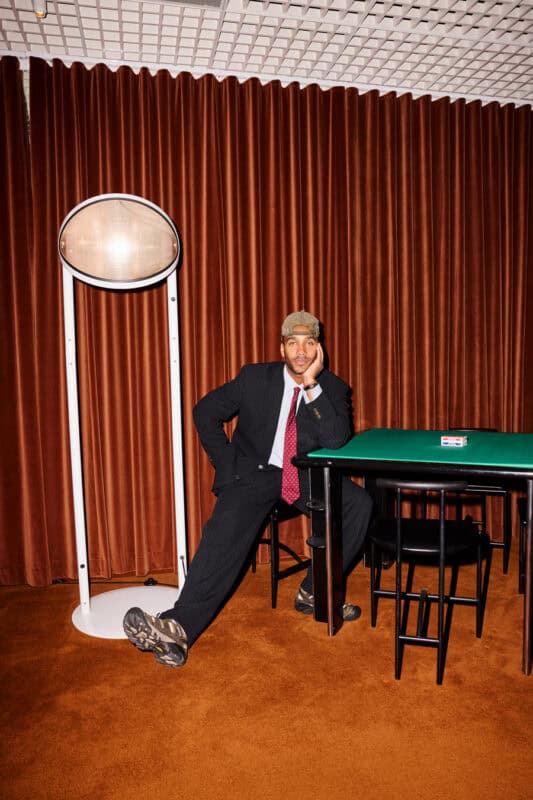
vintage suit by GIORGIO ARMANI, vintage shirt by BRIONI
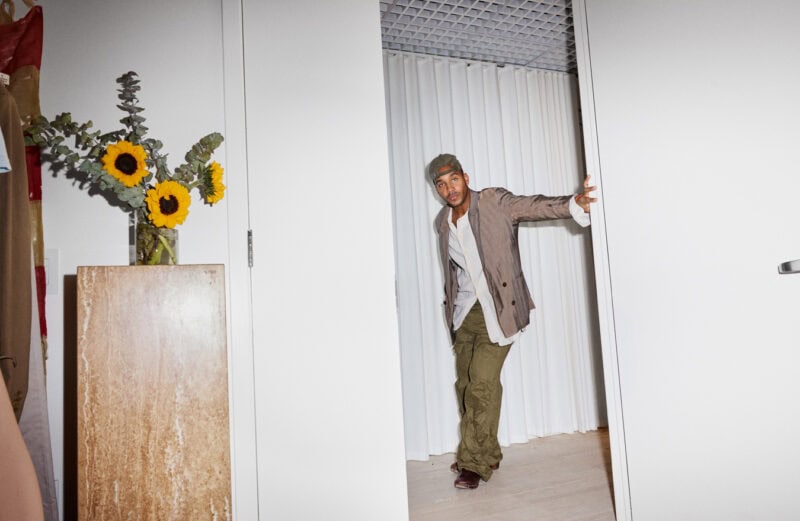
vintage shirt, and jacket by GIORGIO ARMANI
Thus, Allen is partly responsible for the recent revival of a certain flavor of Y2K aesthetics that has taken hold in the fashion industry writ large: the wayward prep of Miu Miu, the new J.Crew-style Americana influence at Dior, or the sexy surf rats that populate Eli Russell Linnetz’s ERL brand.
“Designers and creative directors have always looked to the streets,” he says. “How do you take chinos and a button-up, maybe a fleece, and make it so elevated that it’s walking a runway, or it’s $2,000 for a zip-up? That’s a fun challenge.” In that way he was elevating the humble mall brand of the early 2000s, which had its own power, to the domain of high-end fashion.
In addition to welcoming stylists, designers, and private clients to his archive, brands are now tapping Allen for his sourcing and creative aptitude. Last fall, Banana Republic hired him to source a collection of vintage items for them to sell, including weathered leather jackets, patchwork vests, and chunky knit sweaters. Later, he collaborated on a 20-piece collection with the popular denim brand Frame.
Allen’s next move is his own clothing brand, which is informed by his love of and history with clothes. “It’s really true to me and my taste,” he says of the line, which he hopes to launch this summer. “There’s a lot of what I’m doing out there currently, and so I’m really playing around with questions like: how are you going to style this? What pieces will we champion? What are the things that are going to really speak to my point of view in a big way?”
And if there’s more than just a hint of the mall in his work, so be it. “That style feels, to me, really American,” he says. “And it’s a space where American culture can be celebrated.”
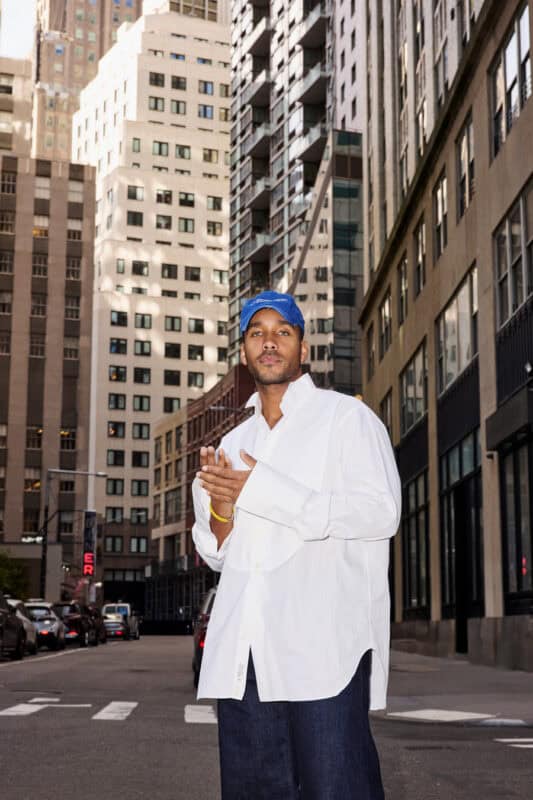
vintage shirt by CHARVET, pants by RALPH LAUREN


vintage shirt by RALPH LAUREN


vintage shirt by LACOSTE, vintage jacket by BARBOUR, pants by RALPH LAUREN, shoes by GUCCI
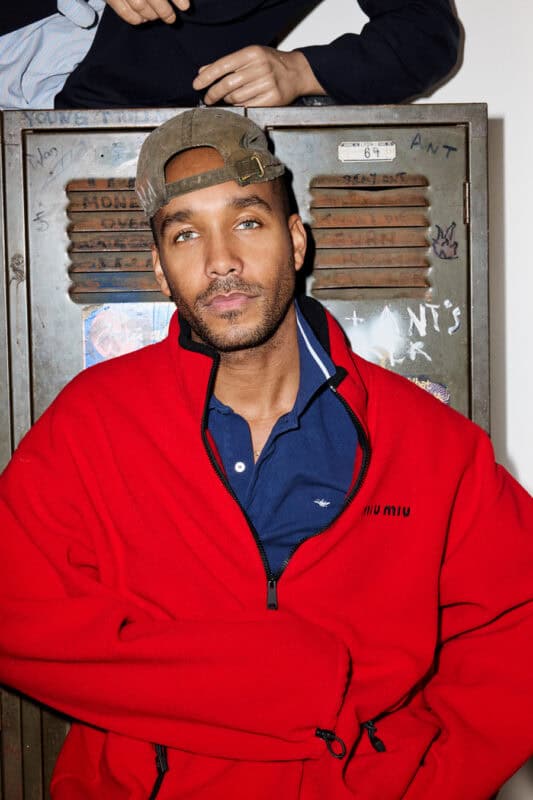
shirt by DIOR, sweater by MIU MIU
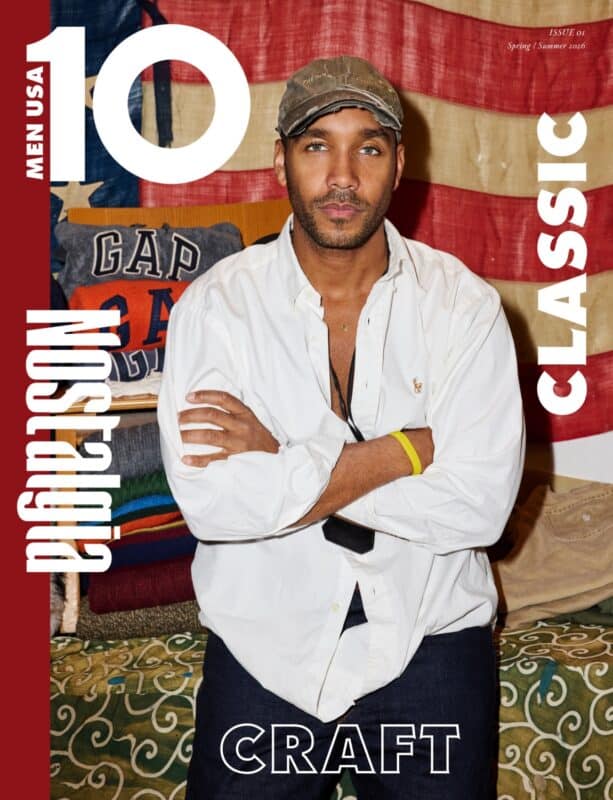
Taken from 10 Men USA Issue 1 – CLASSIC, NOSTALGIA, CRAFT – out April 4th! Order your copy here.
@thesocietyarchive / @theemarcusallen
Photographer JEREMY LIEBMAN
Talent MARCUS ALLEN
Text MAX BERLINGER
Sittings editor ALMA DE GANAY
Tank Must de Cartier watch throughout CARTIER, hats throughout THE SOCIETY ARCHIVE