11 March 2026 |




Nicolas Ghesquière finds a future in nature.
Perhaps the show teaser was the biggest hint that Nicolas Ghesquière was in a playful mood this season. Featuring two lambs, one with their furry feet jammed into knee high boots and the other with a red clown nose balanced on its snout, it was a curious image. How would this translate into his fall 2026 collection for Louis Vuitton? The answer came from the moment you set foot into the Louvre, as Severance production designer Jeremy Hindle transformed the Cour Carrée into a bucolic pasture, albeit one with a modernist slant that you’d expect from the likes of a Ghesquière and Hindle link up.
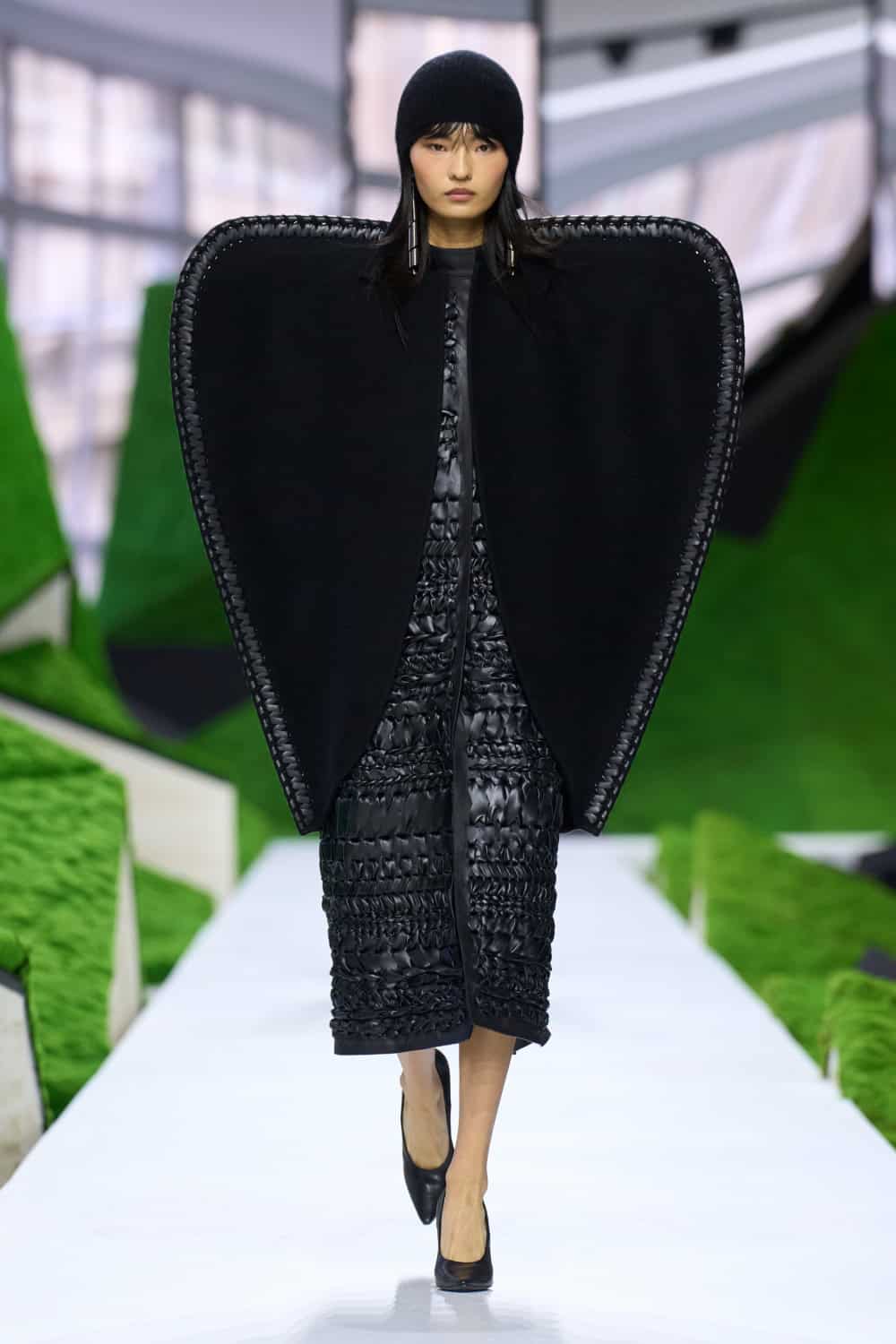
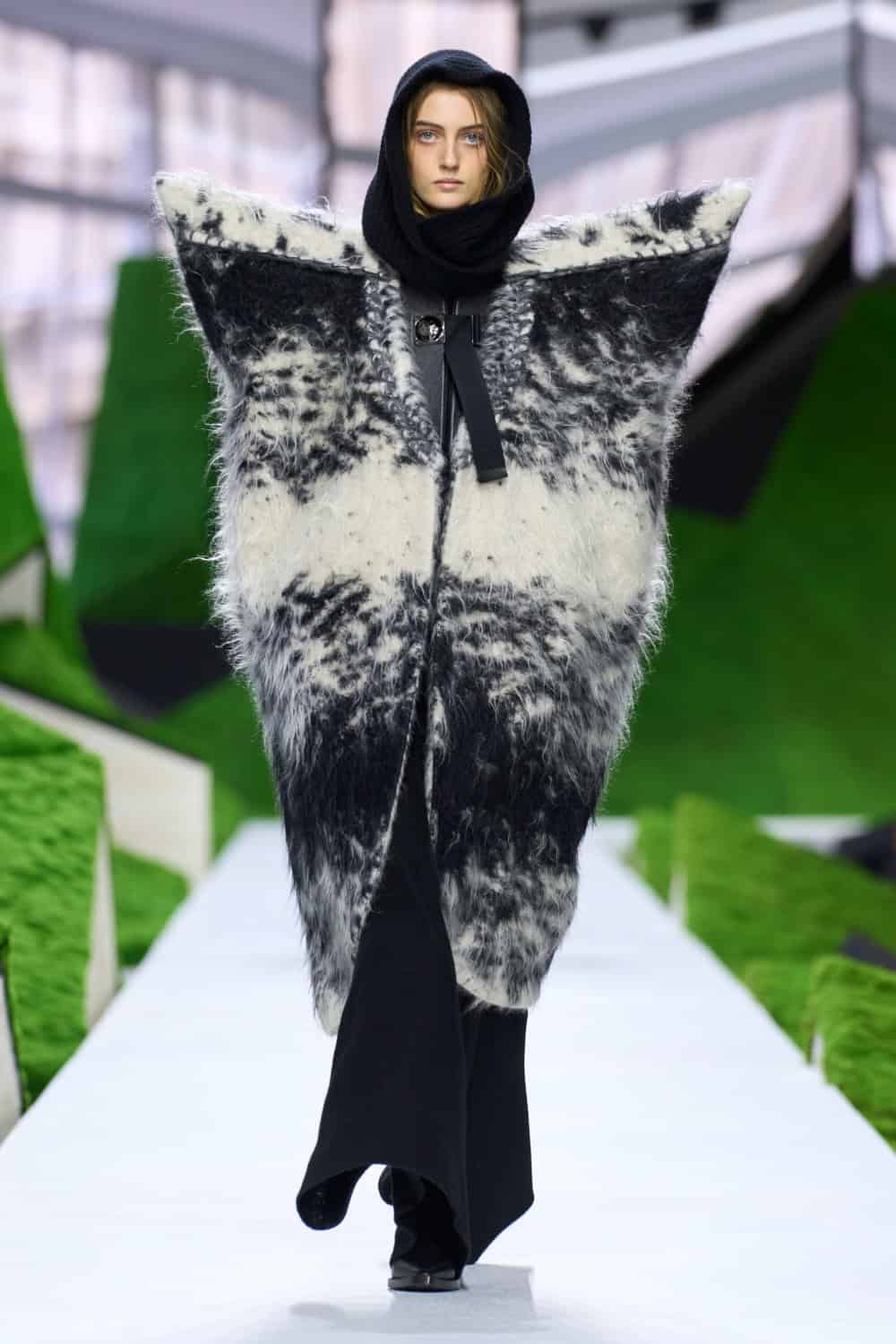
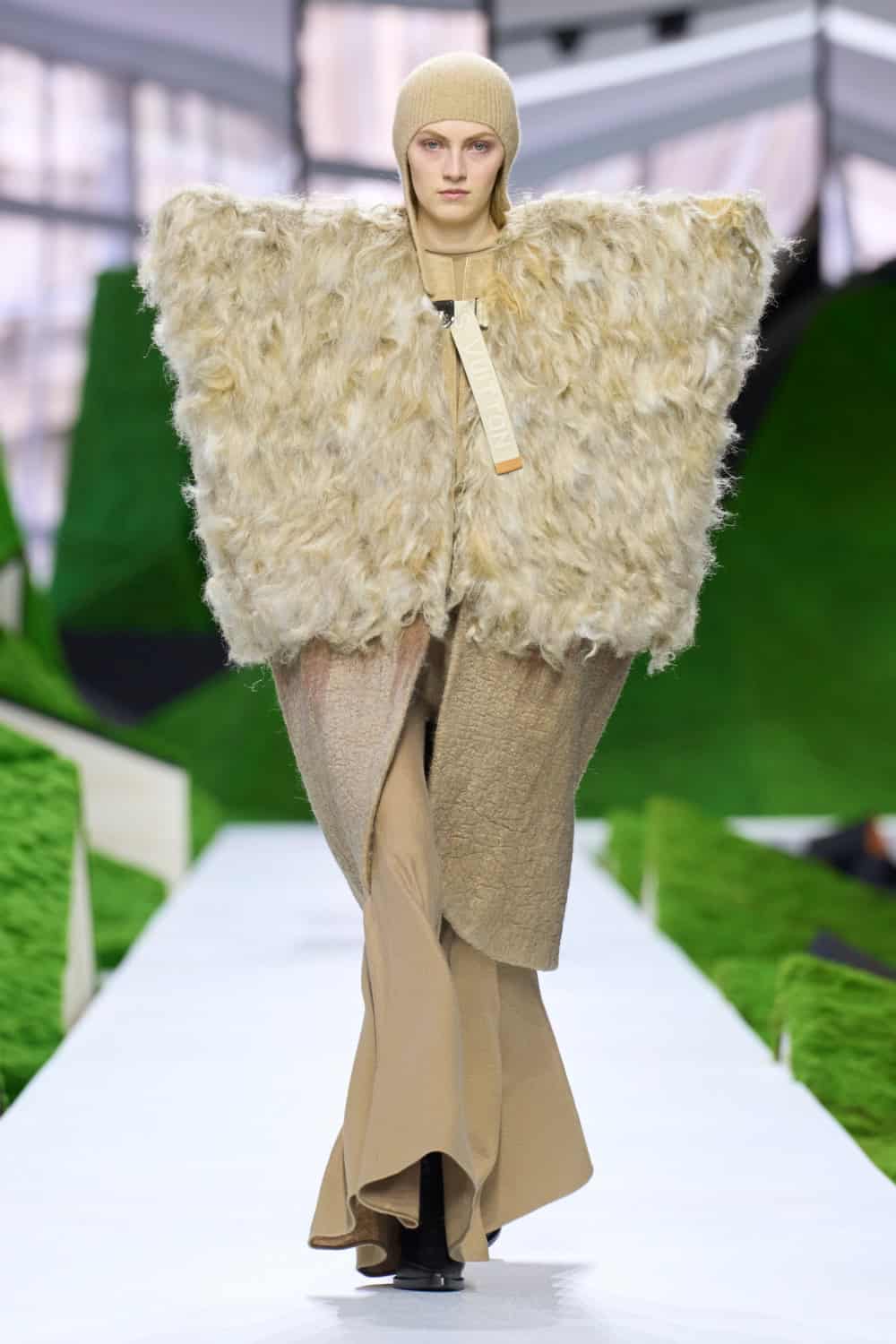
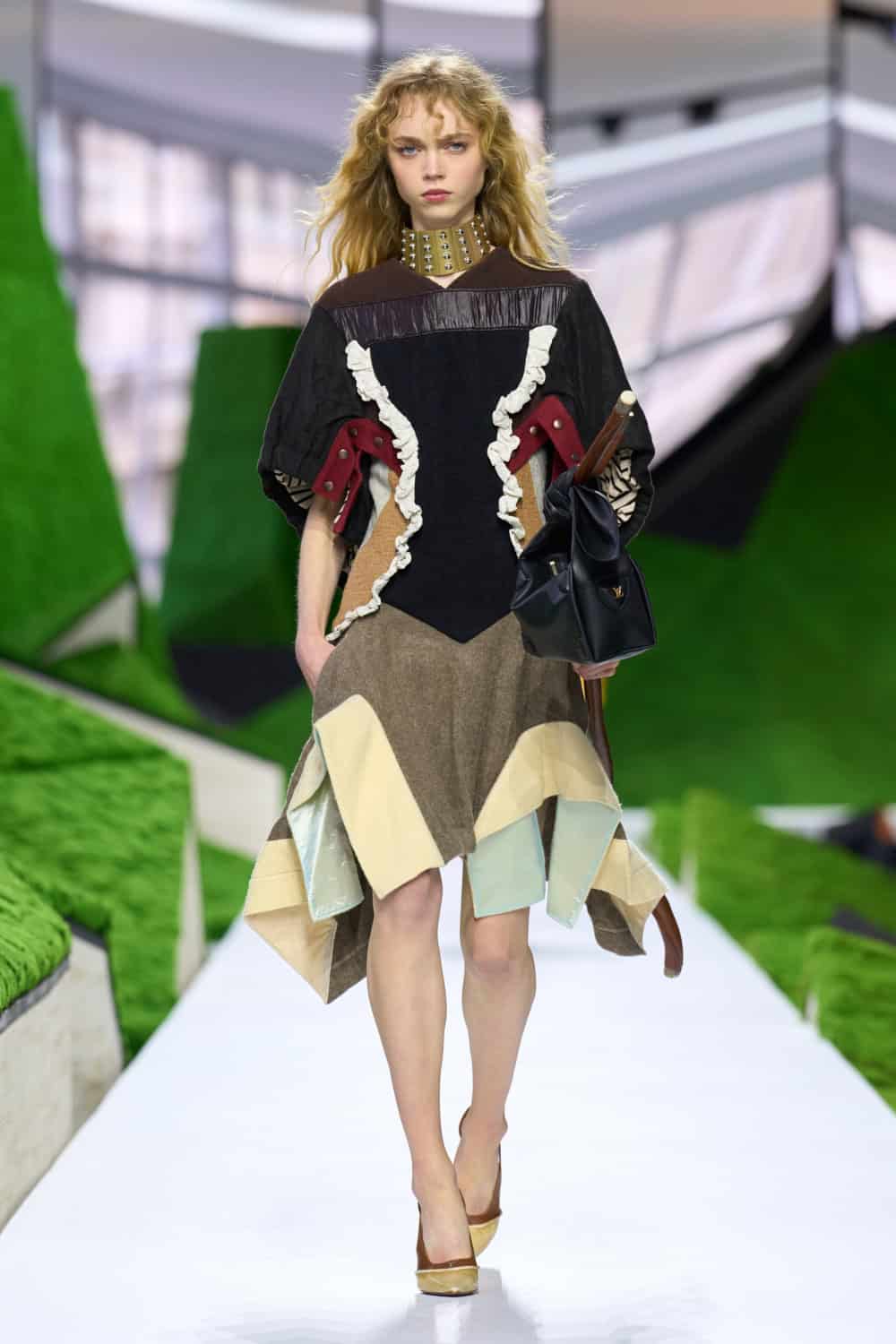
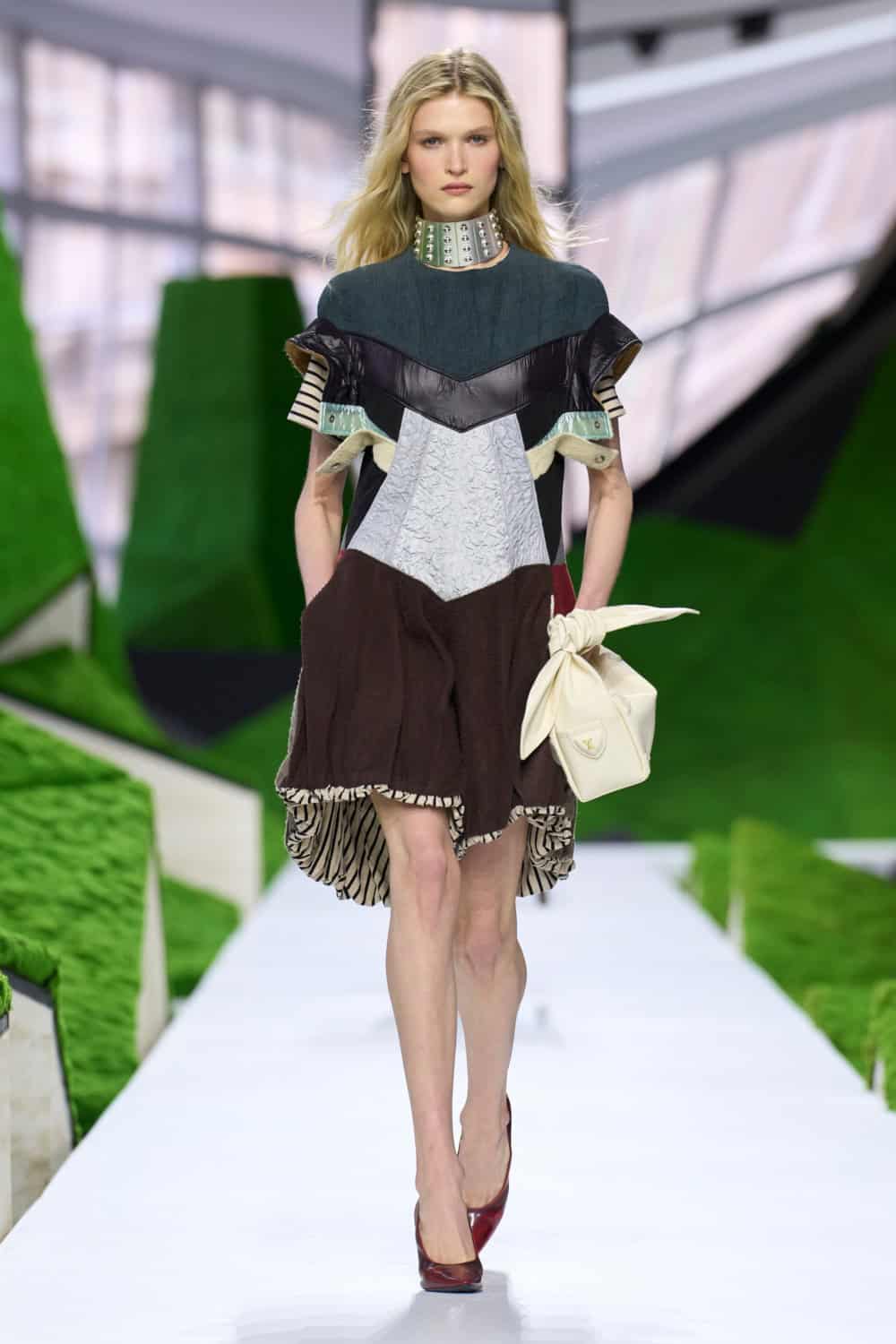
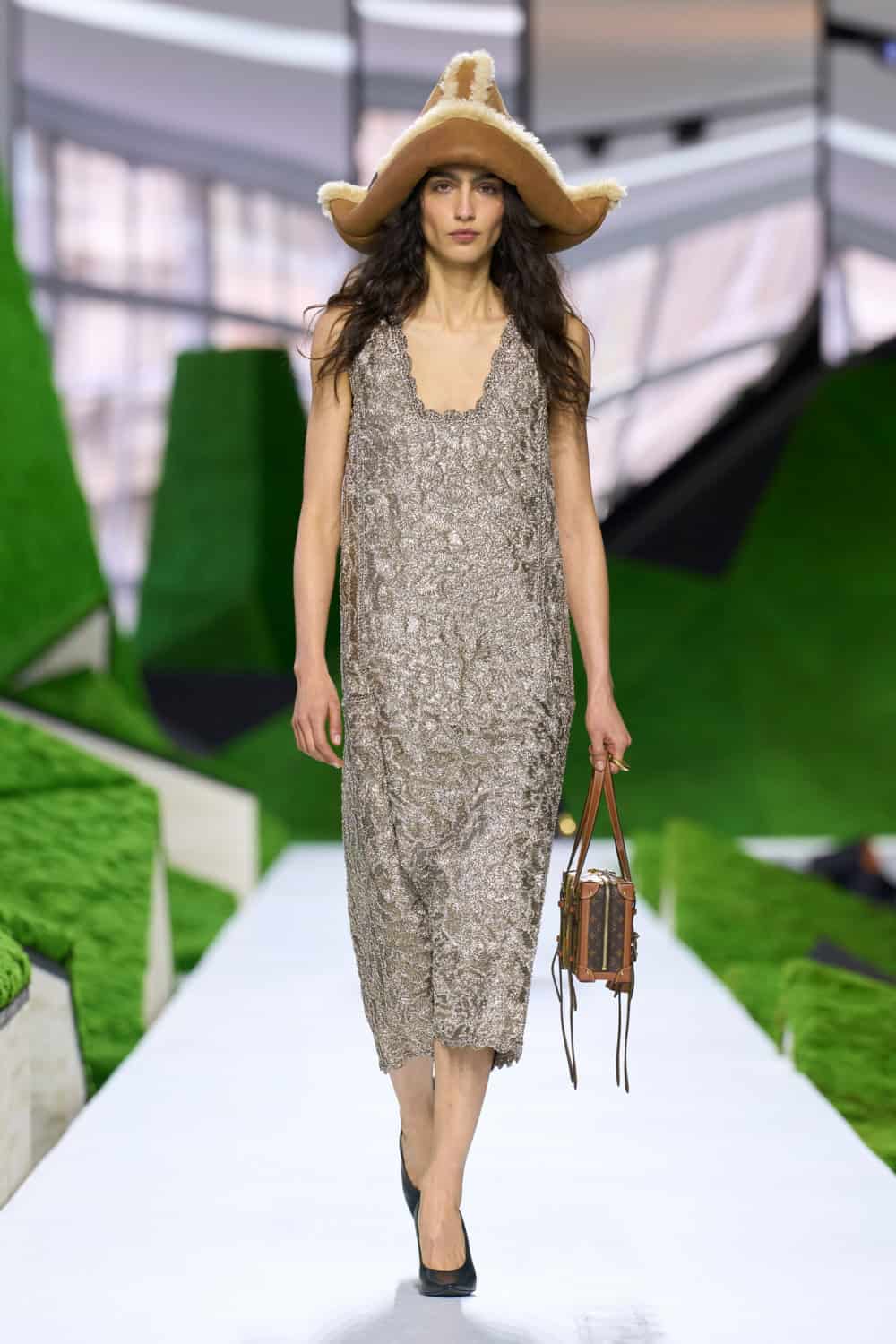
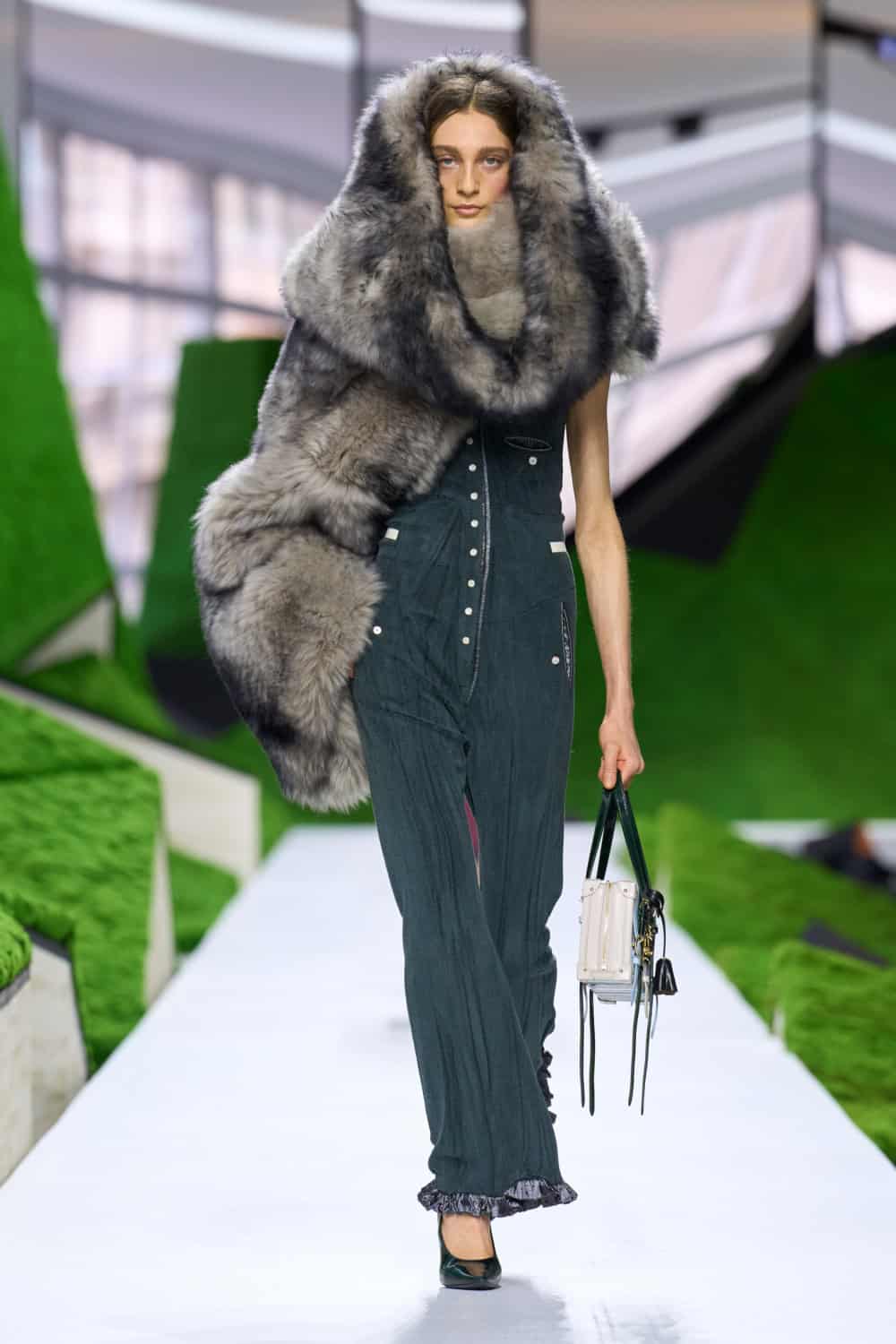
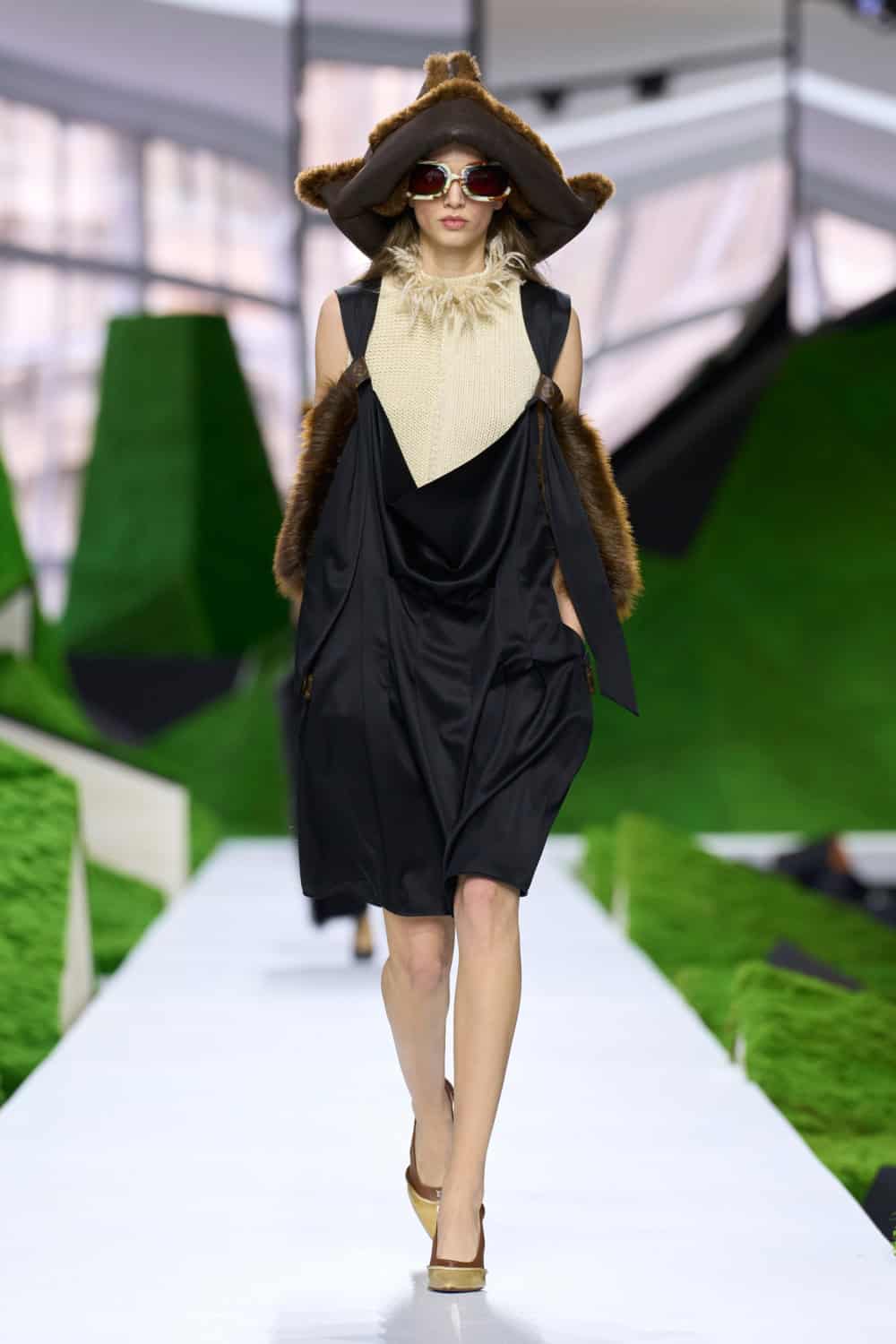
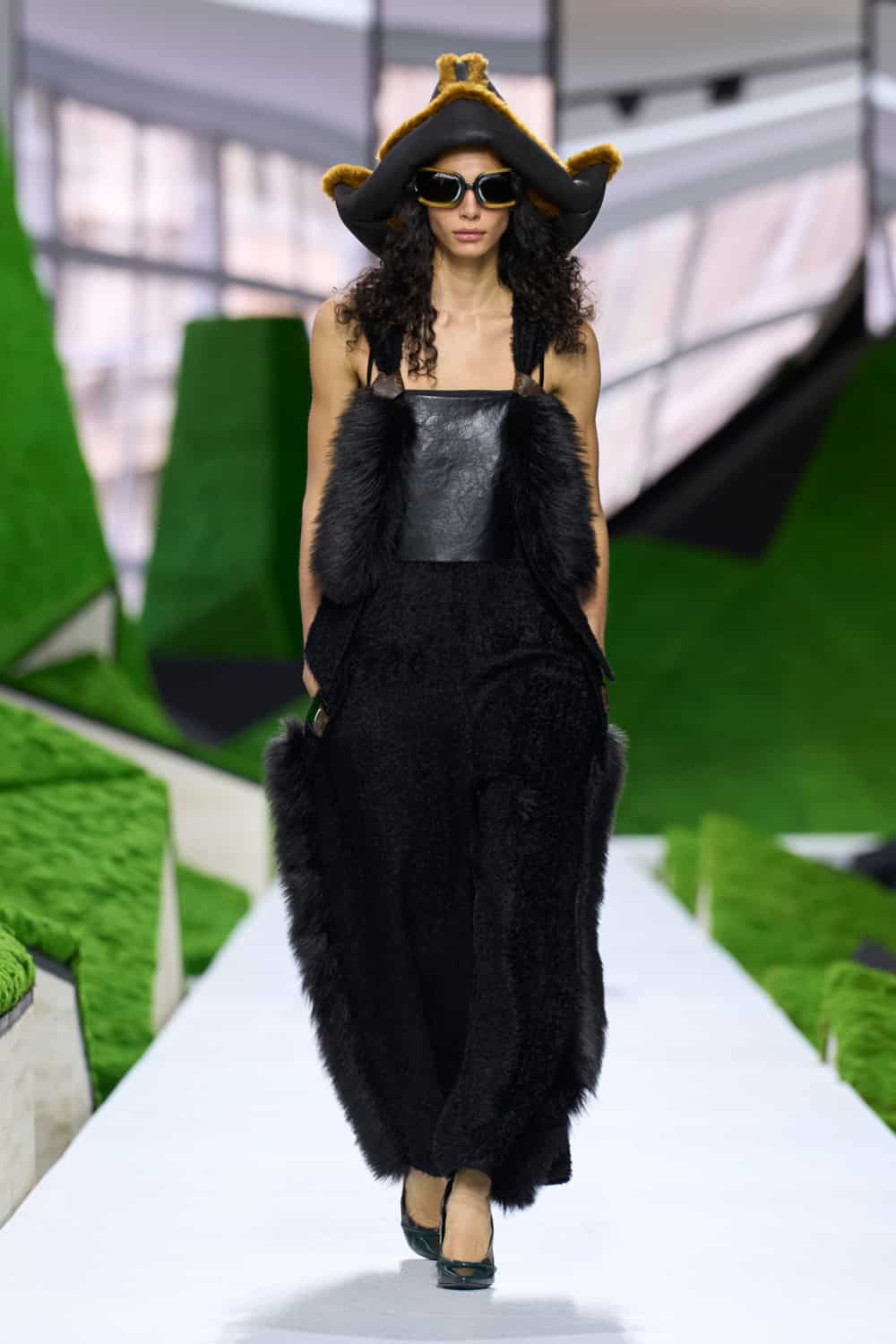
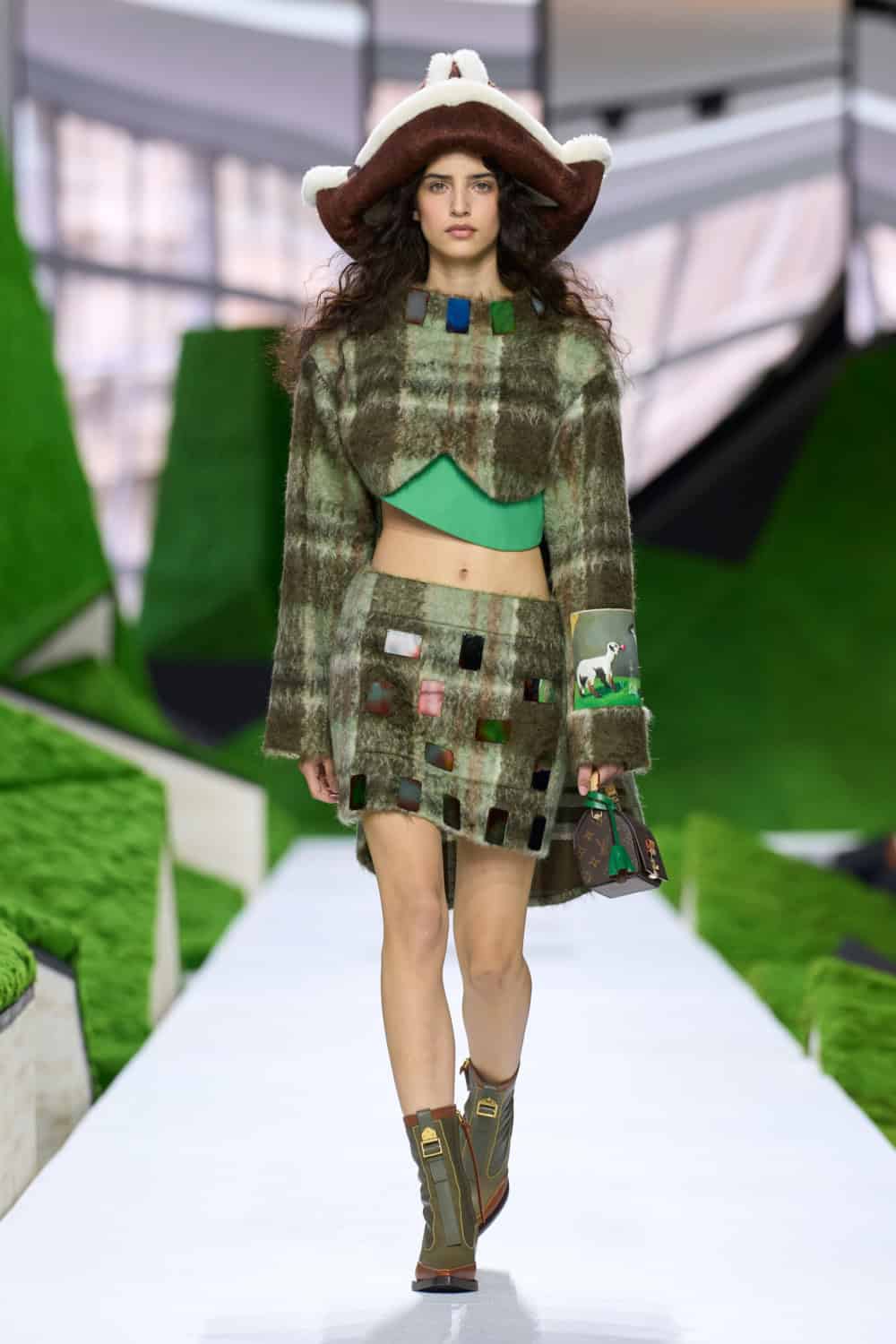
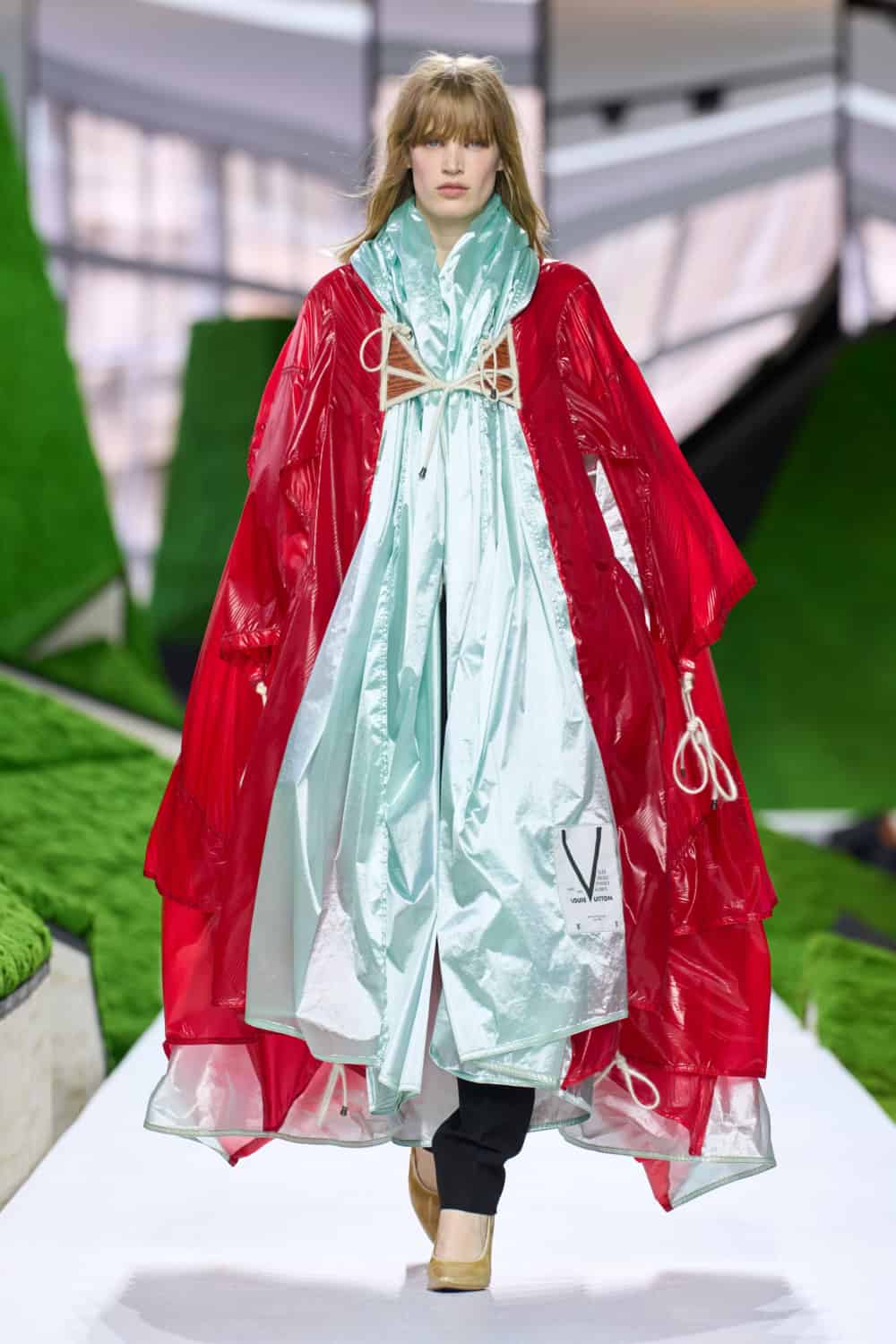
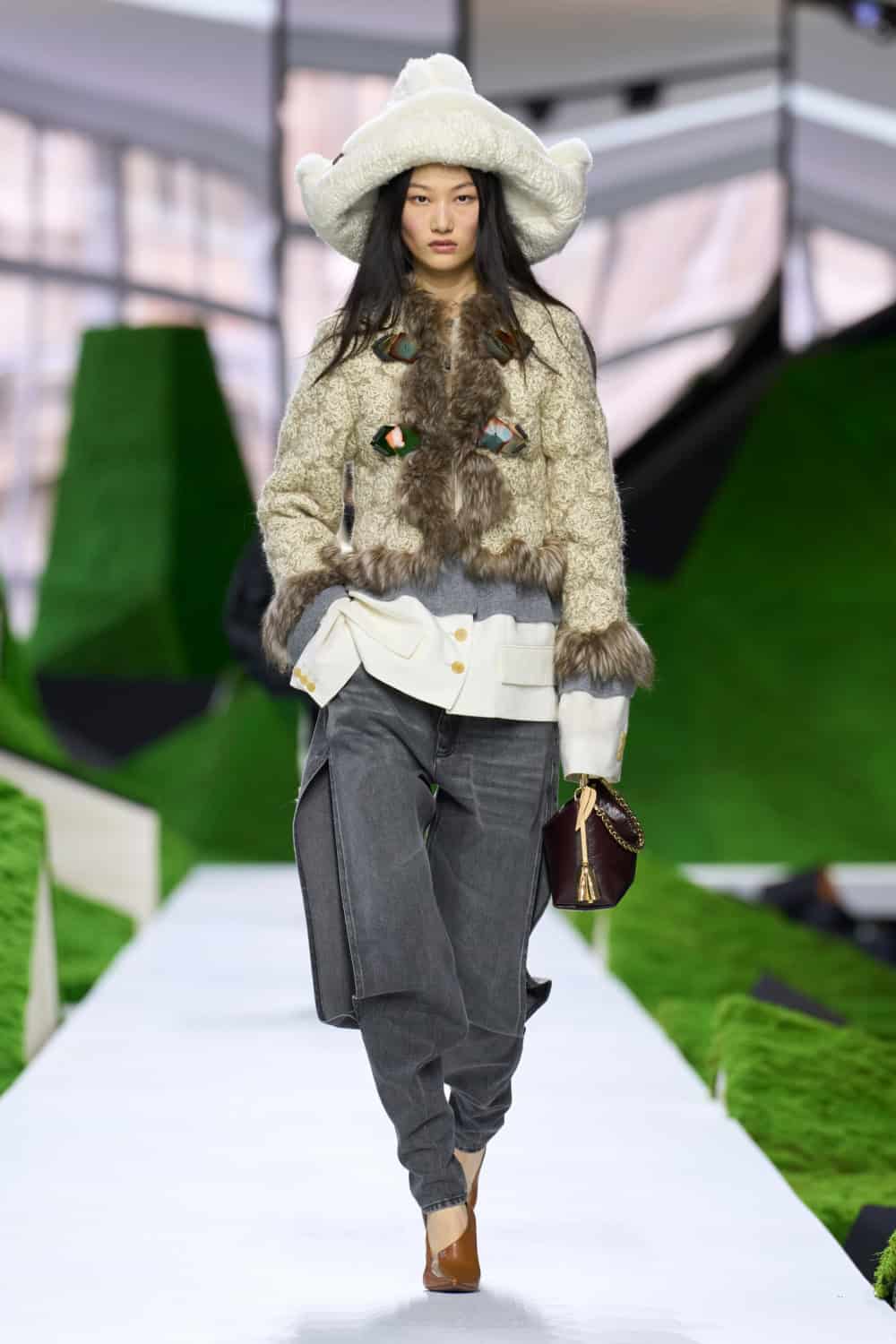
Per the show notes, Ghesquière looked to nature, namely the way humans have interacted with their surroundings and created clothes as a means to survive. As we evolved, so have what we’ve worn — in essence the reason why fashion exists. Opening with a series of exaggerated garments inspired by Turkish kepeneks (a traditional garment worn by sheepherders as protection against the elements), they set the tone for what would be a farflung exploration of other locales. From the forests of Peru to the steppes of Mongolia to the mountains of Nepal, the world has never been more interconnected, and with it comes a shared experience of how one exists and dresses for such an existence.
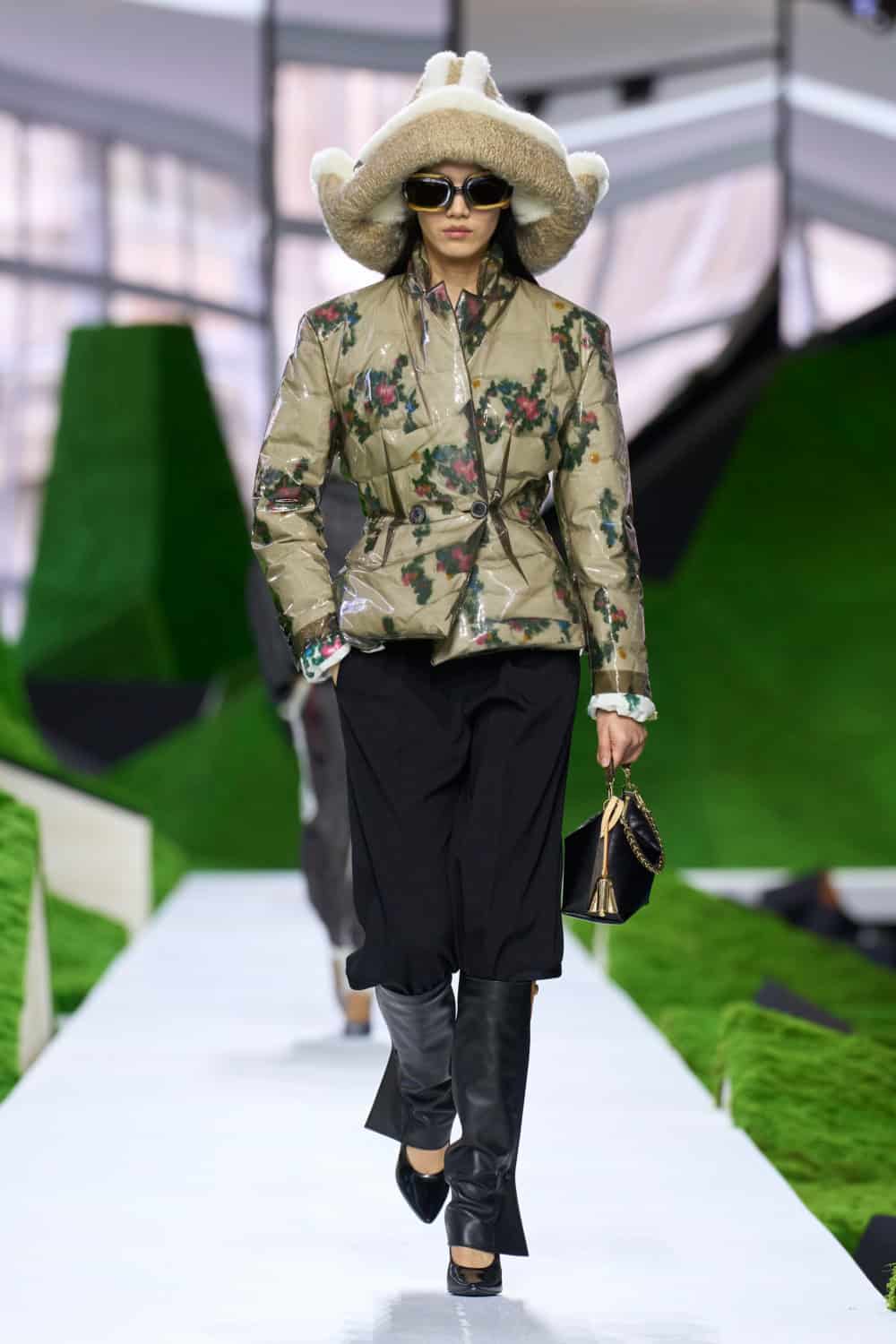
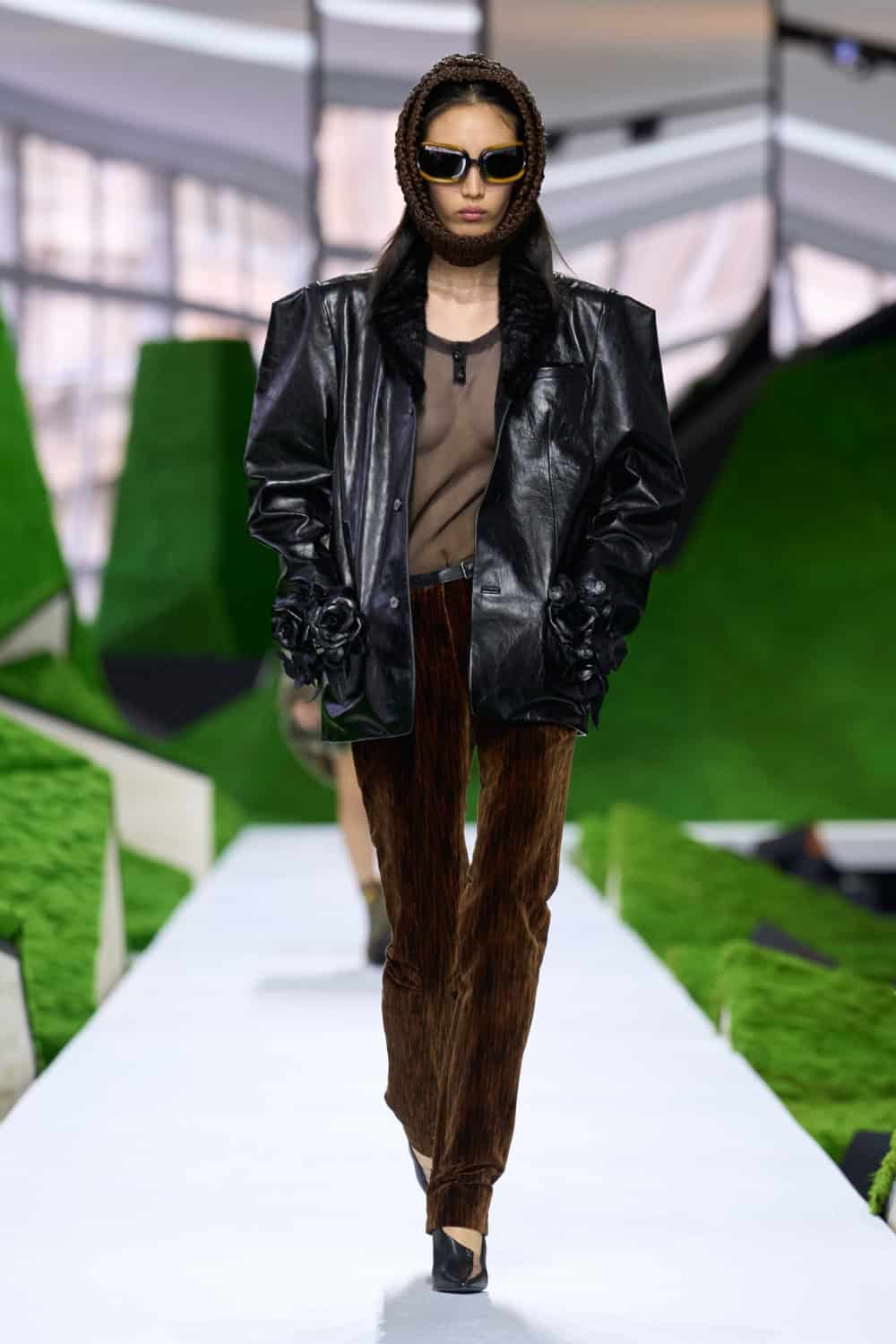
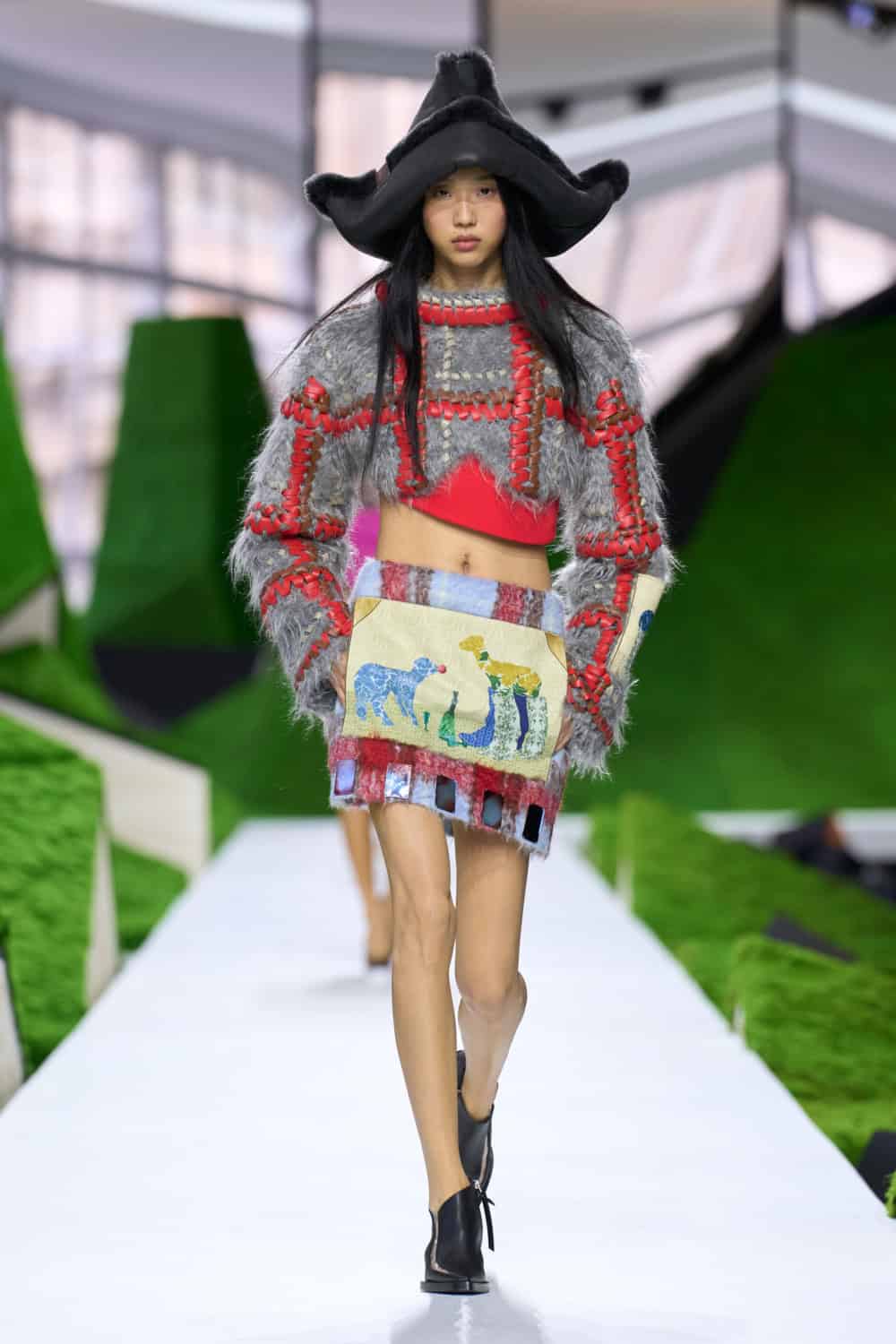
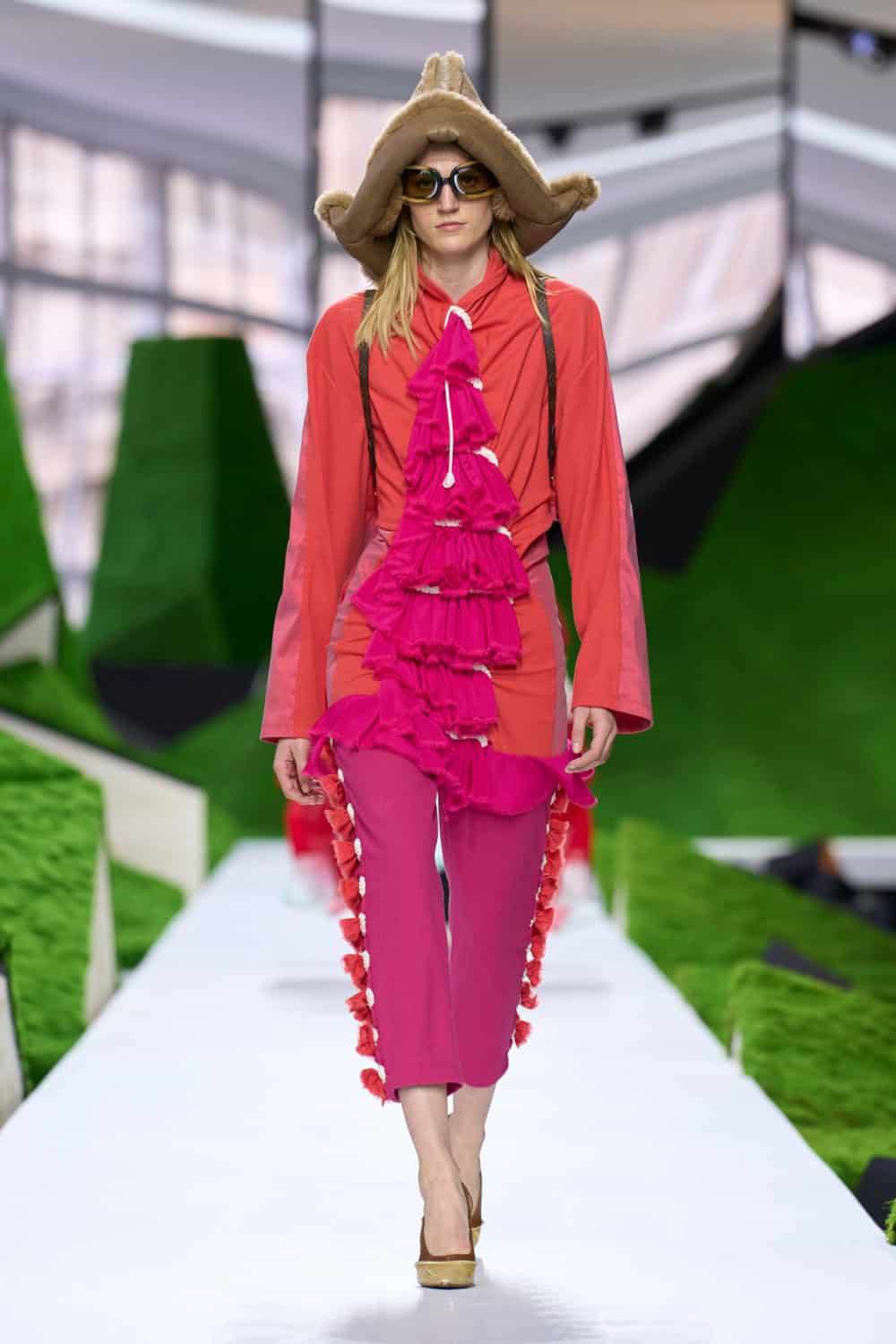
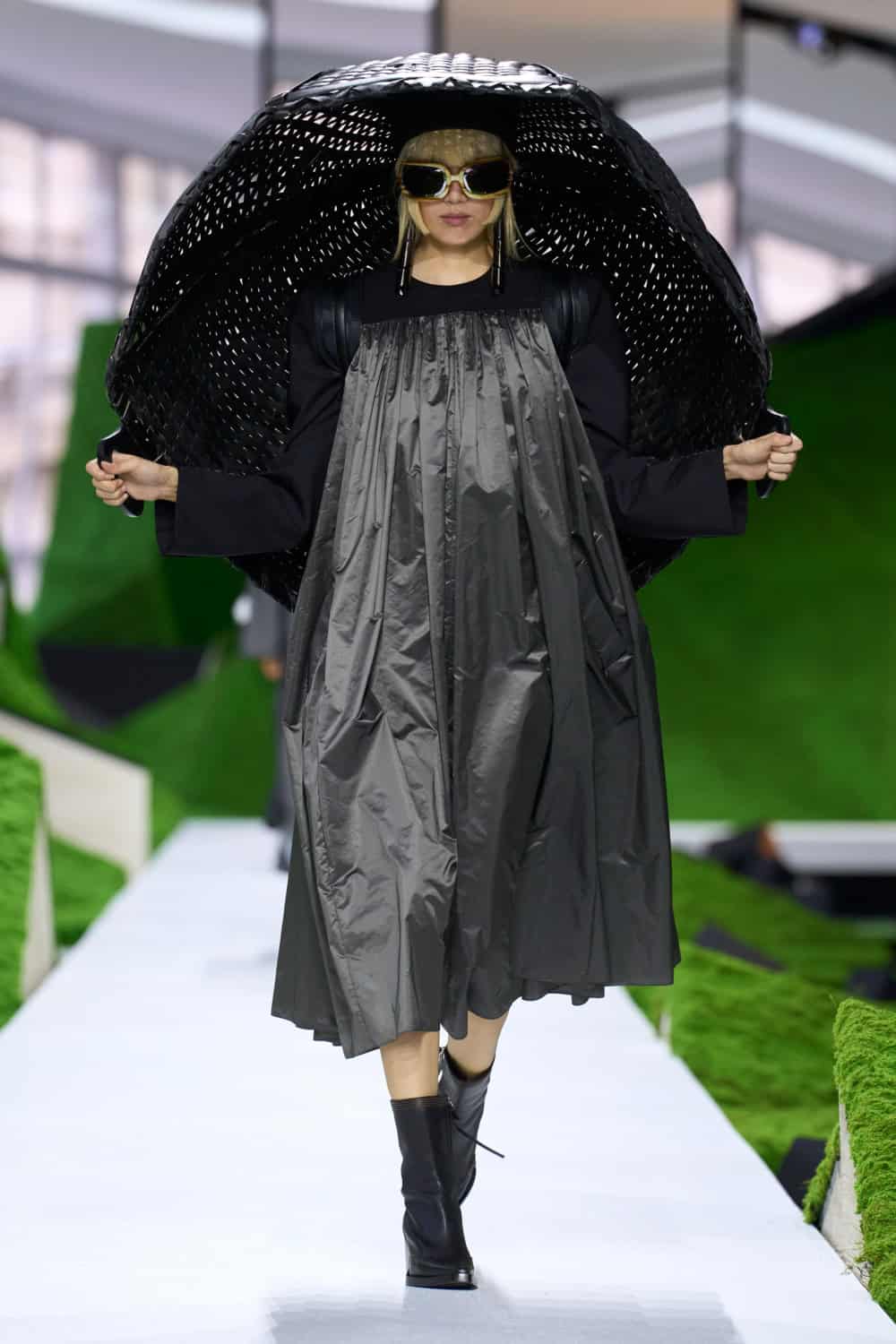
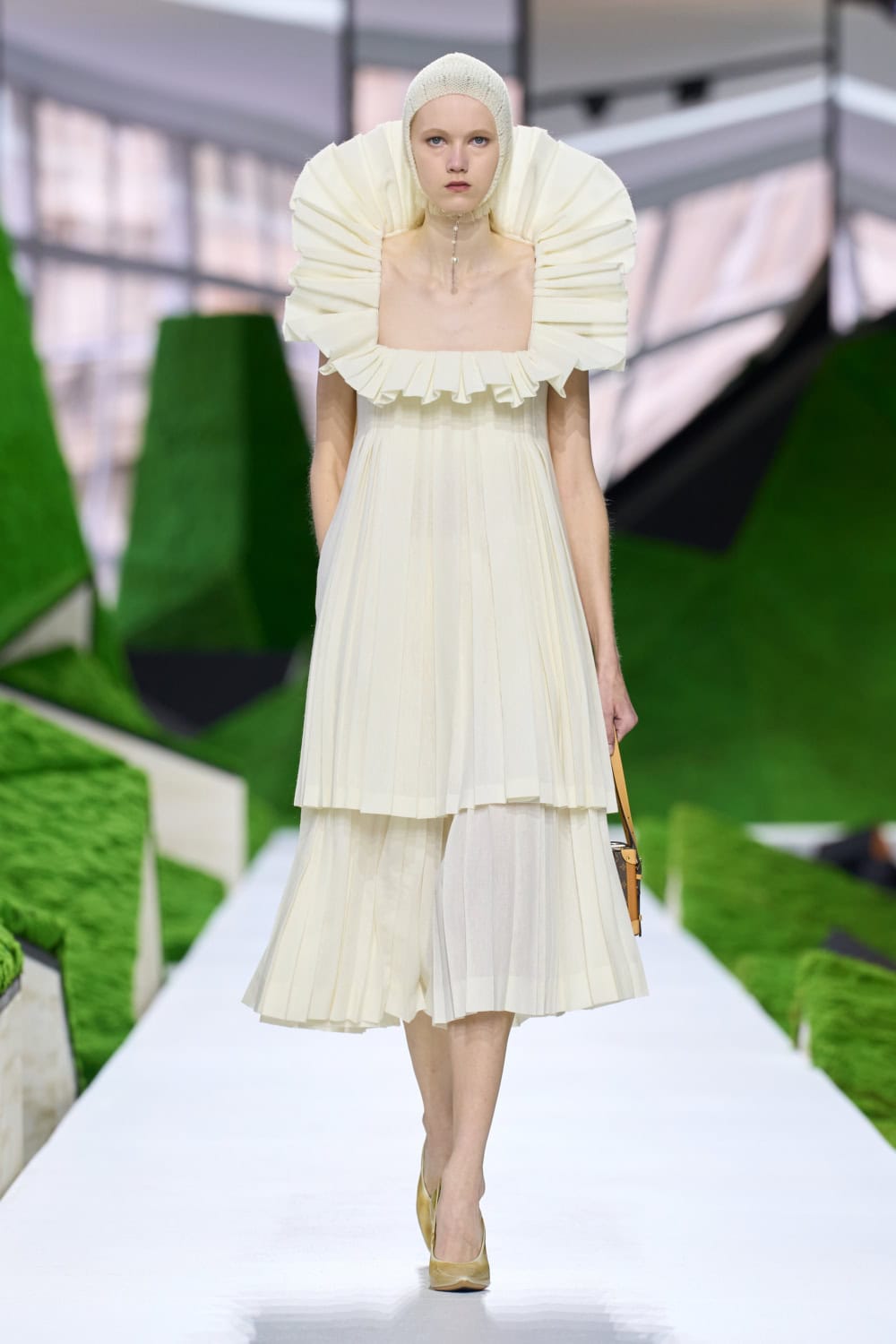
As serious as that sounds, Ghesquière translates these ideas into a sense of whimsy. One model carried a soft leather bag, attached to what looked like a stick, as if it were a traveling sac one would jam for essentials while on a mountain hike. Another held a cow bell, an accessory you’d probably never expect to see on a runway. And that bucolic scene from the invite? That was actually the work of Ukrainian artist Nazar Strelyaev-Nazarko and his images were emblazoned on a skirt and used as patch details on a plaid coat or cropped sweater. Headwear spanned the gamut from triangular styles that recalled traditional Mongolian garb to surrealist takes on sunhats that resembled upturned baskets to bathing caps. Perhaps the most eye-catching? A black topper that projected from the head, straight out of a sci-fantasy but rooted in tradition.
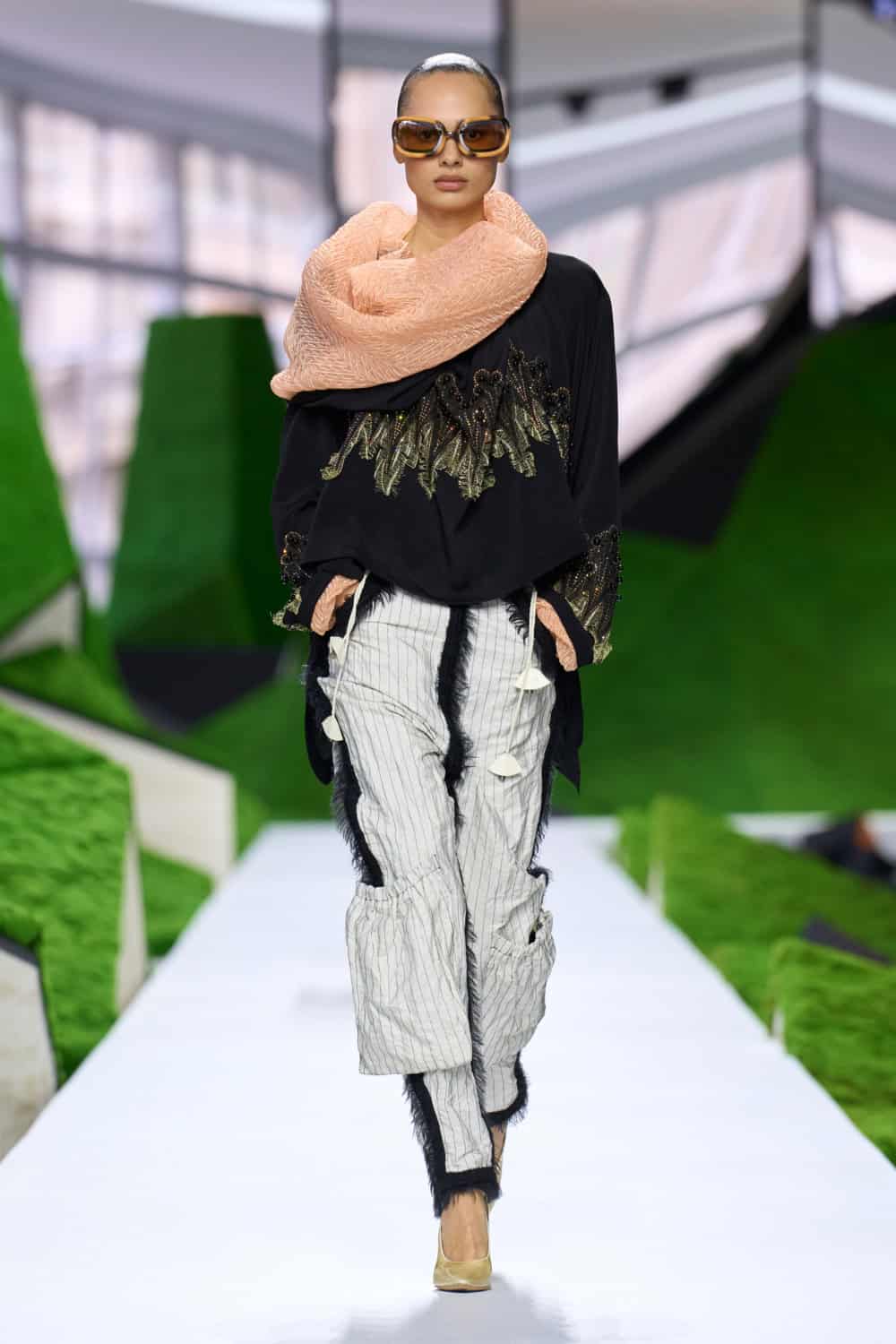
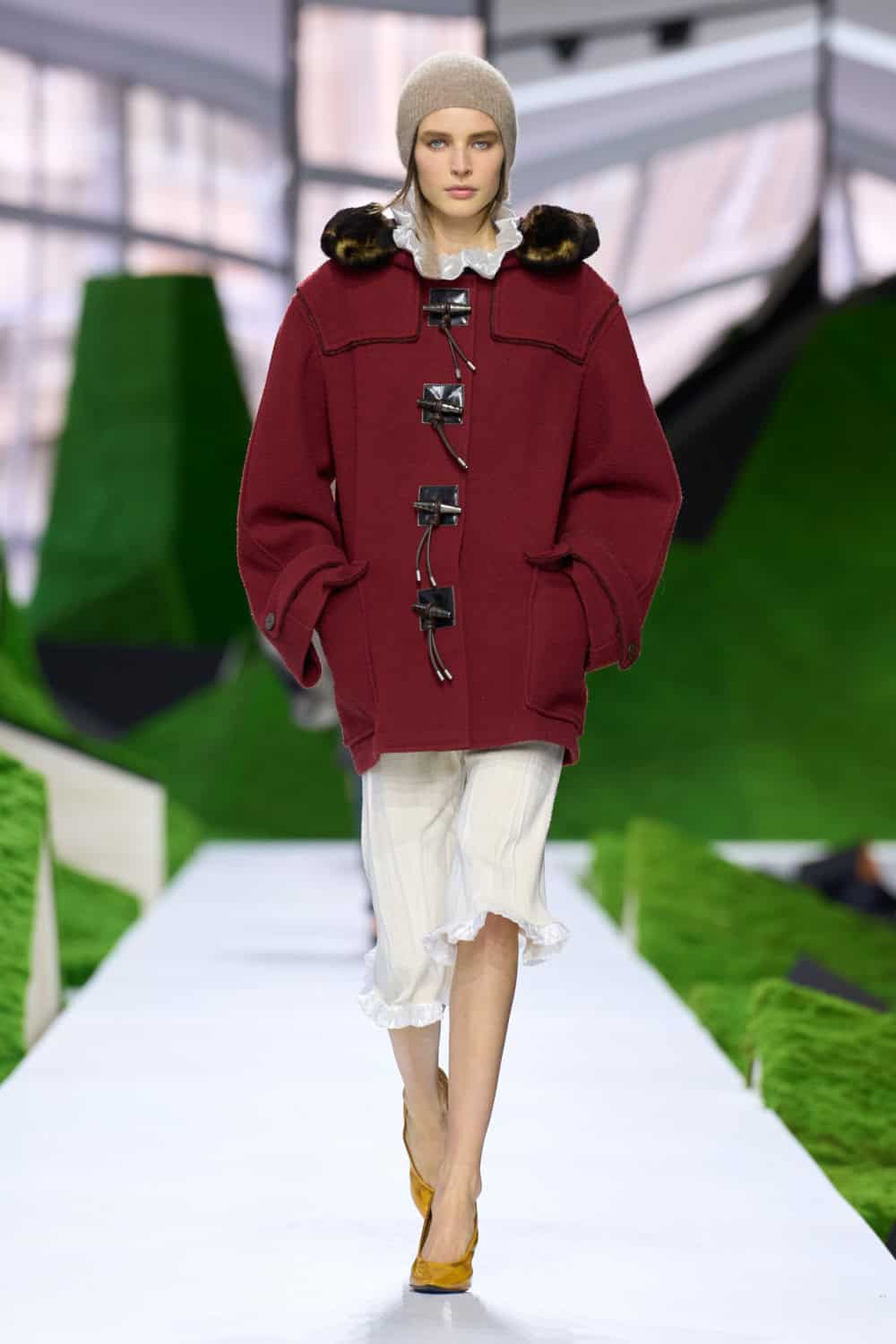
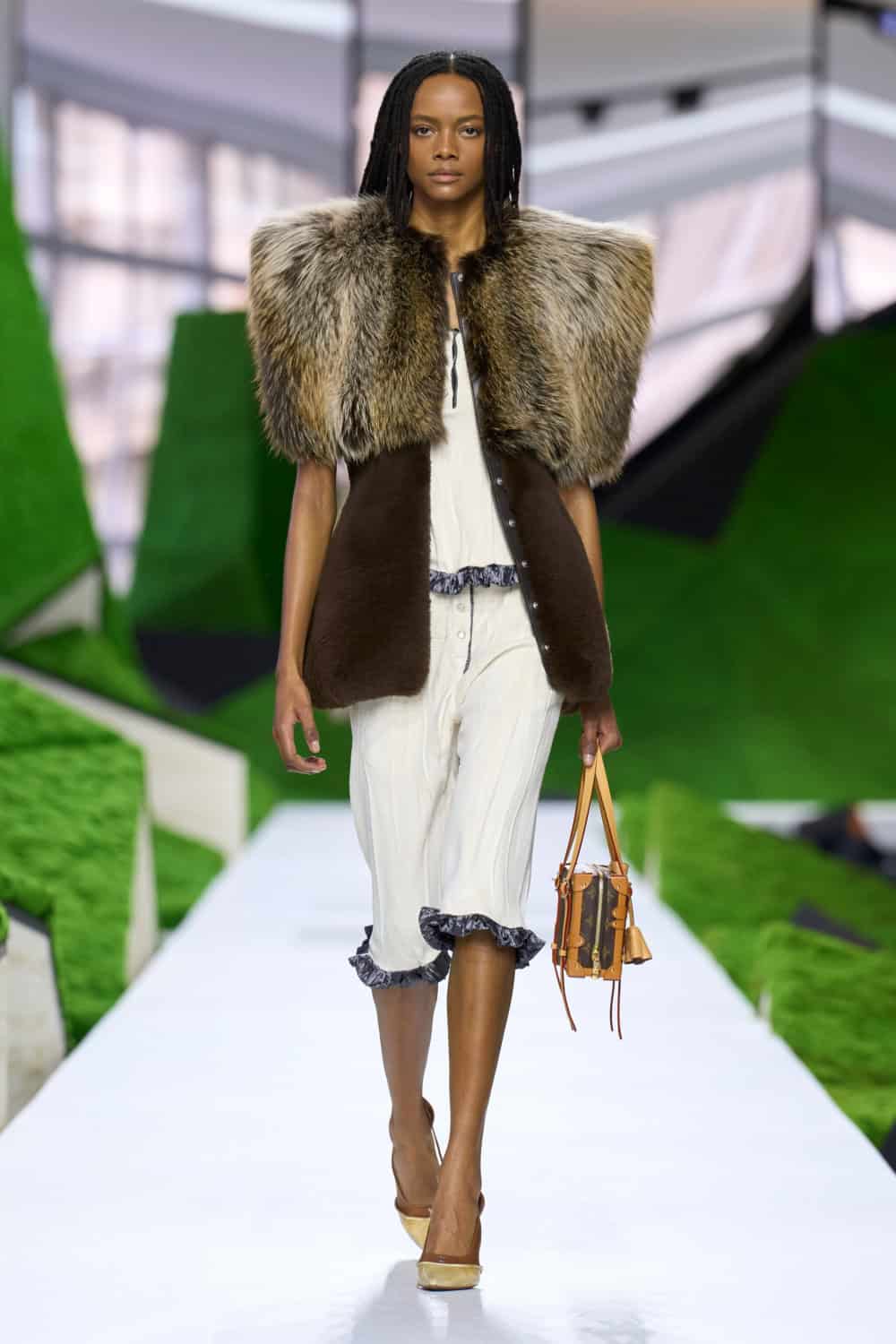
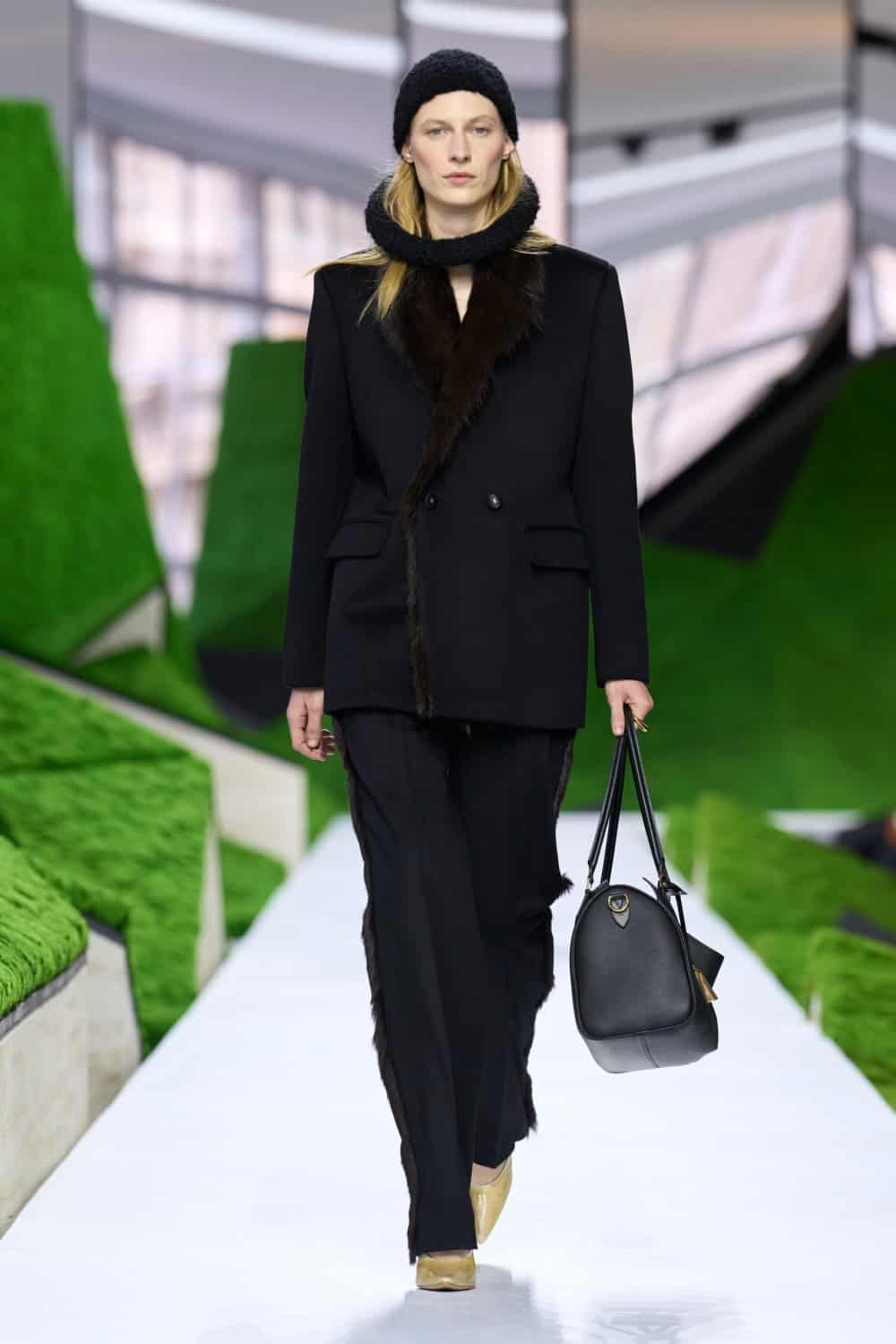
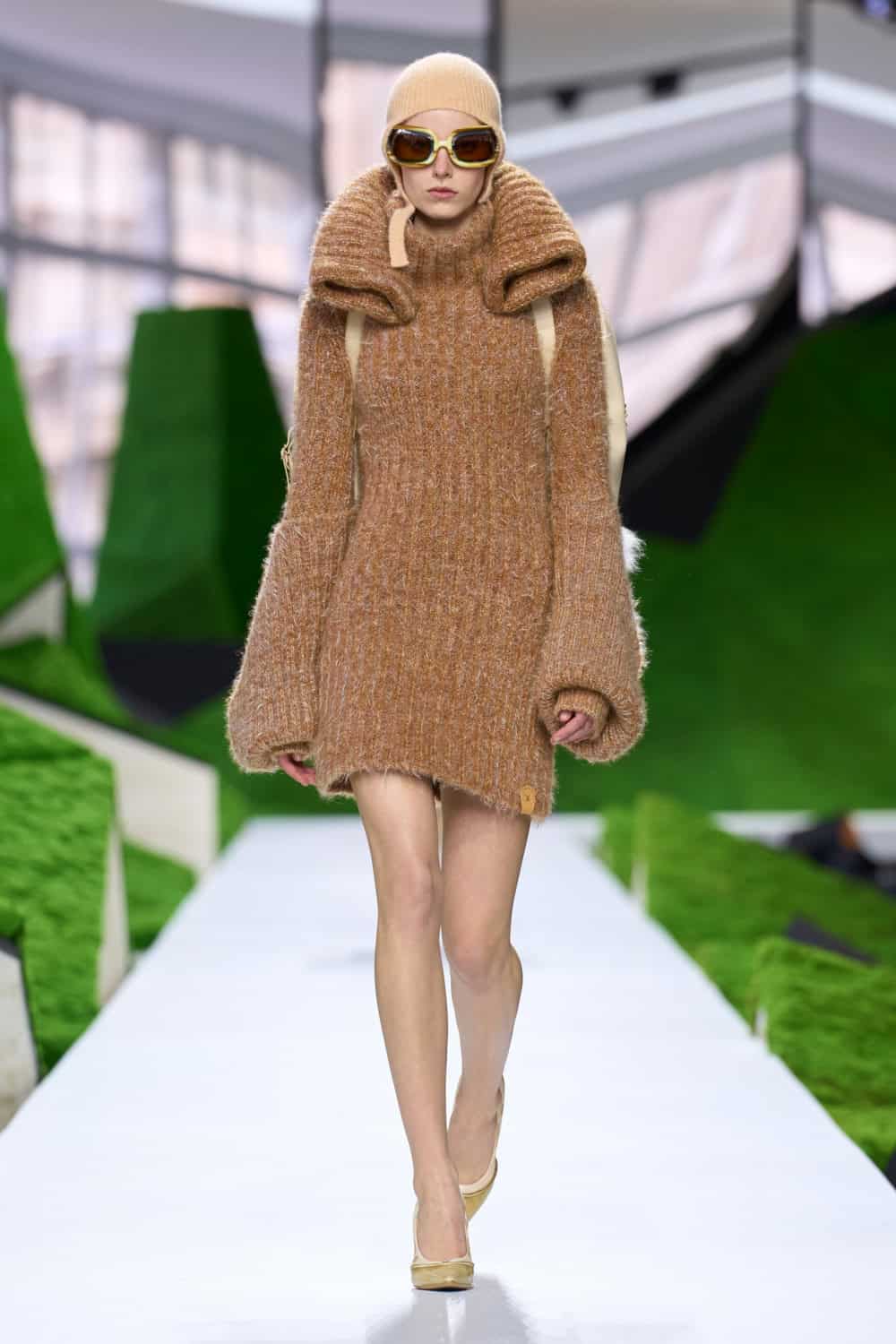
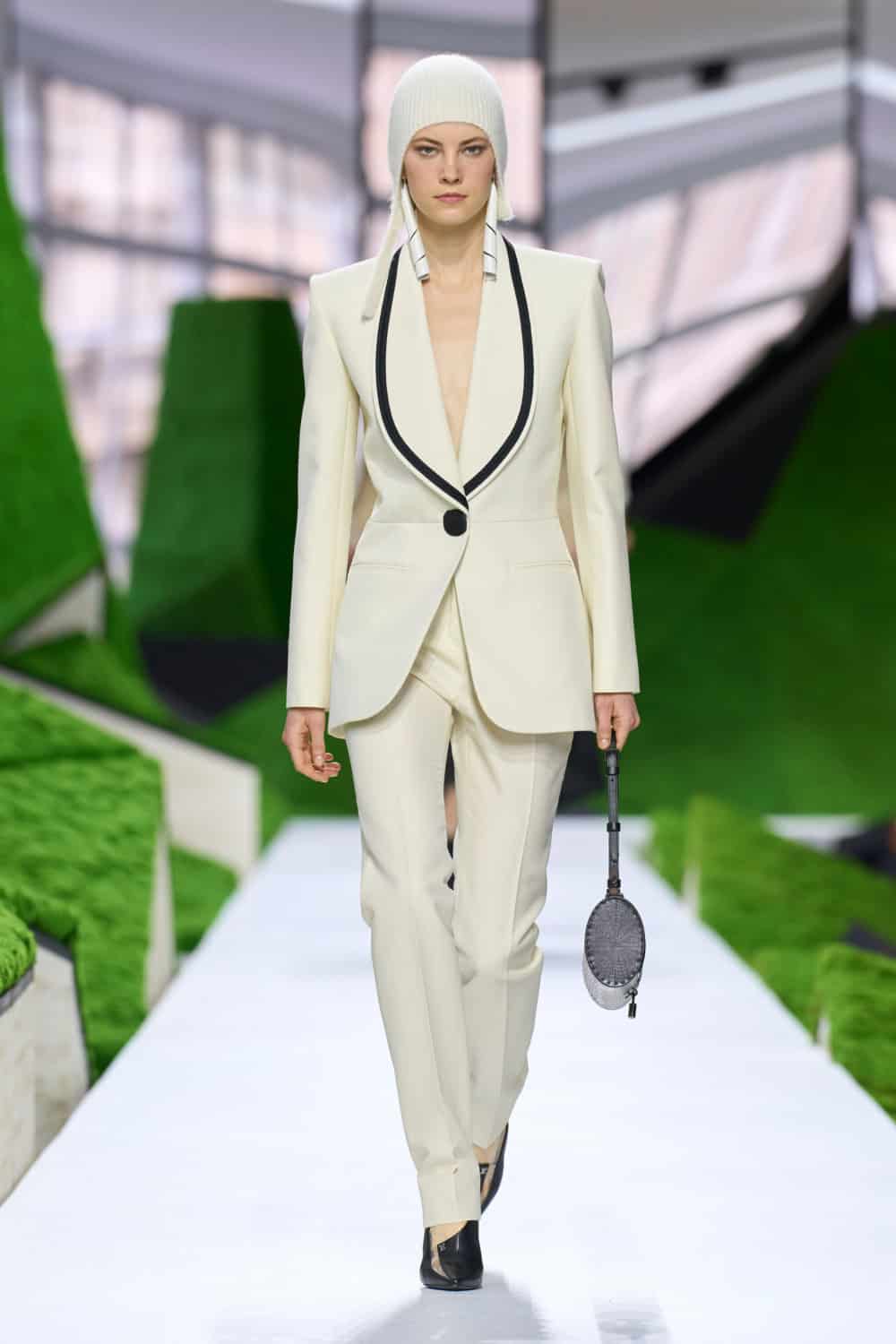
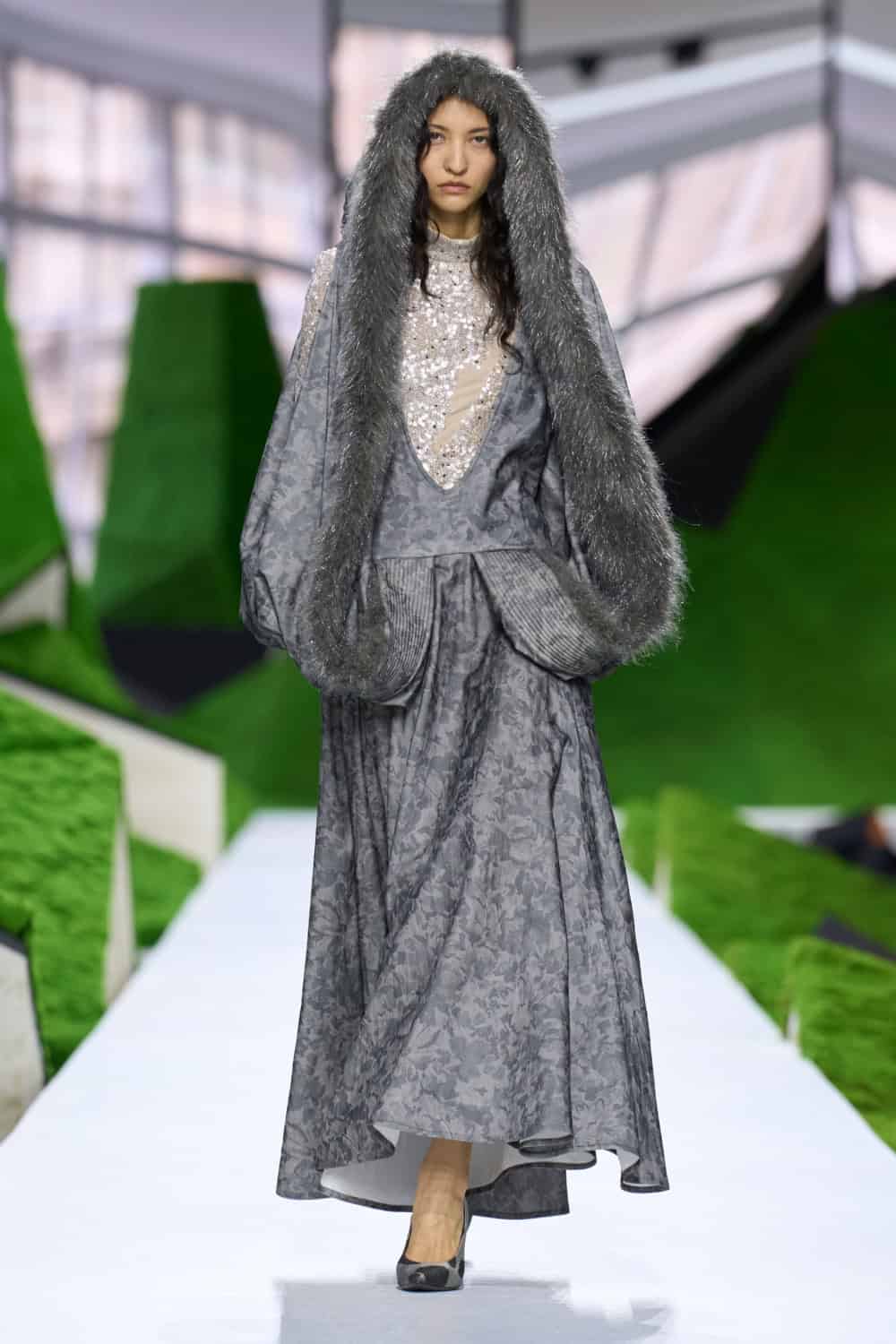
Even “basics” were anything but, with toggle coats and suiting trimmed in fur as a nod to the pastoral theme. Silky track pants, cropped sets, and billowy dresses were all dramatic — these are not clothes for those who prefer to fade into the background. “When we started the collection, we wanted to work on architectural clothing that could express different cultures around the globe,” Ghesquière said adding, “I think clothes are bringing us together, and it’s kind of a form of anthropology—to think about how people can find things in common in different parts of the world in their way of dressing.” In the end it was Paris by way of Kathmandu with a detour to Machu Picchu and a jaunt to Ulaanbaatar that reminded us, oh what a world we live in.