28 September 2026 |
Designer Colleen Allen took her time to figure out her business, and now that she’s an industry favorite, she’s going to keep doing it her way.
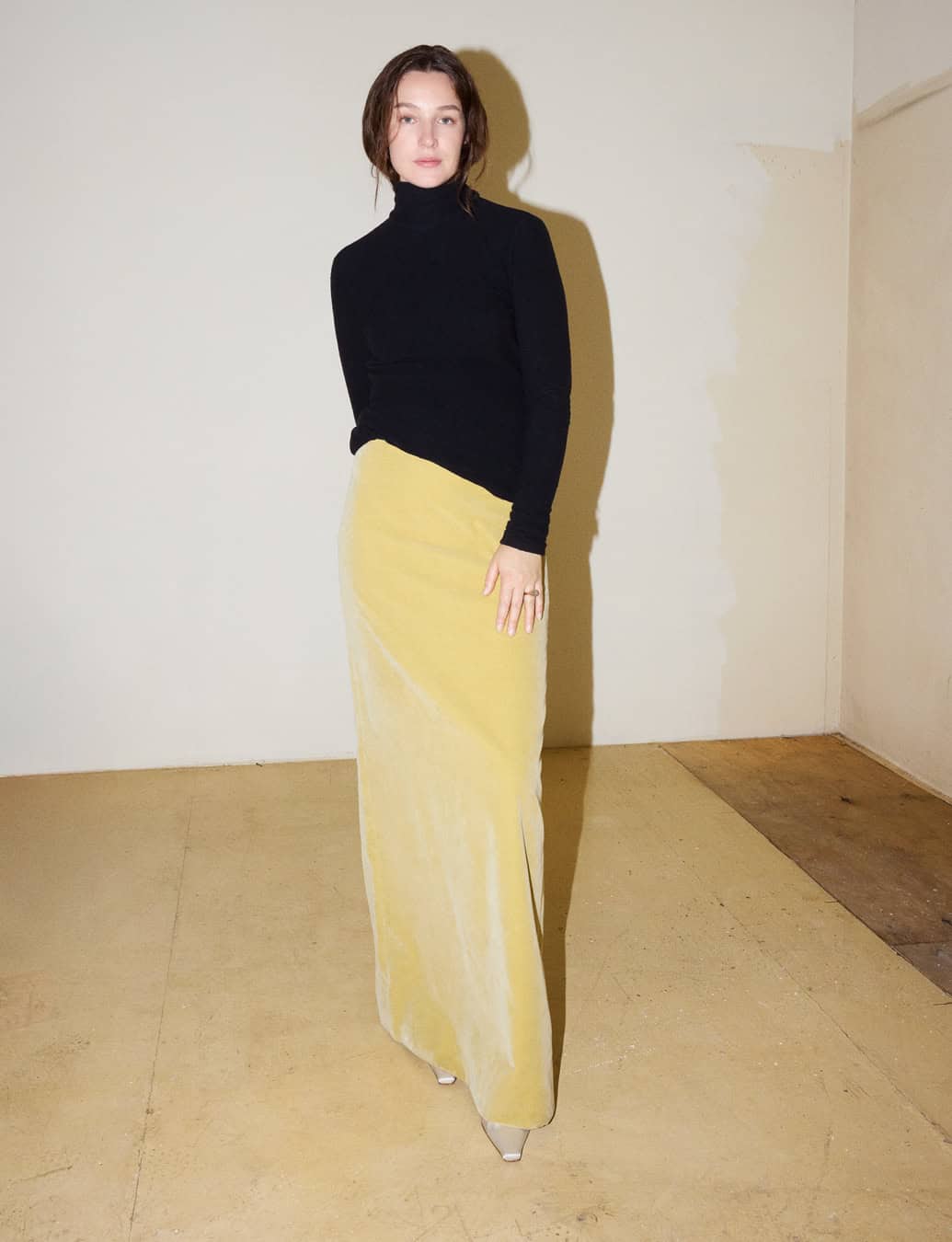
When, in 2014, Colleen Allen was a freshman at Parsons School of Design, she wanted to be a menswear designer. “I felt like everything had been done before in womenswear,” she said one recent morning in SoHo. She was wearing a long white cotton skirt and a white T-shirt, her brown hair falling in gentle waves around her face. At the time, designers like Phoebe Philo and Raf Simons had captured our attention with their menswear-inspired silhouettes that pushed back against the hypersexualized femininity of the 2000s. Menswear was beginning to feel more fluid, and it’s easy to imagine how Allen found it both more interesting and more challenging.
By 2024, she had launched her own eponymous womenswear line in New York, debuting a collection that was inspired, in part, by the surrealist painter Leonora Carrington and Victorian silhouettes. What changed? In some ways, it’s hard for Allen to articulate. “Phoebe and Raf at that moment were super minimal. It was like a clean slate. They were designing in this post-Galliano era, where nothing’s interesting anymore because it’s been pushed so far that everyone has become minimal and refined. And now, I think you’re seeing the response against that.”
Allen is 30, and five collections in, with her sixth arriving this September at New York Fashion Week. She is still an ingénue in an industry where careers span decades, if not lifetimes, but with write-ups and reviews from major publications like Vogue and The New York Times, as well as being recently nominated as a CFDA emerging designer of the year, she has received the kind of early success and recognition most young designers only dream about. She routinely dresses A-list celebrities such as Lily Allen, Sienna Miller, Nicole Kidman, Ayo Edebiri, Michaela Coel, and Carey Mulligan. In May, she designed a look for Vogue’s head of editorial content, Chloe Malle, look for the
Met Gala. A beautiful marigold- yellow draped and layered dress inspired by Frederic Leighton’s 1895 painting, Flaming June.
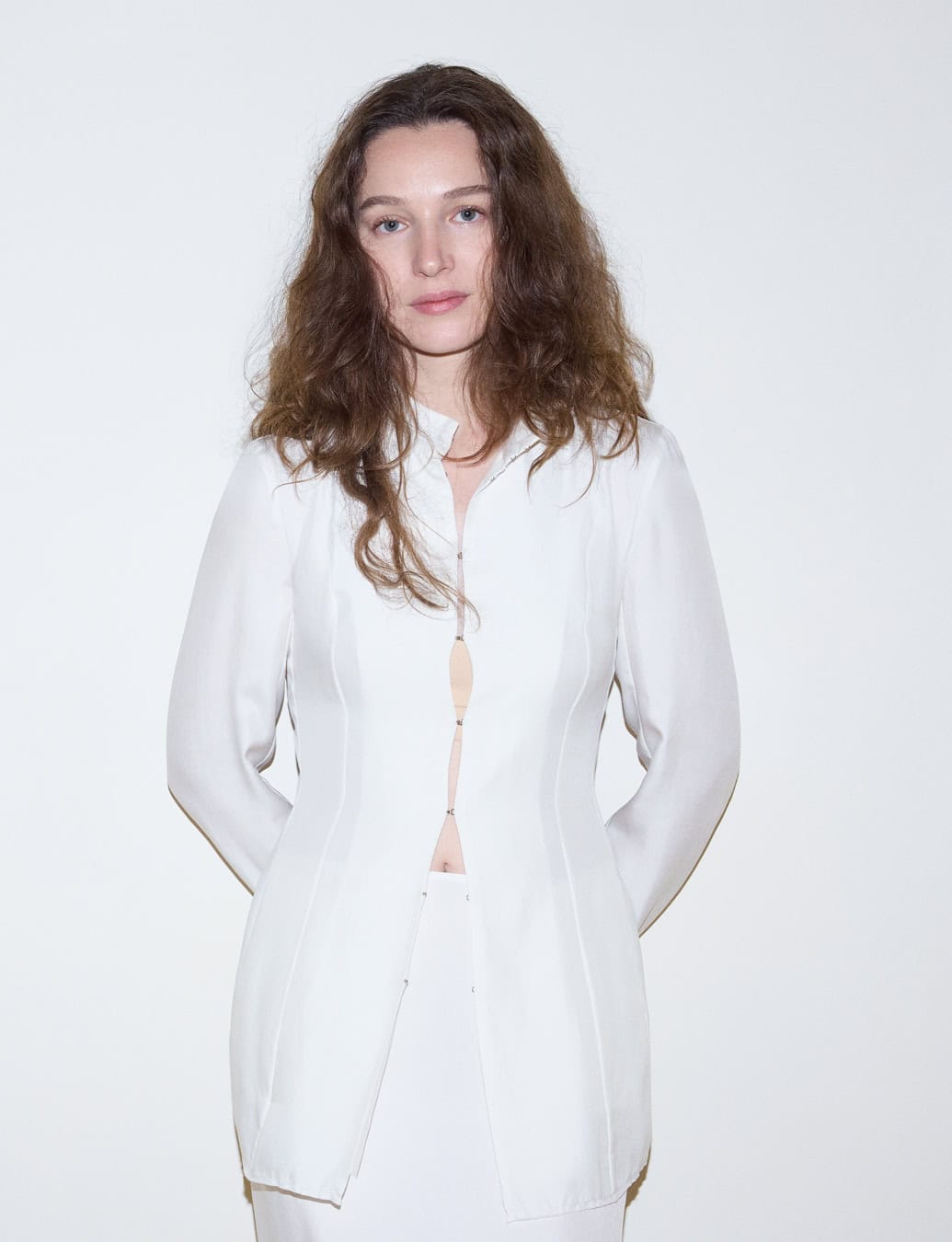
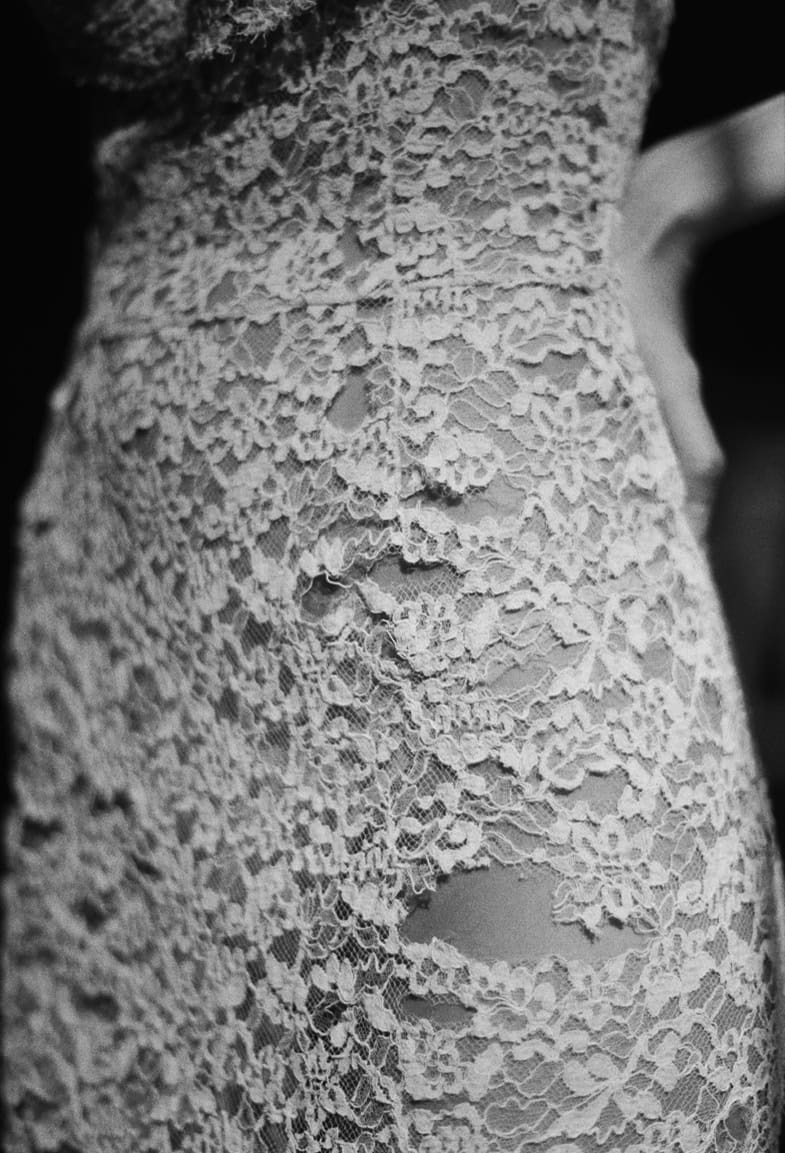
Allen’s clothes are wonderfully contradictory. They are both modern and old-fashioned; conservative and, at times, daringly provocative; elegant yet fussy and impractical. They speak to a nuanced understanding of femininity and also possess an uncomplicated perspective. This is how Allen sees the world, how she feels women can dress. Allen is of a generation that was educated online, where references and inspirations can be cross- pollinated with ease. Where gender is uncomplicated, but sex is. Her dresses have bustles, corseted ribbing, and long, floor-grazing hemlines. But they also have moments of startling sensuality – lace trim that cheekily reveals a woman’s nipples on a long slip dress, cutouts that barely conceal a derriere. And yet, nothing is costume. At her most recent fashion presentation, held in a Mercer Street loft (where Allen was quietly taking the fashion critic Vanessa Friedman around), I was struck by a silhouette that reminded me of a riding jacket, with metal hook-and-eye closures running down the front, but made entirely out of fleece.
It was impractical, technical, old-world, and modern all at once. Allen grew up in Hinsdale, Illinois, a suburb of Chicago, and learned to sew thanks to her grandmother, a quilter. She liked to modify the clothes she bought at the mall or received as hand-me-downs, finding ways to make them her own or make them “feel cool,” as she put it. She worshipped designers like Alexander McQueen; by the time she was a teenager, she knew she wanted to be a fashion designer. She was a prolific magazine reader and subscribed to Women’s Wear Daily and Dazed & Confused (now just Dazed). At the same time, she was online, reading what fashion bloggers such as Tavi Gevinson, Susie Bubble, and others had to say. They made fashion accessible. “That was an amazing time to start getting interested in fashion because it was like the world was opening up.
You were seeing what people were wearing to shows and had this literacy of what different designers were doing and what collections look like,” she recalls. At the same time, she was honing her craft. While in high school, she took classes at The Art Institute of Chicago, where she learned illustration and clothing construction (one of her teachers was Shane Gabier of Creatures of the Wind). Parsons was even more of a technical education. During her junior year, she studied abroad at Central Saint Martins in North London. She instantly fell in love with the studio-based pedagogy and camaraderie. “The second that I got there, I was like, I don’t want to leave,” she says. “I made very good friends there.” She believes both schools helped her get to where she is today.
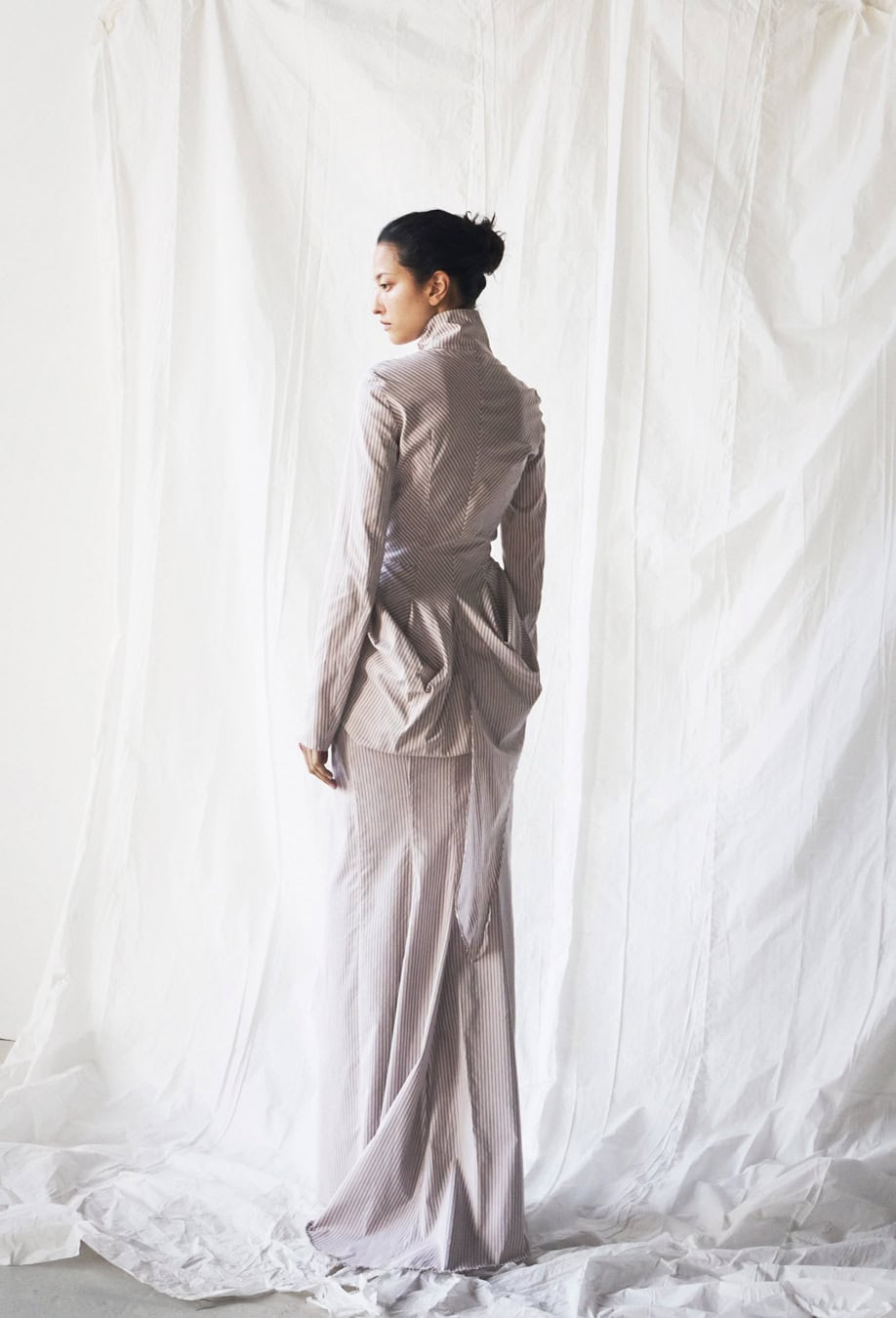
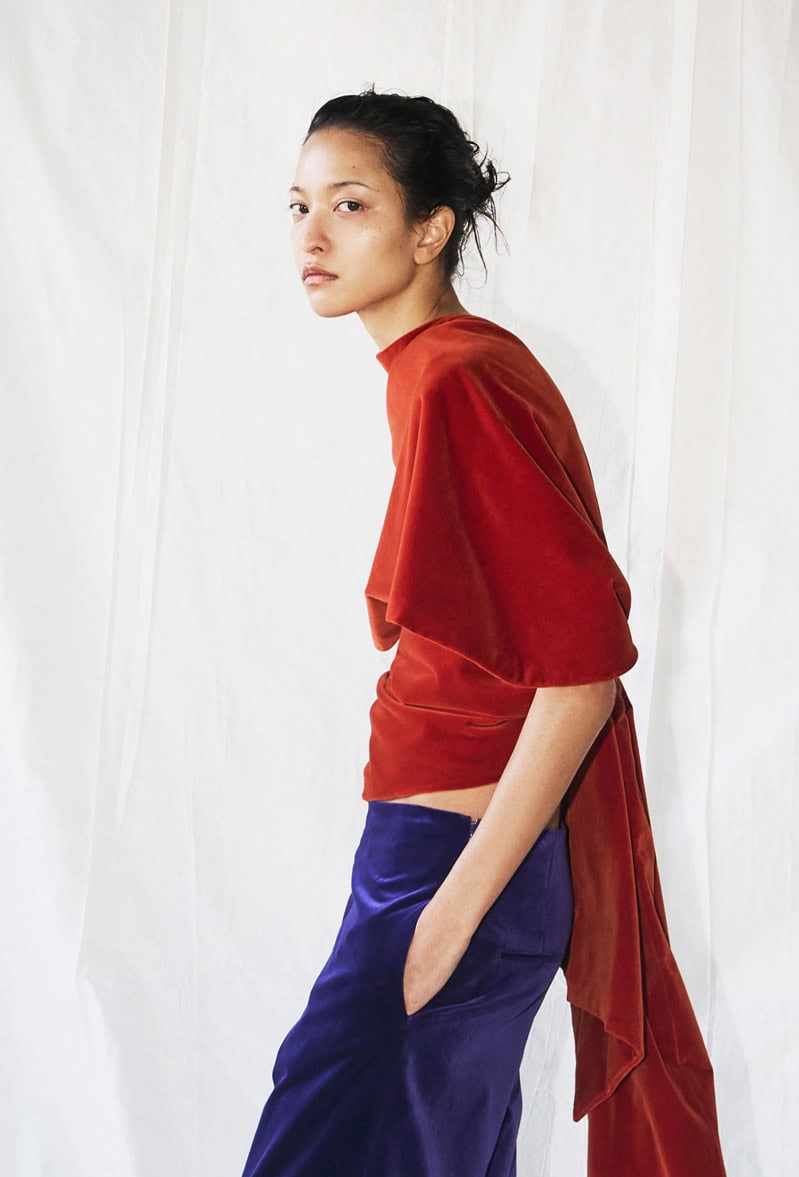
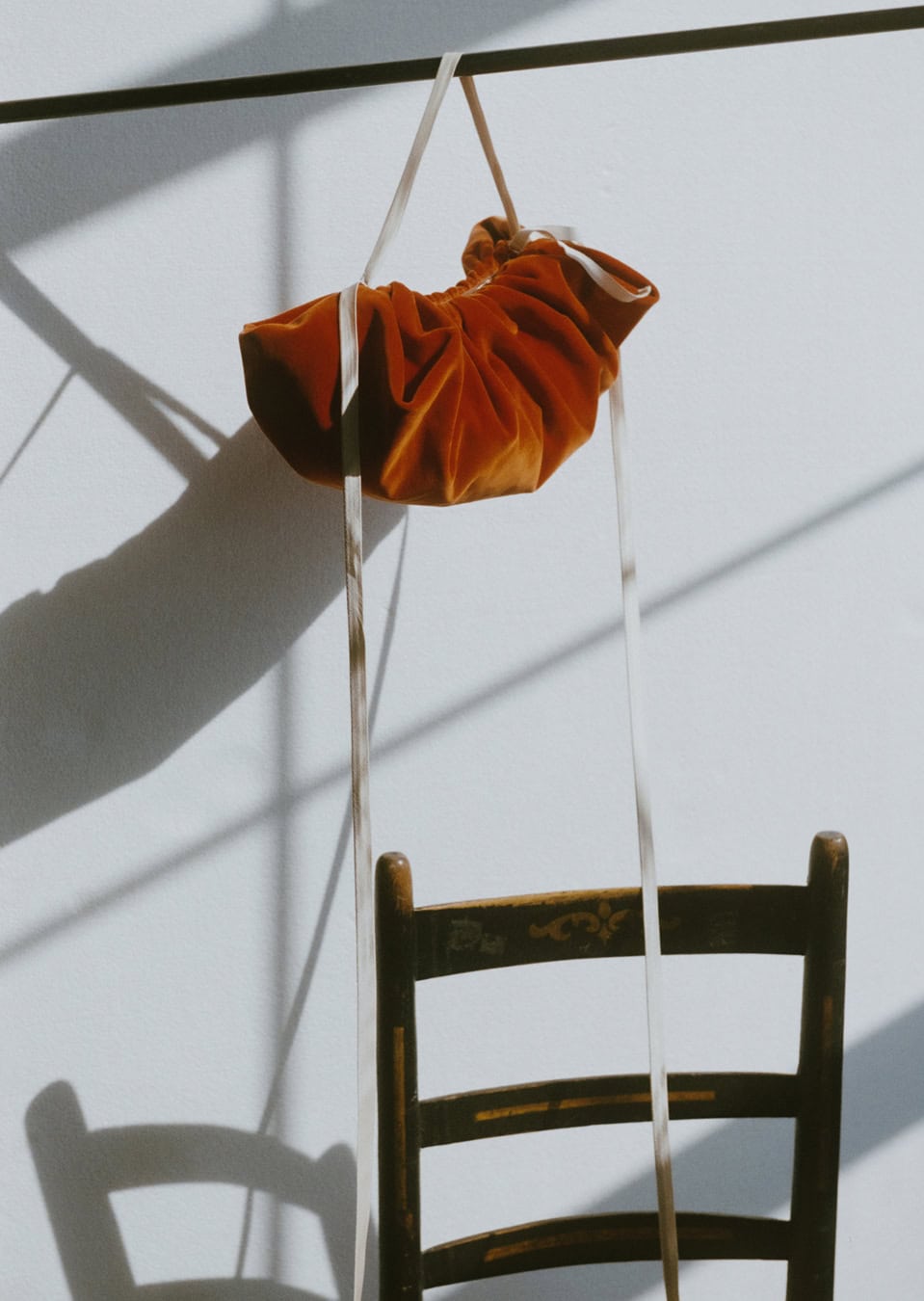
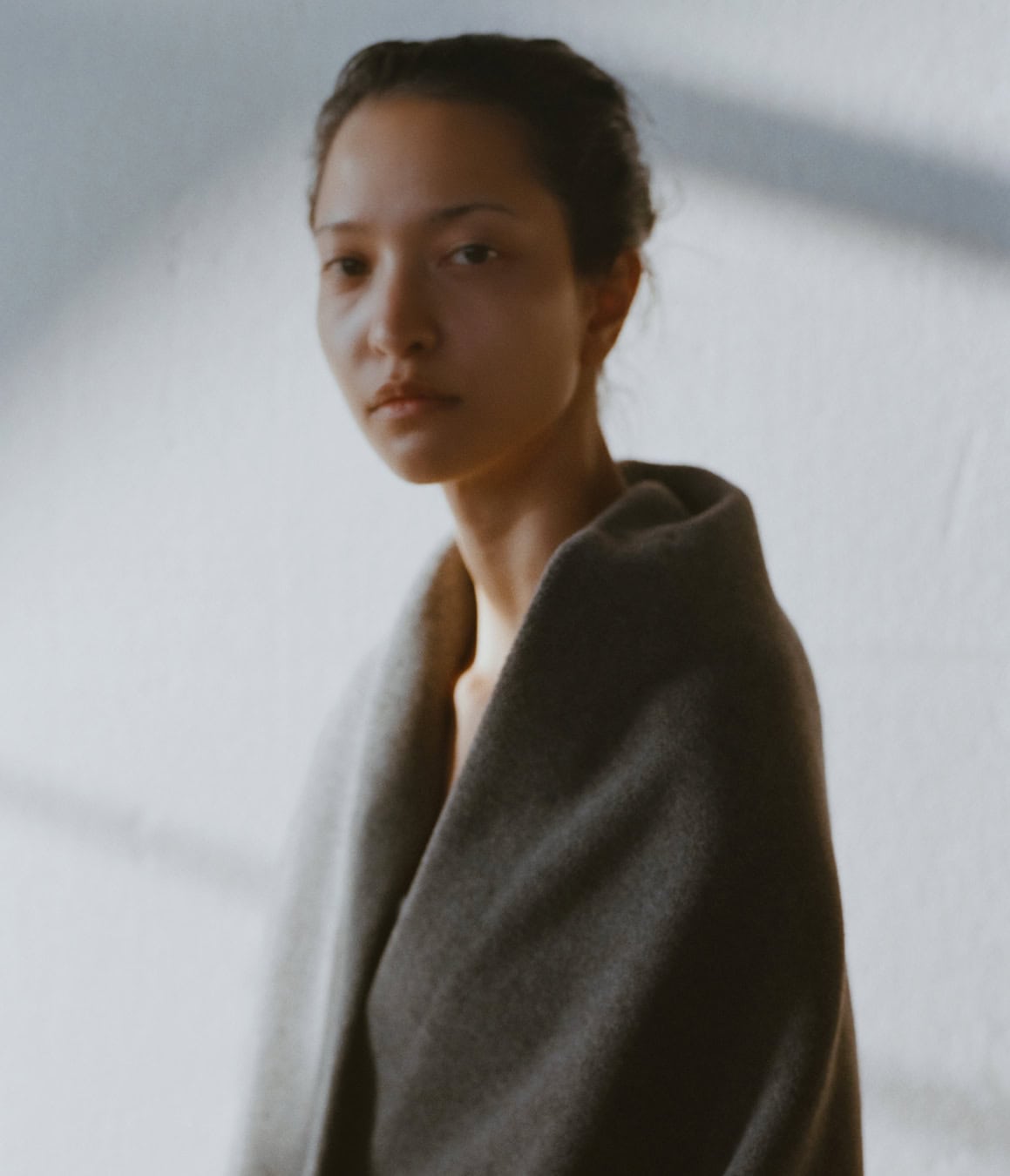
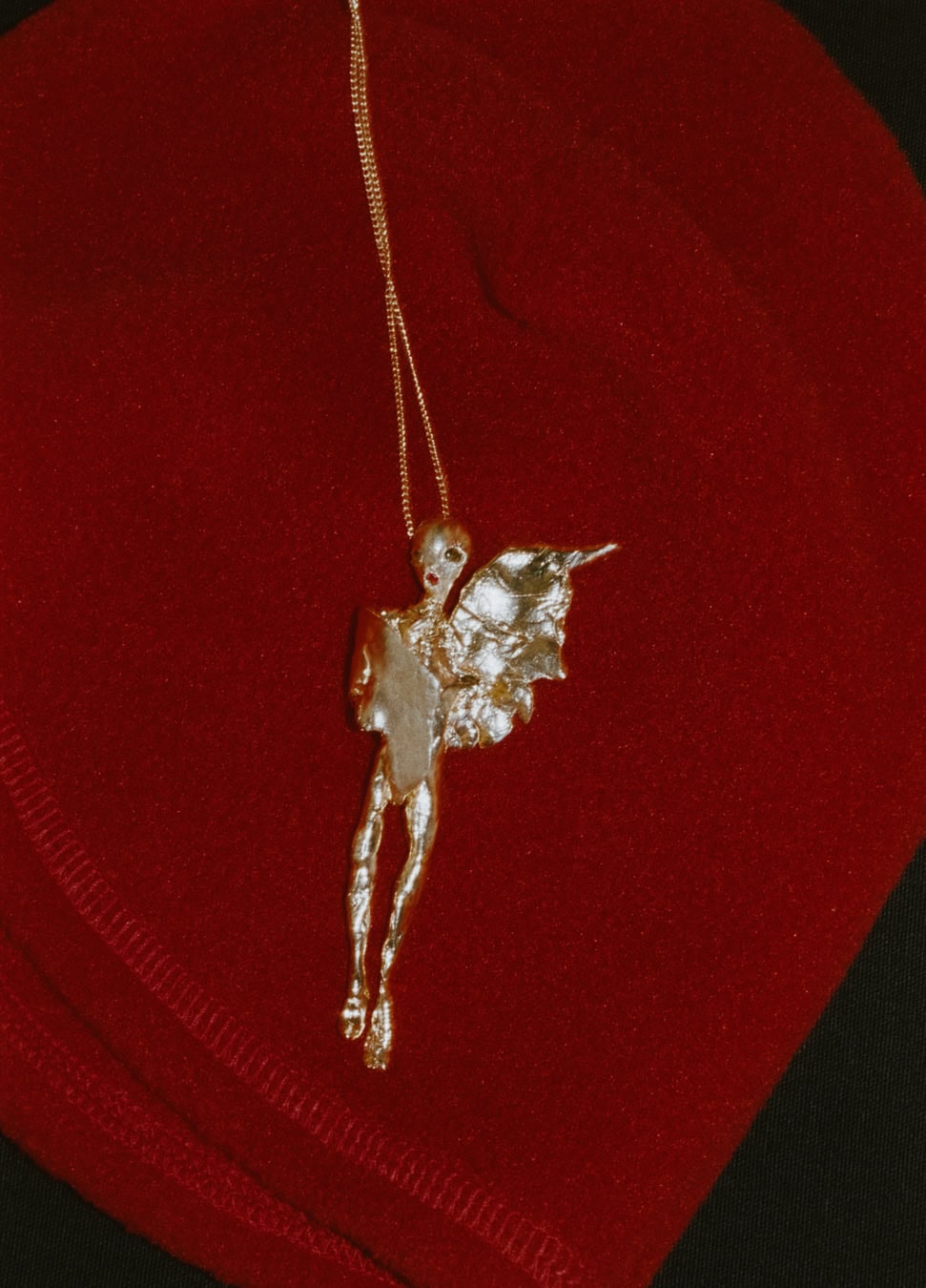
PHOTOGRAPHY COURTESY OF DAN MCMAHON AND DREW JARRETT
Allen’s clothes are wonderfully contradictory. They are both modern and old-fashioned; conservative and, at times, daringly provocative; elegant yet fussy and impractical. They speak to a nuanced understanding of femininity and also possess an uncomplicated perspective. This is how Allen sees the world, how she feels women can dress. Allen is of a generation that was educated online, where references and inspirations can be cross- pollinated with ease. Where gender is uncomplicated, but sex is. Her dresses have bustles, corseted ribbing, and long, floor-grazing hemlines. But they also have moments of startling sensuality – lace trim that cheekily reveals a woman’s nipples on a long slip dress, cutouts that barely conceal a derriere. And yet, nothing is costume. At her most recent fashion presentation, held in a Mercer Street loft (where Allen was quietly taking the fashion critic Vanessa Friedman around), I was struck by a silhouette that reminded me of a riding jacket, with metal hook-and-eye closures running down the front, but made entirely out of fleece.
It was impractical, technical, old-world, and modern all at once. Allen grew up in Hinsdale, Illinois, a suburb of Chicago, and learned to sew thanks to her grandmother, a quilter. She liked to modify the clothes she bought at the mall or received as hand-me-downs, finding ways to make them her own or make them “feel cool,” as she put it. She worshipped designers like Alexander McQueen; by the time she was a teenager, she knew she wanted to be a fashion designer. She was a prolific magazine reader and subscribed to Women’s Wear Daily and Dazed & Confused (now just Dazed). At the same time, she was online, reading what fashion bloggers such as Tavi Gevinson, Susie Bubble, and others had to say. They made fashion accessible. “That was an amazing time to start getting interested in fashion because it was like the world was opening up.
You were seeing what people were wearing to shows and had this literacy of what different designers were doing and what collections look like,” she recalls. At the same time, she was honing her craft. While in high school, she took classes at The Art Institute of Chicago, where she learned illustration and clothing construction (one of her teachers was Shane Gabier of Creatures of the Wind). Parsons was even more of a technical education. During her junior year, she studied abroad at Central Saint Martins in North London. She instantly fell in love with the studio-based pedagogy and camaraderie. “The second that I got there, I was like, I don’t want to leave,” she says. “I made very good friends there.” She believes both schools helped her get to where she is today.
While still at Central Saint Martins, she worked at Calvin Klein under Raf Simons during her placement year and was later hired by The Row, where she designed menswear for three years. It was there, she says, that something clicked within her and she began to look more to womenswear as the ultimate place for her creative ambitions. Both jobs were formative. “At The Row, I learned true appreciation for the utmost quality of material and construction of a garment,” she says. “From Raf, I learned how to dive into intensive research to build worlds within each collection.”
Today, the label is very much a one-woman show. Allen’s team is largely comprised of patternmakers, merchandisers, and others working on a contract basis, but much of the big picture work falls solely on her shoulders. Her design style is more free-form. “Rather than sitting down and sketching and trying to imagine what the thing is going to be, my process is more about collecting different bits and pulling them all together,” she says. “With sourcing materials, for example, I like to do it freely without necessarily thinking about what I’m trying to accomplish in the final garment. I like to consider physical touch, color, texture, and just let it be an intuitive gathering of things that feel attractive.”
As the brand grows, Allen will have to learn how to grow with the company. But for now, this independence is also very much part of her label’s appeal. Ultimately, she doesn’t want the early success go to her head. “I try not to think too much about it,” she says. She wants to keep pushing herself creatively – no matter the response from the outside world. “I just hope every season I’m getting better and doing new and more interesting things,” says Allen. “And I hope that will be enough for the people who are around it.” We’re sure it will.
Taken from 10 Magazine USA Issue 7 – HERITAGE, LEGACY, FUTURE – out September 18! Order your copy here.
Photographer JENNIFER LIVINGSTON
Text THESSALY LA FORCE
Instagram: @colleenallen
colleenallen.com