8 October 2025 |
“Isaac Mizrahi is a fashion designer.” So opens the 1995 fashion documentary Unzipped, a seminal film in its genre that chronicles the fabulously chaotic production of Mizrahi’s fall/ winter 1994 collection and New York Fashion Week show. As it turns out, that description may have been a bit reductive.
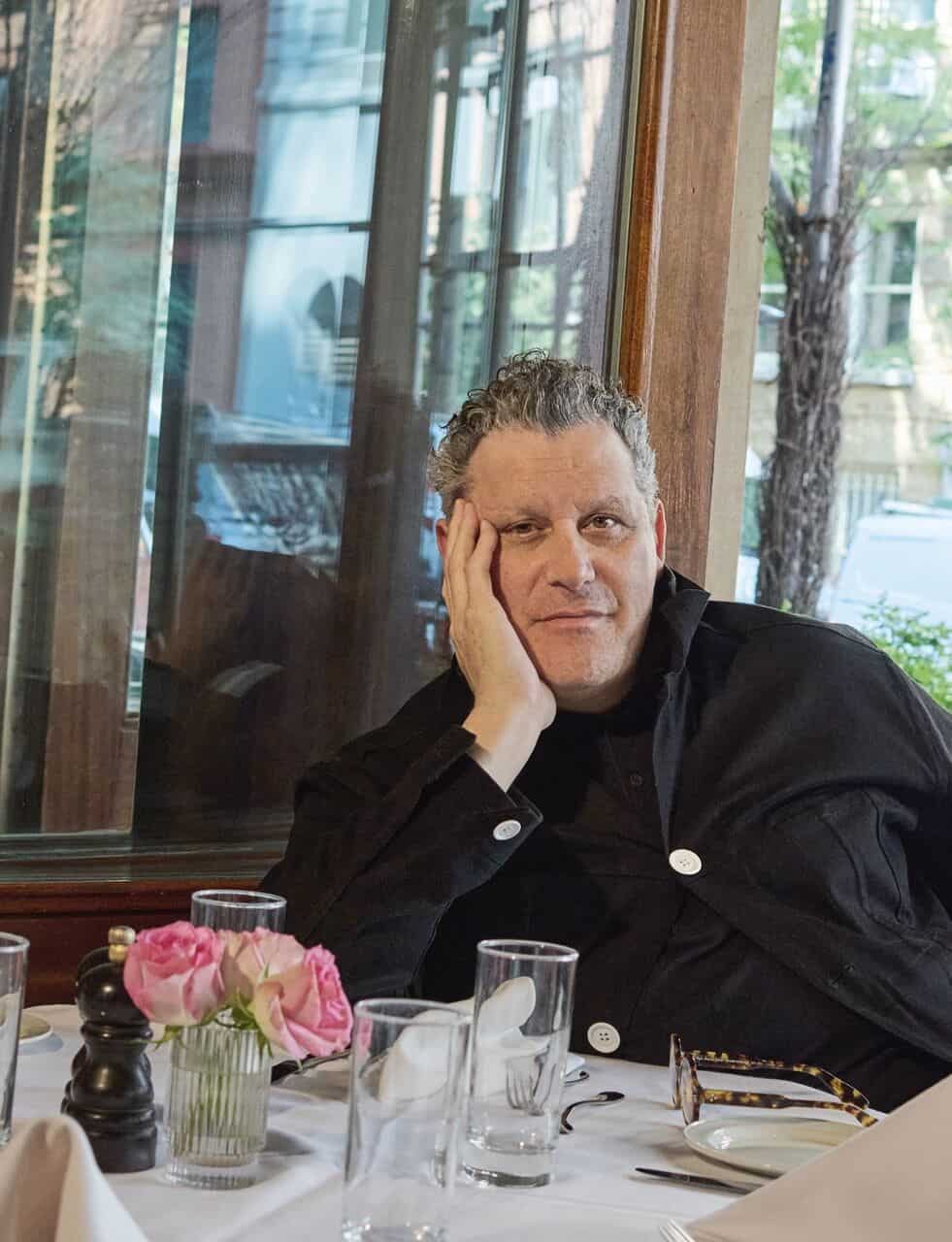
Photographer Greg Kessler
Today, 30 years after the documentary’s debut, you won’t find Mizrahi taking a bow with Naomi Campbell and Christy Turlington at the end of a catwalk— he shuttered his high-fashion brand in 1998 due to unstable sales. Rather, you can catch him singing and spieling with his brassy six-piece jazz band on stage at venues such as uptown Manhattan’s tony Café Carlyle, where he’ll celebrate the 10th anniversary of his annual performance residency next February. His shows combine Broadway ballads, dishy cultural commentary, and bouts of self-deprecating comedy. This summer, he debuted a new set at 54 Below, a cabaret in the basement of New York’s Studio 54 club, where he’s been performing since 2022. And next year he’s taking his show on the road for a multi-city tour.
Mizrahi says his audiences comprise both longtime fans who have followed him since his early fashion career and Gen Zers who are discovering him for the first time. His performances have generally received rave reviews but he concedes that “everyone can’t love you.” His most recent brush with haters came at a San Diego show where a couple were less than amused by his Donald Trump jokes. “Four years ago I would have taken a Xanax and called my shrink,” Mizrahi says with a laugh. “But this felt kind of like a victory, like an evolution as a performer. It’s like the opposite of stage fright, when someone says they don’t love you and you can go, ‘All right, well, it can’t be for everyone.’”


Isaac Mizrahi performing at Café Carlyle. Photo Courtesy of Isaac Mizrahi.
Offstage, Mizrahi is storming screens both big and small. His roster of work includes a producer role on the Hulu comedy Mid-Century Modern and a guest spot on the Amazon series Etoile. He also just wrapped Marty Supreme, the hotly anticipated Josh Safdie film about a table tennis prodigy that stars Timothée Chalamet and Gwyneth Paltrow, as well as Mizrahi’s longtime friend Sandra Bernhard. “It’s one little scene— I swear to God, it might get cut,” says Mizrahi, who plays the manager of Paltrow’s character. “I mean, there are other scenes where I appear, but I don’t have lines.”
Some might call Mizrahi’s new life in the spotlight a fresh start. But he sees it as a continuation of who he always was. “I was a performer before I was a designer,” he says. “I started doing female impersonations when I was eight years old. It’s funny, I was never into drag, but I of course did [Barbra] Streisand, Liza [Minnelli]… Dionne Warwick was one of my specialties.” Politely declining a request to recreate his impressions for our interview— “If you had told me in advance, maybe… ” he teases— Mizrahi doesn’t discount their impact on his creative trajectory. “I loved it. But it was forbidden. It was a different time and it just wasn’t what my parents wanted me to do in public.” And while his parents ultimately supported his embrace of the arts, their disapproval of his early burlesques still lingers. “To this day, I think it’s part of why I have such terrible stage fright. I knew they didn’t like me doing it and I did it anyway.”
Born in 1961, Mizrahi was raised in a religious Brooklyn Jewish community. He never quite fit in. “I was very different. I was on the outside. There was an enormous amount of bullying and judgment,” he recalls. Understandably, after eighth grade, the prospect of spending another four formative years with his tormentors seemed unbearable. So when an alternative presented itself, he grabbed it. “There was this teacher who said, ‘Oh, maybe you shouldn’t go to yeshiva. Maybe you should apply to the High School of Performing Arts.’” His entrance audition was a success. And the school—a New York institution that counts Minnelli, Al Pacino, and more recently, Nicki Minaj among its alumni—was a portal to another realm, one where Mizrahi could flourish. “I never looked back,” he says. “I just started on this whole other life. It was fantastic.”
Mizrahi studied acting and even appeared in the cult 1980 musical Fame, a film directed by Alan Parker that followed a fictional group of students through their careers at the school. “I don’t want to say I was the star of my class, but I held my own,” says Mizrahi, whose “main character energy,” as the kids call it, radiates through his every word, even when chatting on the phone. Why, then, did he choose to toil away in a SoHo design studio instead of hamming it up on Broadway?
“The teachers were incredible, but every day they would tell us, ‘The odds of you making it in showbusiness are zero,’” he recalls. “And I was smart. I had eyes. I could see the beautiful people in my class. They were gorgeous and thin and tall and blond. And I was this little fat thing. Actors call their body and voice their instrument. My instrument didn’t really match. I always felt fat. So I didn’t think there was a place for fat people.”

Photographer Greg Kessler
The theatrical arts weren’t Mizrahi’s only teenage pursuit. “I was also really good at sewing. I made puppets. I made clothes. I loved fashion and magazines and all that.” His father, a clothing manufacturer, introduced him to Ellie Fishman, a renowned childrenswear designer. She was impressed by Mizrahi’s design chops. “She looked at my sketches and gave me advice, and she encouraged me to go to Parsons School of Design.” At age 14, the burgeoning designer spent his days at school on stage and his nights taking adult education fashion classes downtown at Parsons, which helped lay the foundation for his first professional act. “I thought since I’m good at this other thing and I’m taking these night classes, it’s going to be easier to get a job as an assistant to a fashion designer than as an actor.” He wasn’t wrong, per se. Mizrahi worked under the likes of Perry Ellis and Calvin Klein before launching his own collection in 1987. The brand, known for its irreverent pop- culture references, bombastic use of color, and experimental construction, was a creative pillar of the New York fashion scene until its main backer, Chanel, pulled funding in 1998.
Anyone who watched Unzip- ped at the time, of which Mizrahi is the star and co-creator, could have guessed that his next move would involve the stage— even if they weren’t privy to his performative past. When sharing the screen with famous friends including Bernhard, Cindy Crawford, and Eartha Kitt (another High School of Performing Arts alum), he commands your full attention with outsize gestures, effortlessly comedic interjections, and witty quips—much like the ones peppered throughout his current cabaret shows.
But Mizrahi hasn’t abandoned fashion—he designs a line for QVC, was a judge on Project Runway All Stars, and assembles his cabaret costumes, which comprise “the most glamorous, easiest things to pack.” His high- fashion days have helped in that regard. “One thing I learned as a designer is that bugle beads do not wrinkle. You could literally wad up a bugle-beaded jacket in a ball and it’ll be fine. It’s so heavy.”
Would he ever return to the high-fashion realm? “I mean, of course. If the right opportunity arose. Absolutely.” However, he feels fashion has, as he puts it, lost its thread. “The narrative about clothes is just gone,” he says. “And there are no clothes that can fit me.”
Mizrahi is open about his lifelong struggle with his weight, even giving his 2017 Café Carlyle run the title Does This Song Make Me Look Fat?.
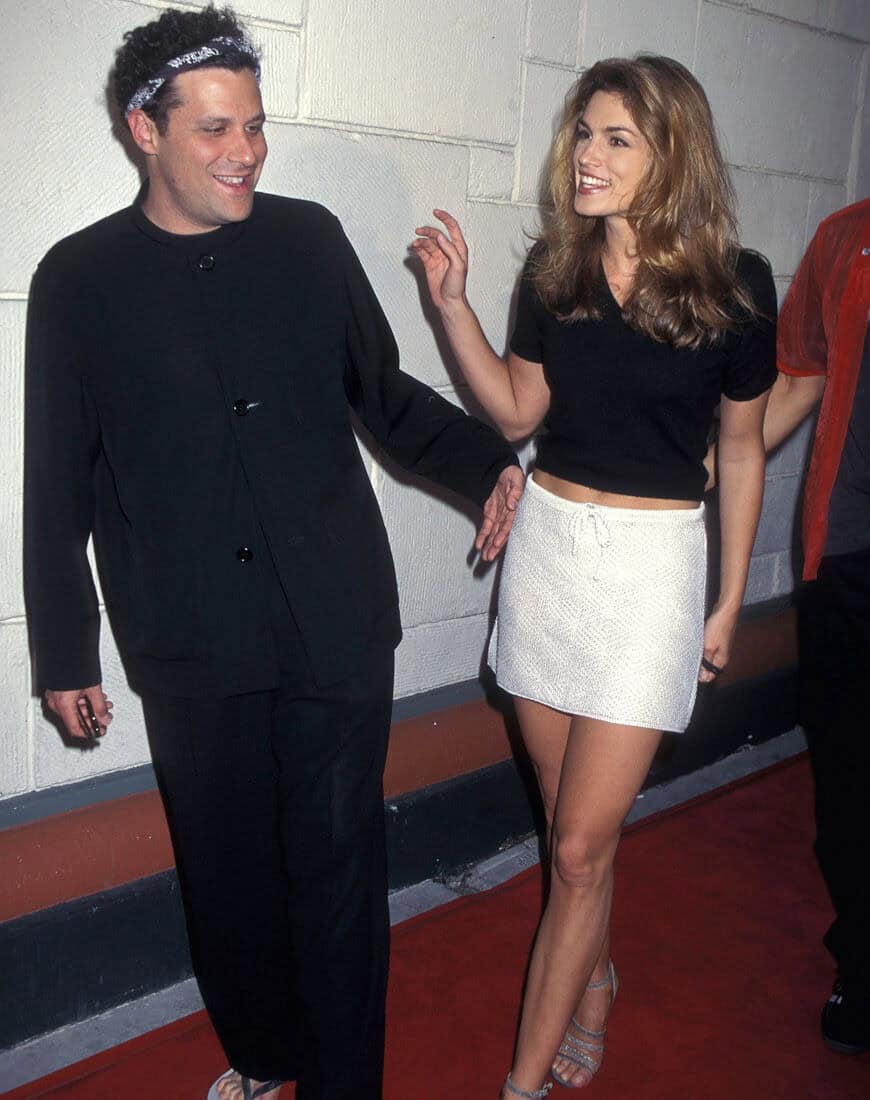
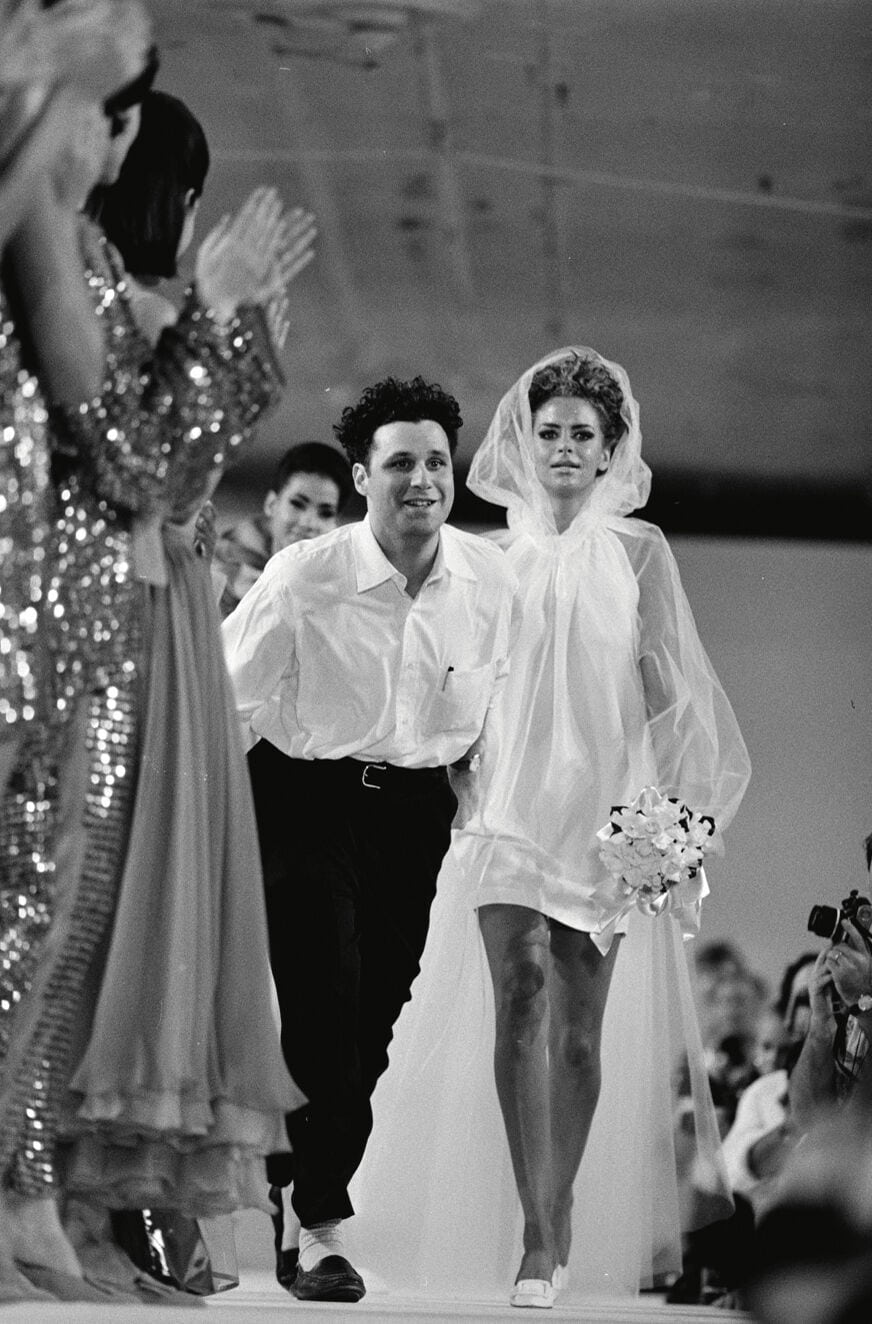
From left: on the runway at the Isaac Mizrahi SS91 show; with Cindy Crawford at the Unzipped premiere in LA, July 1995. Photo Courtesy of Getty Images.
He describes his current physique as “not my fighting weight,” but he’s still slimmer than the average American man. “You walk into a store and everything is such a construction. The only place to wear these things would be on a red carpet or something,” he continues. “And then it’s a billion dollars and it doesn’t fit anybody. And so I just wonder, what the hell is going on? I mean, where can I buy clothes?” The answer: he has pants, polo shirts, and the like custom-made by his longtime collaborator Marla Wonboy. “She enables me,” he says, adding that designing the garments is a team effort.
However, he’s not entirely pessimistic when it comes to today’s fashion-scape. “There are a few things I’m excited about—one of them is Jonathan Anderson at Dior. I think he’s a genius. He is able to balance modern life with this over-the- top fashion thing. If I were a woman, I would buy his clothes.” He is also delighted by Pierpaolo Piccioli’s appointment as creative director at Balenciaga. “It’s so good. He really feels like the right person for that brand. Because it was not good. It was weirdly political. I thought it was offensive. It was so two- dimensional and wrong. I don’t know who the hell was doing it, but it never struck a chord with me.”
Mizrahi’s performance work is, however, striking a chord with audience members. Recently, a woman approached him when he was out having dinner. “She know I saw your show at the “Sometimes, when you come off a good show and you’re just floating, there is nothing like that feeling. And I never felt that in fashion” said, ‘I want you to Carlyle. It was the greatest thing I ever saw.’ And I was like, ‘Thank you!’ It was like, oh my God, have a seat. This is particularly rewarding because it’s this transition I’m trying to make. And I think I’m going to make it, by hook or by crook.”
There is a scene in Unzipped during which an exasperated Mizrahi declares, “Everything’s frustrating. Every single thing is frustrating—except designing clothes. That’s really liberating and beautiful.” Today, it’s being on stage that he finds liberating and beautiful. “It’s just the greatest pleasure,” he says. “Sometimes, when you come off a good show and you’re just floating, there is nothing like that feeling. And I never felt that in fashion. This is much more personal.”
Taken from 10 Magazine USA Issue 05 – TRANSFORMATION, BIRTHDAY, EVOLVE – on newsstands September 18. Order your copy here.
Instagram: @imisaacmizrahi
Text KATHARINE K. ZARRELLA