15 October 2025 |
Editors and creators talk us through 25 years of online fashion media.
Open up your phone and fashion content is at your fingertips. Want to see Jonathan Anderson’s Dior debut in real time? Stream it on Instagram. Feel like diving through the Chanel archives? A talking head on TikTok will happily guide you through niche Karl Lagerfeld moments. Twenty-five years ago, it was hard to imagine a world in which a person sitting behind a screen had a better view of show looks than an invited guest.
“Before Style.com there was literally no way of knowing what went down the runway unless you were there in person, or you waited for one of the magazine supplements to come out,” says Jamie Pallot, who served as the site’s editor-in-chief from 2001 to 2006. In the following years, influencers became so prominent that the word was added to the dictionary, free designer bags and thinly veiled advertisements flooded Instagram, prompting the Federal Trade Commission to step in and mandate #ad disclosures, and a new economy emerged as marketing dollars pivoted from glossies to digital sites to social media, changing the landscape forever. How did we get here? Read on to retrace our steps.
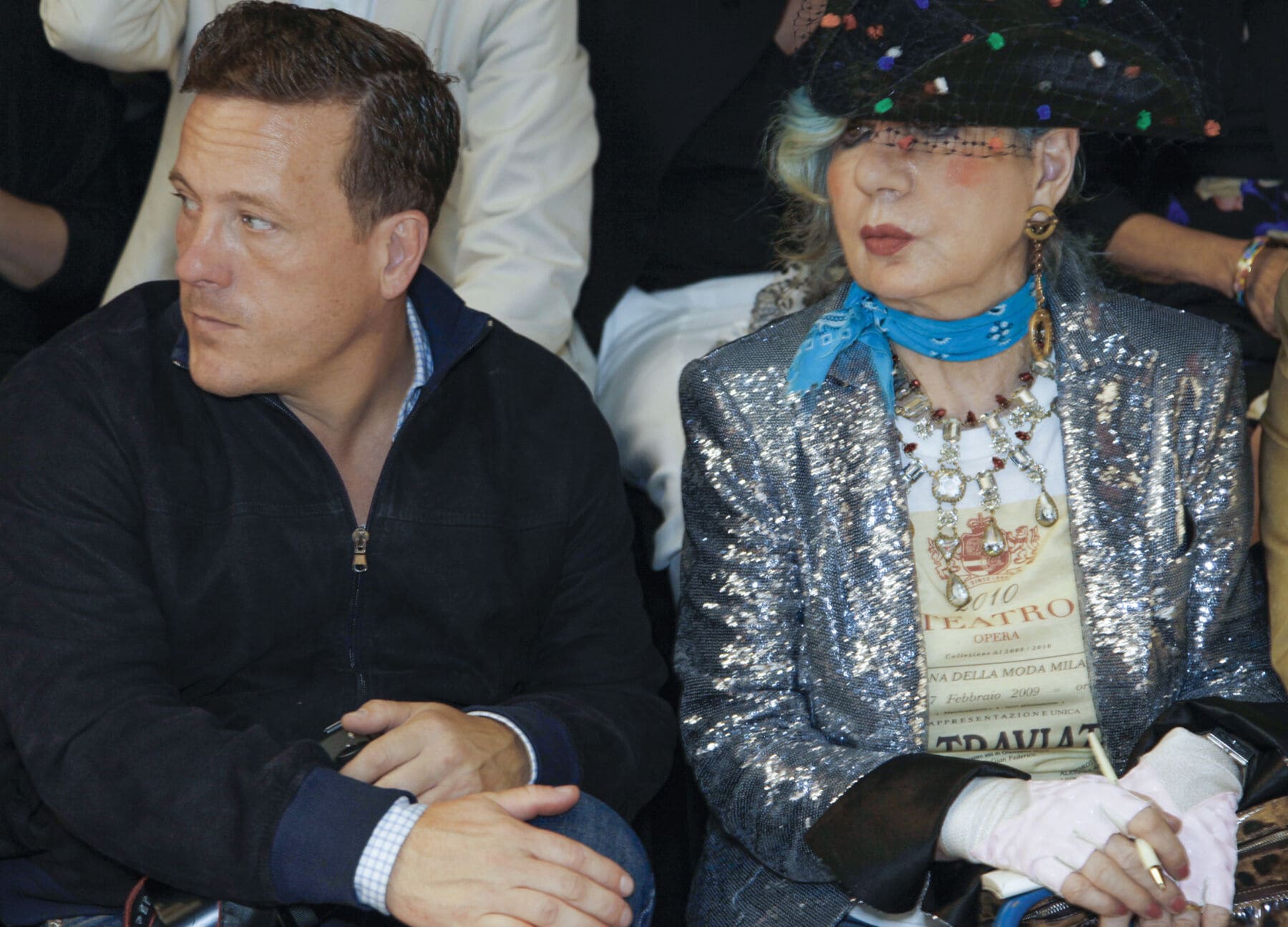
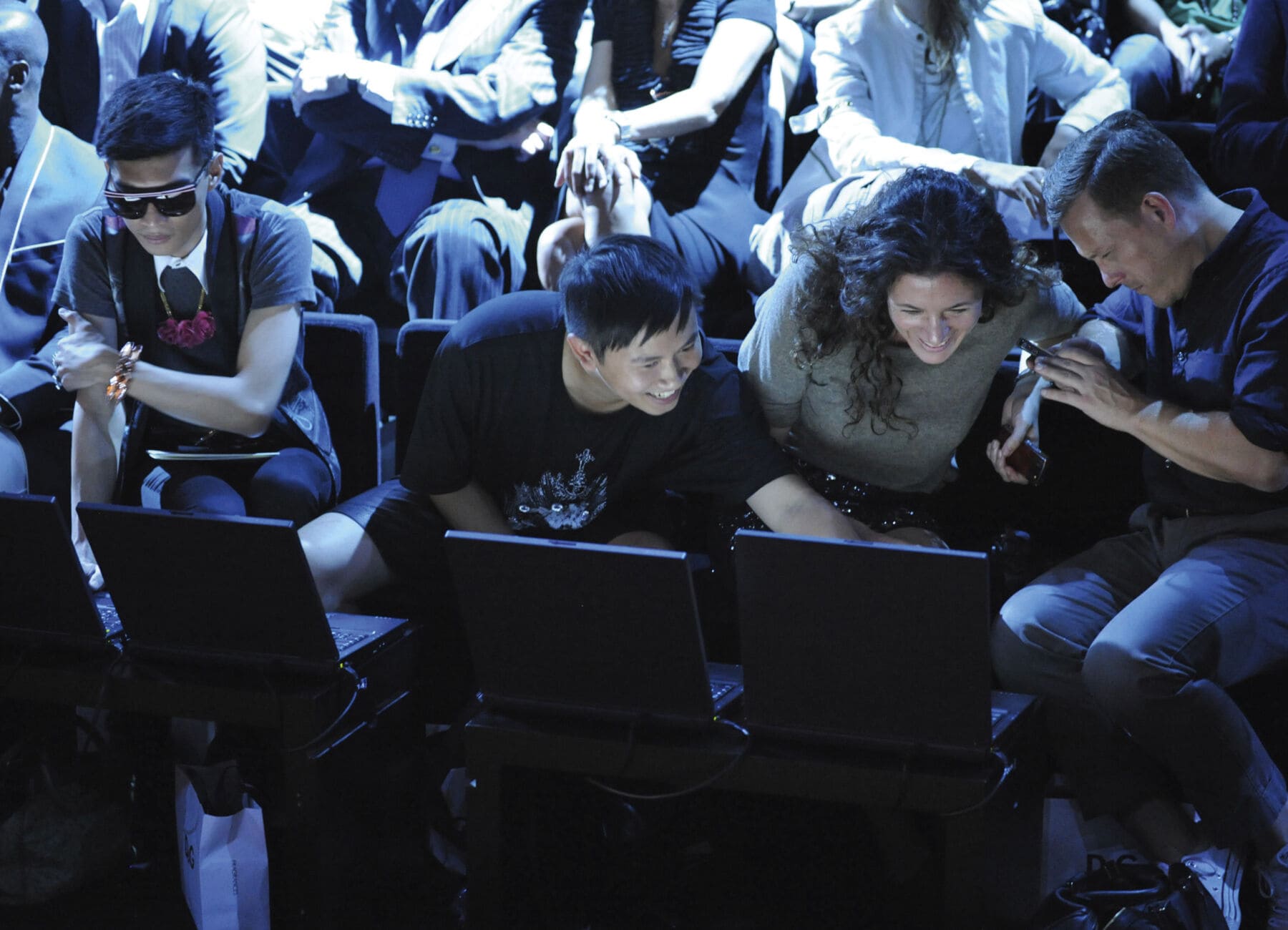
from left: Schuman and the writer Anna Piaggi at the show; the bloggers Bryan Yambao, Tommy Ton, Garance Doré, and Scott Schuman, primed to post at Dolce & Gabbana SS10
1998: FASHION WIRE DAILY IS CREATED
Impact: Created by Brandusa Niro, it disseminated fash- ion news via subscriptions and syndication. In 2002 Niro would go on to found The Daily Front Row, a gossipy industry-insider magazine handed out in front of runway shows along with accompanying online content. Status: The Daily Front Row is still in business and chronicling the ins and outs of the industry. When reached for comment on the early days, Niro had this to say: “I have absolutely no interest in talking about that old dead business when I have been running and own- ing a thriving media company for the past 24 years!” Not many can make that claim these days—cheers!
2000: STYLE.COM BEGINS PUBLISHING
Impact: As the first to publish images and reviews of runway shows, Style.com was the gold standard for fashion enthusiasts and industry insiders alike, even if there was some skepticism. “In the beginning, there was a staggering level of condescension toward us from the print side at Condé Nast. Then there was a turning point. I remember being introduced to a Vogue assistant editor—she literally recoiled and blurted, ‘You stole our traffic!’” Jamie Pallot recalls.
Status: The site splintered in 2017, with the domain sold to Farfetch and becoming an e-commerce retailer. Vogue took over fashion-show content and made it its own, renaming it Vogue Runway. It is edited by former Style.com alum Nicole Phelps.
2000: SHOWSTUDIO MERGES FASHION AND VIDEO
Impact: Envisioned by the esteemed British photo- grapher (and CBE) Nick Knight, the platform brought video to the forefront at a time when short fashion films were rare. “I saw all the exciting possibilities the internet would bring, from live broadcasting to being able to show the process of [the fashion industry]. The only challenge was waiting for broadband to be invented!” Knight says. In 2009 the site was the first to livestream a runway show, Alexander McQueen’s famous Plato’s Atlantis collection, paving the way for other media entities to follow.
Status: “When we started, it was for inventing fashion films and now I’m able to work with artificial intelligence, augmented reality, and many other new technologies,” Knight says. As such, the site continues to produce beautifully in-depth video content, including panel discussions, podcasts, a live feed of the office, Knight’s photography inspirations, and more.
2000: DAILY CANDY COMES TO INBOXES
Impact: The scrappy newsletter founded by Dany Levy covered local happenings across major U.S. cities like New York, Los Angeles, Chicago, and Boston. It read like your best friend who was in the know, tipping off young women to trendy boutiques at the time, like NYC’s Bird and Steven Alan. Levy told Inc. that she had dreams of selling the publication to LVMH for $1 million. Instead, in 2008, DailyCandy had 2.5 million subscrib- ers and Comcast acquired it for a reported $120 million. Status: Following Comcast’s merger with NBCUniver- sal in 2009, Levy became a figurehead. In her absence the site tried launching money-making concepts like Swirl (online sample sales in the vein of Gilt Groupe) and DailyCandy Deals (like Groupon). It failed, and even- tually DailyCandy was shuttered in 2014. Levy is still active on Instagram, posting black and white fashion- inspiration images.
2001: AT THEFASHIONSPOT, STYLE LOVERS CONVENE
Impact: Besides Style.com, the forums were the go-to destination to deep dive into threads devoted to run- way shows and industry figures. Influencers like Bry- an Yambao, aka Bryanboy, and Susanna Lau, aka Susie Bubble, were among the early fans, posting everything from thoughts on collections to their daily outfits, set- ting the stage for their subsequent careers in the industry. Status: The forums are still around, should you want to read people’s opinions on the impending debut of Sim- one Bellotti at Jil Sander, dissect the latest Vogue Adria cover, or show off a well-styled look. But given that you can also do this on Instagram, TikTok, or YouTube, theFashionSpot forums lack the same addictive quality they once wielded.
2005: THE SARTORIALIST RISES
Impact: What began as a side project documenting real style on the streets of New York City and outside fashion shows turned into a career-defining enterprise for The Sartorialist’s founder, Scott Schuman. “I saw a lot of cool people that nobody knew and wanted to shoot them. I was the first to capture Anna Della Russo and I brought Franca Sozzani to a wider audience. By March 2006, GQ, Vogue, Esquire, everybody was calling,” he says.
Status: Schuman now resides in Milan, where he continues to capture all of the city’s inherently chic inhabitants. He has retained his OG status at the European shows and you can catch his commentary and photos on Substack or Instagram (@thesartorialist), where he has amassed over a million followers. As for street style, it’s exploded in popularity. Brands dress influencers in order to be captured by swarms of photographers loitering outside shows. For those not in the latest runway looks, they’re in their flashiest outfits, hoping that the right photo will transform them into the next big influencer.
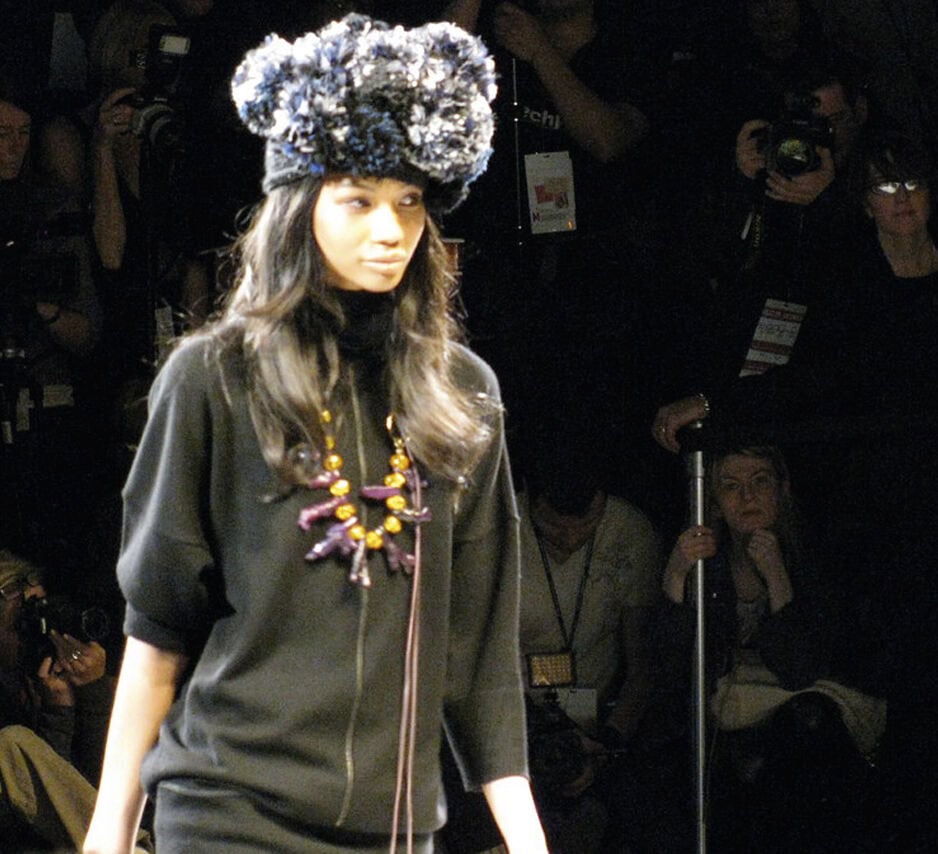
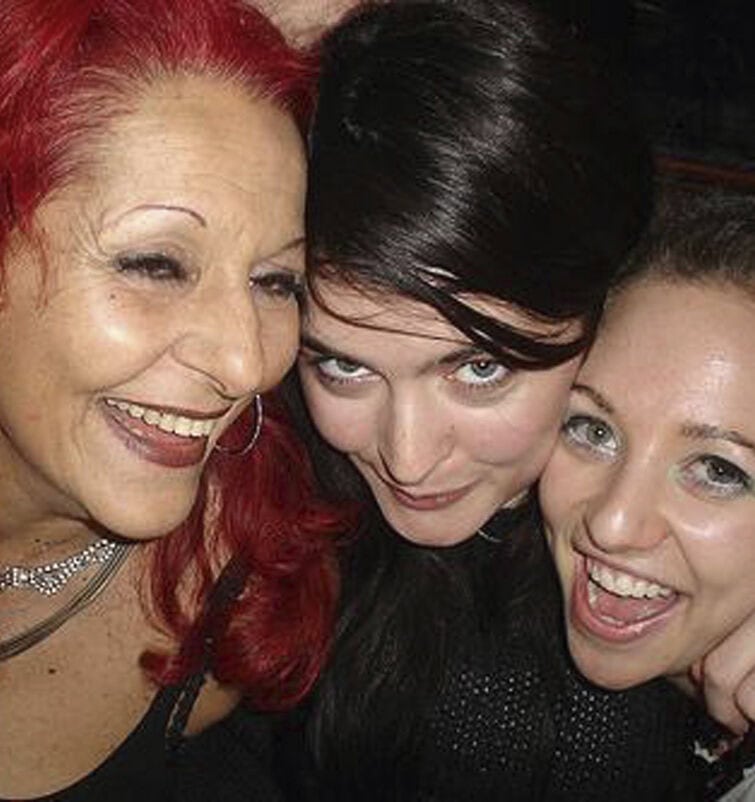
from left: a look from the Diane von Furstenberg FW09 show, captured by Racked’s Leslie Price; Patricia Field. Leigh Lezark, and Fashionista founder Faran Krentcil
2005: REFINERY29 IS FOUNDED
Impact: Founded by Justin Stefano, Philippe von Bor- ries, Piera Gelardi, and Christene Barberich, what began as a city guide turned into a destination for millennial women that hit its peak in the late 2010s. “In the very beginning, there was a lot of resistance and obstinance. I remember introducing us to a group of executives at a big American retail chain and they didn’t think anyone would buy clothes online,” Barberich says.
Status: R29 was sold to Sundial Media Group last year and has a new chief content officer, Brooke DeVard. The original owners are no longer involved.
2006: YOUTUBE IS ACQUIRED BY GOOGLE
Impact: The video-sharing program hit its stride in the late 2000s as fashion fans created long-form content grounded in everyday style. Among the early adopters was the influencer Chriselle Lim. “I started it in college as a creative outlet and film tutorials to help other girls my age. There were little to no opportunities to make money, I simply loved it,” she says. In 2018, the longtime editor and man-about-town Derek C. Blasberg joined to lead fashion partnerships, making it a legitimate player in the industry.
Status: YouTube has 2.5 billion active users across the world, with its fashion content consistently ranking among the most-watched topics and brands pouring in the money to advertise. Vogue has embraced the platform to livestream big events like Vogue World and the Met Gala red carpet with big sponsors like eBay. One of their go-to hosts? Emma Chamberlain, a YouTuber turned fashion industry darling who has 12 million subscribers.
2006: TWITTER LAUNCHES
Impact: By 2007 the microblogging site was the place for off-the-cuff discussions as publications, editors, and real people fanned out over Marc Jacobs collections in real time. In 2019, HF Twitter was coined (HF standing for high fashion), in reference to a vibrant subculture of users like @HFMetGala and @rianphin, who love high fashion and aren’t afraid to get snobby with their perceived expertise. If you didn’t get what the posts were referencing, then this world was not for you. Status: It might be called X, but HF Twitter lives on, perpetually arguing. Recent debates have included: phone bans at runway shows, Martin Margiela nostalgia, and which recession indicators are legitimate.
2007: TUMBLR IS CREATED
Impact: The microblogging site that became known for bringing indie sleaze into the mainstream also spawned a new generation of editors and influencers.
“It was 100 percent my gateway into fashion,” says the TikTok creator Mandy Lee. “I discovered McQueen’s Plato’s Atlantis as it was happening, and Miu Miu spring/summer 2010 was one of the first runway collections that went internet viral at a time when it was impossible to do so.”
Status: Much like skinny jeans worn with Alexander McQueen skull scarves, Tumblr is viewed with a nostalgic lens, but its cool factor is long gone.
2007: FASHIONISTA LOGS ON
Impact: With a devoted young female audience, the site had a scrappy start as its founder, Faran Krentcil, wanted a place for young women to nerd out on fashion. “My friends were models and assistants at magazines and brands. They heard everything, which meant I heard everything. And so would Fashionista readers. I went from making the blog in my bedroom to Karl Lagerfeld pinching my cheek once and telling me I looked like a wind-up doll,” she says.
Status: Currently helmed by Dhani Mau, Fashionista continues to be a resource for fashion news. And Krentcil is still on the beat, covering fashion and beauty across a wide spectrum of publications, including this one! (Turn to p. 206 for her latest.)
2007: RACKED IS ON THE SCENE
Impact: Known for live-blogging the lines gathered for sample sales and designer-collaboration drops, Racked’s founder, Leslie Price, took a creative approach to getting access to runway shows. “PR people weren’t interested in me, so I snuck in at Bryant Park. I’d dress up and look incredibly busy. Eventually a connection got me into Ralph Lauren and I was in the back row, taking bad pic- tures on my flip phone in order to be the first to post it.” Status: Racked was acquired by Vox Media in 2013 and folded in 2018. Price went on to be a co-founder of Glo- ria, a newsletter for older millennial and Gen X women.
2007: LOOKBOOK.NU AGGREGATES OUTFITS
Impact: Before Instagram was even a thought, Yuri Lee, Andy Chen, and Jason Su created Lookbook.nu as a place to post outfits. Good ones earned hype and kar- ma from users, a feedback loop that would ensure that subsequent photos would gain more visibility on the site. Status: In 2013 Lee and Chen attempted to launch a scripted video program, Lookbook: The Series, which was described as House of Cards for the fashion- blogging world. Brands such as Dr. Martens and Victo- ria’s Secret Pink sponsored the series but it never found an audience. As of September 2023 Lookbook.nu was inaccessible and very little can be found about its found- ers’ current exploits.
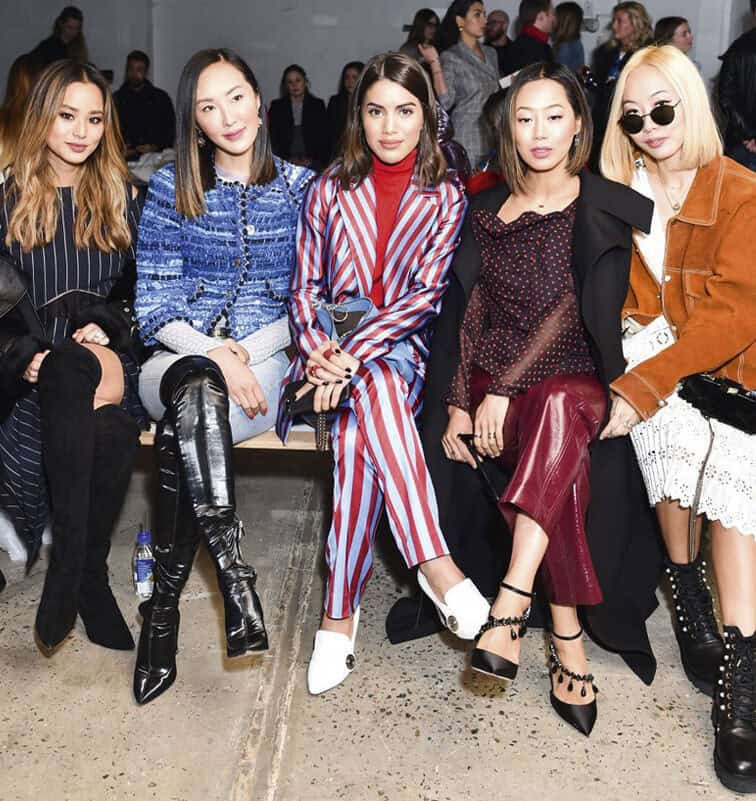
from left: Jamie Chung, Chriselle Lim, Camila Coelho, Aimee Song, and Vanessa Hong at Self-Portrait FW18
2007: THE BUSINESS OF FASHION LAUNCHES
Impact: What began as a blog from Imran Amed’s London apartment covering the business side of the fashion industry has become a sprawling media empire with one million page views a month and three million Instagram followers. Covering everything from C-suite moves to dissecting Burberry’s sales numbers to runway reviews, it’s now a respected outlet for breaking big news. In September 2013 the site started The BoF 500, an annual list of the most impactful people in fashion and considered an industry badge of honor.
Status: With over 100 employees and a reported annual revenue of $51 million dollars, The Business of Fashion has risen to be a power player in the industry, rivaling stalwart Women’s Wear Daily as the daily must-read. Last year’s BoF 500 featured the likes of Phoebe Philo, Kylie Jenner, Greta Lee, and Glenn Martens among the honorees and 2025’s will likely be as star-studded.
2008: ENTER THE CUT
Impact: New York Magazine’s editor-in-chief at the time, Adam Moss envisioned a smart, voice-y women’s- interest blog. “The role seemed like the way writers were breaking out at the time. We got great access but on the downside the day-to-day was grueling. I was at my desk writing 12 to 15 posts a day,” says The Cut’s founding editor Amy Odell. Some of The Cut’s biggest early gets included interviews with Ke$ha, Kanye West, and Karl Lagerfeld.
Status: Under the leadership of current editor-in-chief, Lindsay Peoples, the site has become a go-to resource where millennials can still find Cathy Horyn’s fashion critiques, sex-related confessionals, and first-person essays. There is also a dedicated print issue, as well as in-person events.
2009: DOLCE & GABBANA BRINGS BLOGGERS TO THE FROW
Impact: The SS10 runway show was an industry shake-up, with bloggers like Bryan Boy, Tommy Ton, and Scott Schuman perched front row with laptops. “My stomach sank to the floor and my shoulders were sweating because I could feel the eyes of the editors behind me, questioning why I was there,” Ton recalls. “We were expected to live tweet from our computers and they’d be projected onto the screens above. Hamish Bowles leaned over to glance at my screen and asked for a mini Twitter tutorial.”
Status: The stunt was covered extensively across outlets including The New York Times, WSJ, and more, cluing brands into the reach that influencers wielded. Now it’s the norm to find them sitting front row (laptops not included).
2010: INSTAGRAM JOINS THE APP STORE
Impact: Developed as a way to spontaneously share heavily filtered images, the app evened the playing field for anyone who posted glossy images to garner a follow- ing. In 2015, the former Lucky EIC Eva Chen departed Condé Nast to lead fashion partnerships, forever alter- ing how much a brand was willing to spend on social media marketing.
Status: The platform is considered the gold standard for lucrative brand partnerships, with the countless pretty girls seeking credibility and visibility all hyper- aware of their follower numbers. The more you have, the more you can charge for every post, Reel, or Story… say their agents.
2010: PINTEREST SPRINGS UP
Impact: Gone were the days of cutting and pinning magazine pages to create physical mood boards—here was an app that could easily gather all your visual inspiration in one place. From runway shots to street- style photos to influencer-created content, this was the place to circulate that imagery.
Status: Brands throw some money onto the platform courtesy of shoppable links and affiliate marketing, but it’s not the first platform you would associate with influencers. As a recent Reddit user commented, “Pinterest doesn’t, in my opinion, reflect much of real world trends. Everything is very outdated. Reminds me of Tumblr a lot actually.” Ouch!
2010–2020: THE BLOGGER-TO-MEDIA-EMPIRE PIPELINE
Impact: Peak #Girlboss era. Thanks, in part, to Sophia Amoruso’s Nasty Gal heyday, a fresh crop of influen- tial young talent flooded the media space, utilizing so- cial media to fan the flames of their nascent businesses.
From Tavi Gevinson (Rookie) to Leandra Medine (Man Repeller), these young upstarts went from posting con- tent on their own websites to eventually creating fully fledged media companies complete with staff.
Status: Heavy is the head… A rapidly evolving media landscape and financial difficulties soon proved too great for many of these businesses to continue. Nowa- days, Amoruso is a managing partner at a venture capital firm and Gevinson has pivoted to acting, while Medine has a popular newsletter, The Cereal Aisle.
2014: NET-A-PORTER LAUNCHES PORTER
Impact: The online retail emporium introduces its own online magazine, Porter. With its first cover starring Gisele Bündchen, shot by Inez and Vinoodh and styled by Alex White, it closed the loop between editorial, retail, and consumer engagement.
Status: Porter continues to release celebrity cover stories, featuring the likes of Natalie Portman, Emily Ratajkowski, and Alek Wek—and prompting coveting shoppers to click through with gusto.
2015: REDDIT R/BLOGSNARK IS CREATED
Impact: What began as a subreddit called r/blogsnark to comment on early influencers is now known as r/InfluencerSnark, a place for netizens to dissect every- one from YouTube creators to TikTok darlings. If you’ve ever wondered how a certain someone affords their apartment, don’t worry, this subreddit will have all the answers.
Status: Still the go-to when you feel like being petty, and often referenced in Slate, The New York Times, and New York Magazine when dissecting influencer culture.
2020: TIKTOK GOES MAINSTREAM
Impact: With the Covid-19 pandemic shutting down the world, short-form video became an escape from reality. “Collections were presented digitally, so it was an interesting moment where everyone had the same amount of information, no one was sitting front row or attending press previews,” says Timothy Chernyaev of @relaxitsonlyfashion, who used that opportunity to start his account. “People want to participate in fashion beyond just reading and watching videos. TikTok, more than any other app, shows you what fashion looks like in the real world.”
Status: After briefly going dark in January 2025, due to the China-based app’s perceived security risk, the U.S. government has pushed back the official ban twice. As of this summer, an American version is in the works, as is a sale to non-Chinese investors. Any deal, however, would need approval from the Chinese government, which is also still wrangling with the Trump administration over tariffs.
2022: SUBSTACKERS TAKE ALL
Impact: As traditional media and retailers continue to struggle, editors and buyers have been pivoting to the newsletter platform Substack. “I left my job in 2022 to start an executive styling business and began writing my newsletter at the same time, purely as a personal and creative outlet,” says Becky Malinsky of the extremely popular Substack 5 Things You Should Buy. “The barrier to entry was so low and the format allows people to have connection and trust.”
Status: Top-performing users of the site not only drive hundreds of thousands of dollars in sales for brands, but they’re also being courted with front row seats at fashion shows, lucrative content deals, and creator trips. “There is no denying that the writers on the platform have carved out a distinct place in the fashion landscape,” adds Jalil Johnson, the writer behind Consider Yourself Cultured.
2023: PUCK-ER UP
Impact: In April 2023, the veteran fashion journalist and author Lauren Sherman joined the Jon Kelly- led media start-up Puck, kicking off the Line Sheet newsletter and instantly sending the fashion flock into a tizzy. Unencumbered by the typical fashion strongholds (ahem, advertisers), Sherman led with an opening statement that decreed she planned to report on industry happenings and scoops with an unbiased eye.
Status: The site has ramped up its posting schedule and expanded its coverage to include retail, beauty, and a popular podcast. While Line Sheet has its ardent followers and requisite naysayers, the site continues to be the one that everyone is checking.
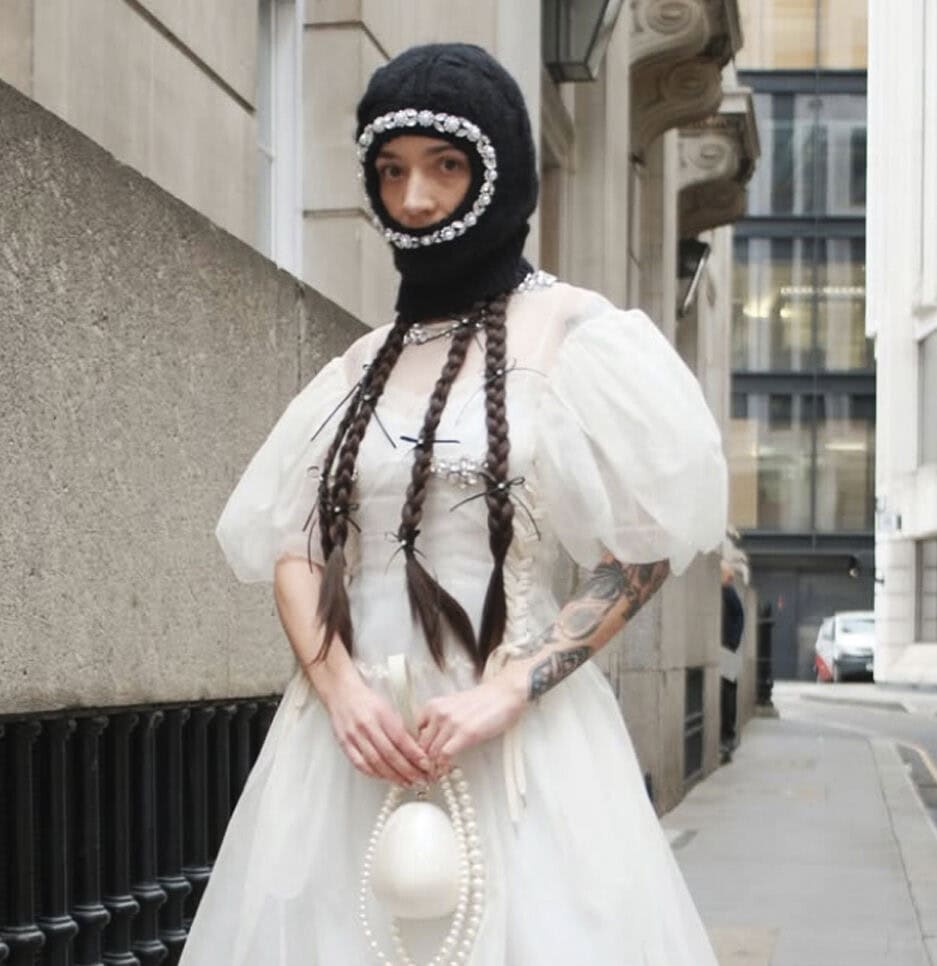
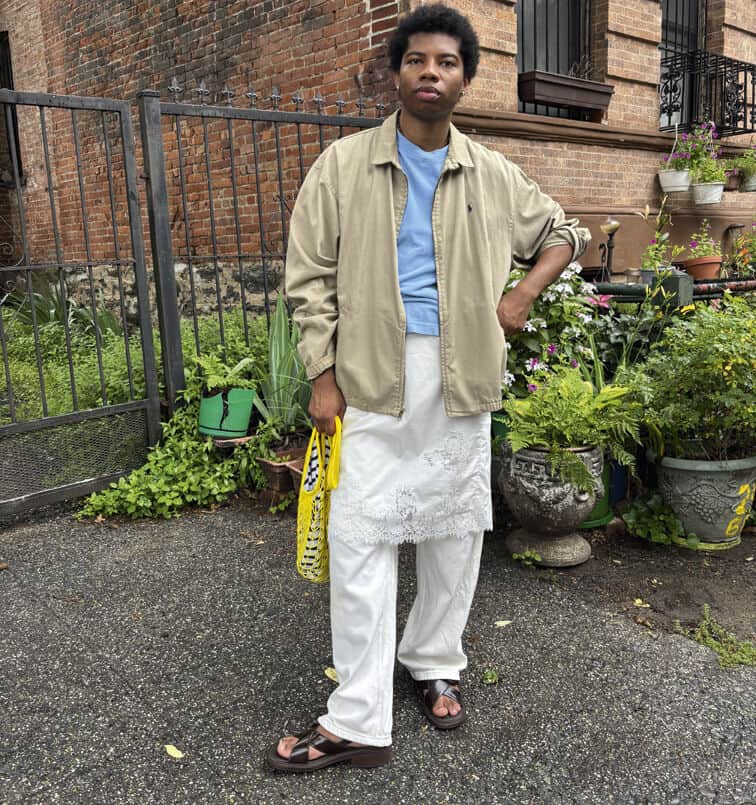
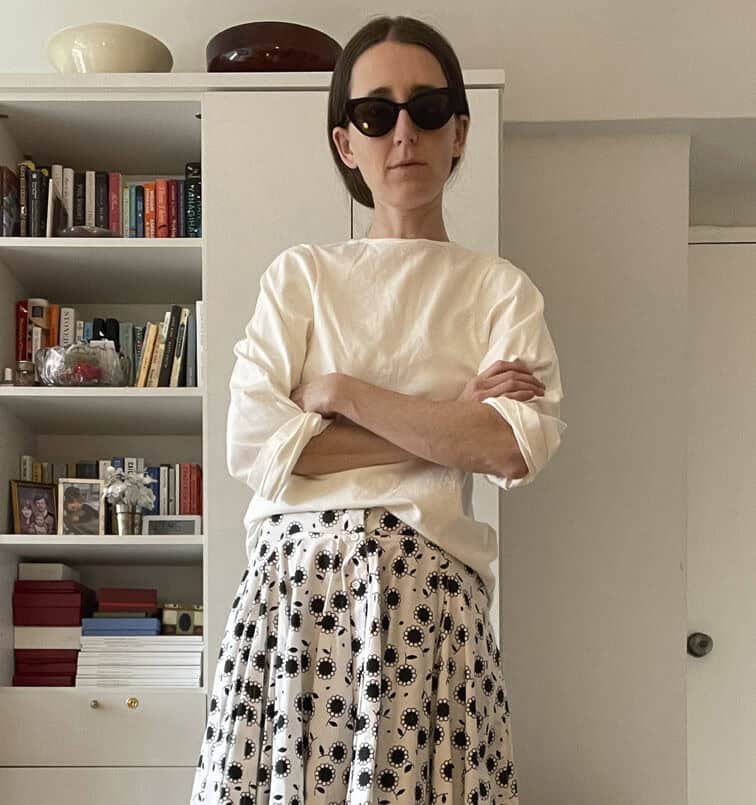
from left: The TikTok creator Mandy Lee outside Simone Rocha FW25; Jalil Johnson of Consider Yourself Cultured; Becky Malinsky of 5 Things You Should Buy
Taken from 10 Magazine USA Issue 05 – TRANSFORMATION, BIRTHDAY, EVOLVE – on newsstands September 18. Order your copy here.
Text DIANA TSUI