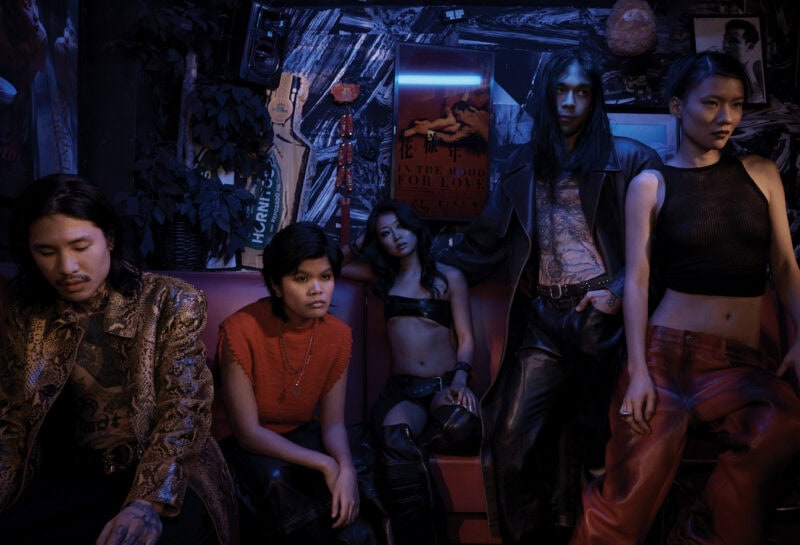
from left: Jae Kim, Keo Diamante, Kirsten Chen, Keegan Dakkar, and Yulu Serao
Designer Hung La’s departure from the world of European high fashion led to creating a vibrant community that embraces the grittier side of the Asian American experience.
On a warm Saturday night last September, a stylish crowd gathered outside Wu’s Wonton King in Chinatown, New York City. Clad in skimpy tanks that revealed muscled arms and tattooed chests, and skater-style oversized pants that dragged on the sidewalk, this crew was a departure from the usual mix of Chinese aunties and uncles, foodie tourists, and off-duty chefs who usually patronize the perennially popular Cantonese restaurant.
Gone were the roast ducks that typically hang in the window; they were replaced by gleaming red neon signs that said Lựu Đạn and Slurp Noodles, a reference to the menswear label’s one-night-only takeover, where never-ending trays of, you guessed it, noodles (wonton and lobster to be exact) were being served. Inside, a makeshift bar offered up tequila and vodka while groups were hunched over stools, playing bầ u cua cá cọp, a dice game. It was debauchery through a personal lens, the type of vibe that the London-based designer Hung La has been curating since he launched the brand in 2021.
For La, this world represents a natural evolution in his career. Growing up just outside Washington, D.C. in a Vietnamese-American immigrant family, he chose the safe route for many first-generation kids by earning a bachelor’s degree in computer science at the University of Maryland. Upon graduating in 2003, he decided to switch to design and enrolled at Parsons, in Brooklyn, before finally landing at the prestigious Royal Academy of Fine Arts in Antwerp, where the Antwerp Six cut their teeth. After earning his master’s in fine arts in 2008, he landed roles under Nicolas Ghesquière at Balenciaga and Phoebe Philo at Celine.
By 2016, La and his romantic partner Léa Dickely (the two met as students in Antwerp) had started Kwaidan Editions, an artsy womenswear brand. “We have two brains, and we’re very complementary—partners in life and work. Kwaidan is more her creative voice, this beautiful jewel around a woman’s interior world,” he says. The label is on hold at the moment, though the two plan to revive it in the next few years. Currently, La is hyperfocused on Lựu Đạn, with Dickely taking a more behind-the-scenes role.
In 2020, a multitude of complicated social justice issues—the pandemic, George Floyd’s murder, and hate Hung La crimes directed toward Asian-Americans—caused La to rethink what he was putting out in the world. He formed Lựu Đạn because, “I realized that I’d never used my identity in my work,” he says. “Fashion’s North Star ideal was centered on what a beautiful woman would look like. Growing up as an Asian designer, you were told to Westernize yourself and speak to a luxury European aesthetic.”
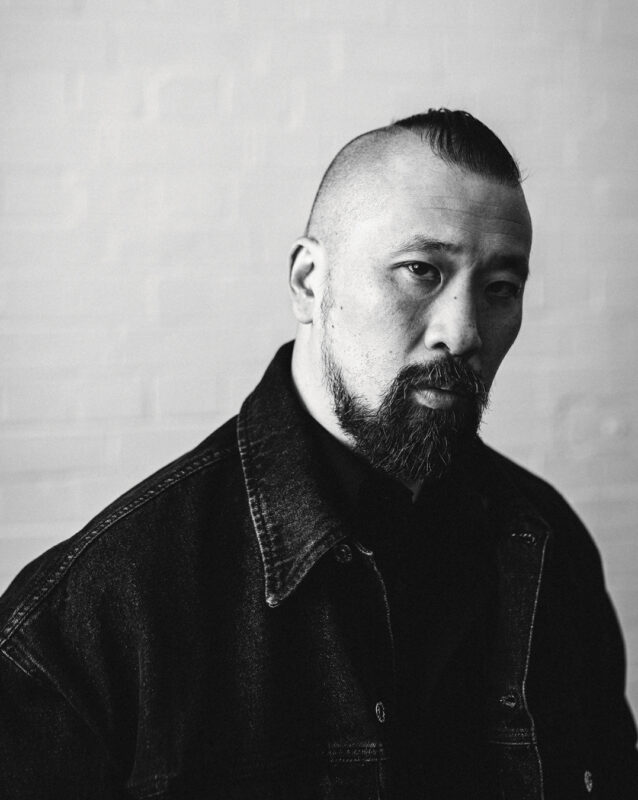
Luu Dan
Let it be known: Lựu Đạn is not interested in seeking mass Westernized appeal. The brand name lựu (pomegranate) and đạn (bullet) is a colloquial term for a dangerous man. For years, the label’s Instagram bio read “For the sheisty Asian dude in all of us.” The Lựu Đạn man is tattooed, smokes cigarettes, races fast cars, and is generally fearless. If society’s prevailing stereotypes for Asian American men were either mysterious Kung Fu masters or buffoon-like, socially inept nerds, with Lựu Đạn, La is presenting a different avenue that combines confidence, swagger, and seediness with a strong dash of sensitivity and sensuality. “It’s disingenuous to our history if we don’t acknowledge there’s so much richness in grittier versions of Asian identity,” he says.
La is inspired by nuanced references to film and photography, such as the nocturnal street life captured by Japanese photographers Watanabe Katsumi and George Hashiguchi, or movie stills from Miike Takashi’s Ichi the Killer and the hit Hong Kong triad film series Young and Dangerous. These IYKYK moments resonate with La’s community, Asian-Americans who devoured the same cultural touchstones.“Young and Dangerous is the foundation of my aesthetic,” says chef Tony Voong, a friend of the brand. “When I walked into Lựu Đạn’s party at [concept store] Essx last year, it felt like I walked onto the set of the movie. It was surreal. I’d never seen a gang of broody, IDGAF, well- dressed Asians who look as if they might throw a cleaver from their leather trenches.”
Leather trenches are but one aspect of La’s designs. The first collection, which debuted in January 2022, featured slinky tiger-print silk shirts, his (now) signature wide-legged trousers, and bold tees emblazoned with Chinese characters. In the past year- and-a-half, Lựu Đạn has really hit its stride, thanks in part to La’s decision to present subsequent collections as a trilogy. Part one, Mayhem, premiered in spring 2025 and featured hooded, masked models in graphic prints such as snarling demon faces, Godzilla heads, and skulls.
It was an obvious ode to rebels. The following season, titled You Don’t Belong Here, was conceived as an acknowledgment of working-class immigrants who are often overlooked. The clothes consisted of sweeping coats and leather aprons. Spring 2026 was dubbed No Man’s Land and was a meditation on the costs of assimilation, represented in garments in muted colors and with lots of padding for protection.
“I’m Buddhist, and one teaching says that without darkness, you cannot have light and vice versa,” says La. “As we talk about identity, you have to show both sides of an individual. The newest collection, fall 2026, moves beyond a streetwear villain. There’s more tailoring, a celebration of glamor and glitz.”
With such an impactful brand, it’s not surprising that the designer has attracted a dedicated following. “Growing up, most Asian-inspired fashion felt like it was made for the Western gaze—lots of silk, traditional embroidery, and very polite aesthetics. But Lựu Đạn feels like it was made for us, especially [for me] since I don’t come off as a ‘regular archetype’ of what you’d consider a Vietnamese man to look like,” says model Zappa Nguyen.


from left: Kirsten Chen, Tony Voong and Bowen Goh
Photographer Tyler Joe agrees. “I’m half Vietnamese, and it’s cool to see a Vietnamese designer make clothes for someone like me that I can not only identify with, but feel confident in,” he says. “I can’t tell you how many times I’ve seen a piece and thought: oh that’s sick, but I could never wear it—only to try it on and feel like the baddest motherfucker on the planet. The energy shift is crazy.”
And while Lựu Đạn was created with menswear in mind, women are drawn to it too. “There’s an obvious sexiness that transcends gender, size, or any sartorial categories,” says writer Kirsten Chen. “The garments heighten specific moods or gestures that define my nights: leathers for skulking around and chain smoking; rubbers for buff arms and a bold entrance; or big jackets with no shirt underneath for being endlessly badass. I’m a hot girl who’s living in Chinatown. I need to rep the brand in the most scantily-clad way possible.”
La supports his ever-growing community and reinforces Lựu Đạn’s devil-may-care attitude through his stylish, meticulously thought-out brand events. There have been evenings dedicated to mahjong or karaoke in Paris, a Fast and Furious-style import car gathering in Atlanta, and a tattoo party in New York City. La is seizing the opportunity to share familiar moments in Asian-American culture with a broader audience. His authentic approach has attracted some celebrity pals. Among them are Billie Eilish, SZA, Usher, and Lisa from Blackpink.
Perhaps the best result from creating Lựu Đạn is a chance for healing and connection across generations that traditionally have issues communicating. Voong recalls showing his father a graphic leather motorcycle jacket emblazoned with Vietnamese lettering. “My dad was so excited,” says Voong. “He asked if I knew if the word meant ‘dynamite.’ He’d throw it in rivers to catch fish when he was in the army in Vietnam. This brand helped bring us together; it’s something to be proud of.”
Translating clothes into a sense of joy, authenticity, pride and connectedness has always been La’s core intention. “Fashion is really powerful when it creates this tribal mentality around identity where people can really buy in,” he says. And for the world he’s built, they’ve not only bought it but they live it.
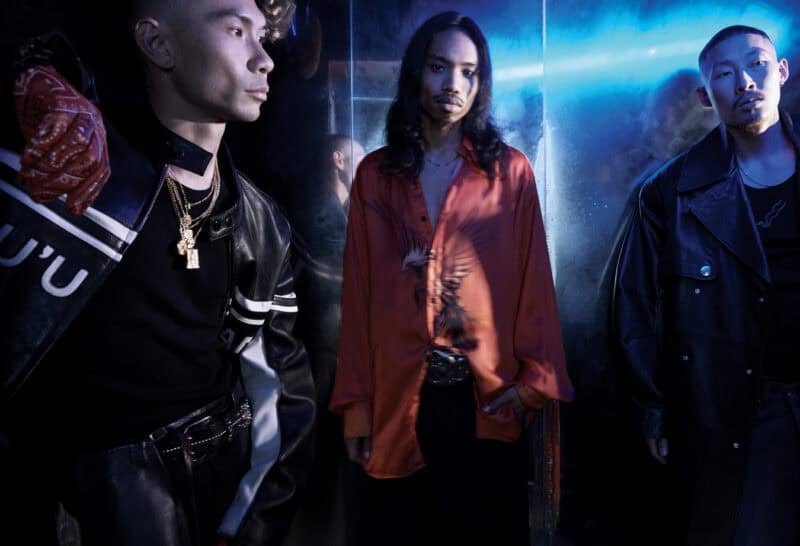
from left: Tyler Joe, Zappa Nguyen, and Chris Kang


from left: Zappa Nguyen, Yulu Serao
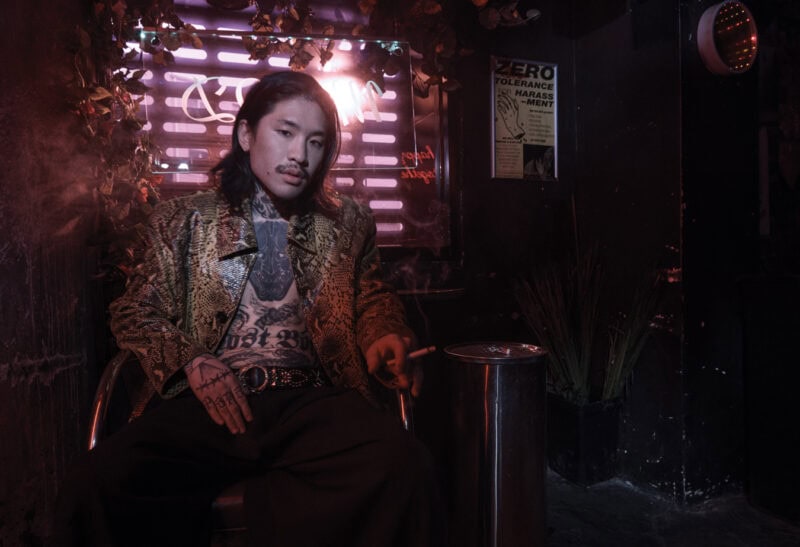
from left: Jae Kim


from left: Keo Diamante, Tyler Joe


from left: Chris Kang, Keegan Dakkar
Taken from 10 Magazine USA Issue 6 – CREATIVITY, CHANGE, FREEDOM – out now! Order your copy here.
@luudan_official
LUU DAN: YOUNG AND DANGEROUS
Photographer OSCAR OUK
Fashion Editor and Text DIANA TSUI
Talent BOWEN GOH, CHRIS KANG, JAE KIM, KEEGAN DAKKAR, KEO DIAMANTE, KIRSTEN CHEN, TONY VOONG, TYLER JOE, YULU SERAO, and ZAPPA NGUYEN
Hair REI KAWAUCHI at Bridge Artists using DAVINES
Makeup YUUI VISION using M.A.C Cosmetics
Photographer’s assistants CLAY CAMPBELL and EVAN ODIORNE
Hair assistant NATSUMI
Special thanks to MOOD RING
Clothing throughout LUU DAN