25 September 2026 |
Master jeweler Shaun Leane on honoring the legacy of Lee while looking towards the future.
This London fashion week saw not only the homecoming of McQueen under the direction of Seán McGirr but also a return of the collaborators under Alexander Lee McQueen. One of these partners? Shaun Leane, the master jeweler who has worked with the brand since its early years creating some of the most memorable runway pieces like the Joan headdress from fall 1998 or the coiled corset from fall 1999 to name a few. Leane, who recently started a new bespoke jewelry brand, 12, after leaving his namesake label in 2024, went back to the archives, reimagining masterpieces for McGirr. In an exclusive interview with 10 Magazine USA, the artist chats legacy, bringing the past into the future, and how his latest endeavor is a reflection of our collective need to slow down. Read on for our 12 (because what other number would suffice?) questions.
- How did this collaboration with McQueen come about?
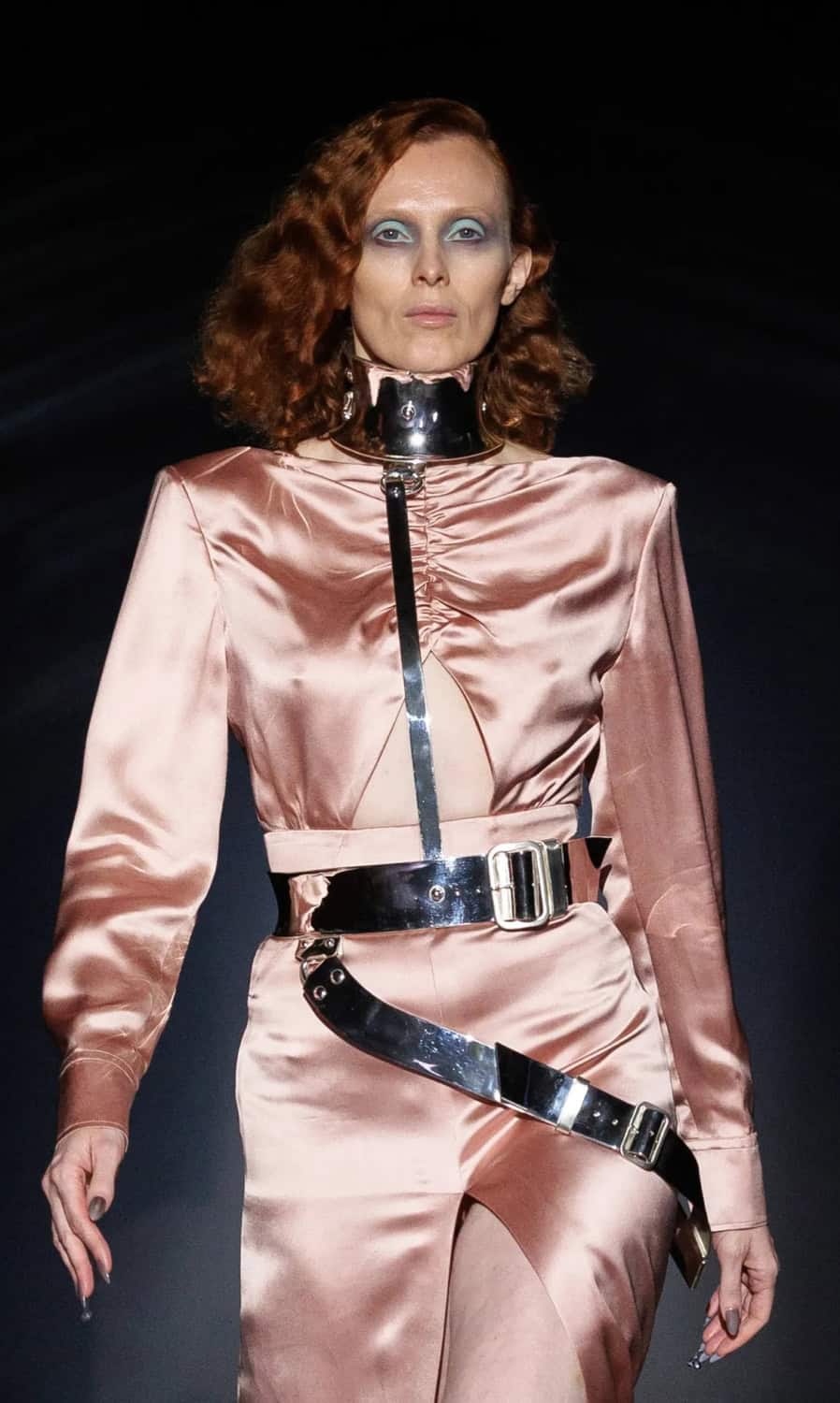
Seán and I talked early on, and it became clear he wanted the collection to hold something real of what Lee and I built together. I first worked with McQueen in 1995 and I feel that relationship never stopped — it just changed shape over the years. The conversation about this specific piece started earlier this year. Once I understood where the collection was going, London, the tension between the sacred and the subcultural, the harness came out of that conversation.
- Were there any challenges in making the pieces?
The body harness weighs 2.7 kilos, and every part of it from the collar to the belt and hips, is raised, forged, engraved and polished by hand in AgAIN silver made from reclaimed medical x-rays. The weight wasn’t really the problem. The issue was making something that heavy move like it wasn’t there. The piece had to follow the body on the runway rather than sit on top so the hinges were concealed and the proportions were worked out on a real life person, not just on paper.
Part of it also reads as leather until you look closely and realize it’s metal, so the finishes had to carry real weight of their own: the buckles are sandblasted against a mirror polish, one metal taken to two different surfaces. Getting that contrast right took time.
- You recently started a new bespoke jewellery brand called 12, what’s special about this project?
It came out of increasing time I spent in rural Ireland, thinking about what I wanted to produce creatively. I’d run my own maison in Mayfair for 28 years. Leaving it wasn’t a rejection of that time, it was a decision to go back to how I started: one piece at a time, one collector at a time, each with my full attention.
Twelve commissions a year means each work gets the time it needs rather than the time a calendar allows. What’s special about 12 isn’t the exclusivity, that’s a byproduct. It’s that I get to create and connect, giving each work time to breathe.
- You made a metal collar for Daphne Guinness, how did that collaboration come about?
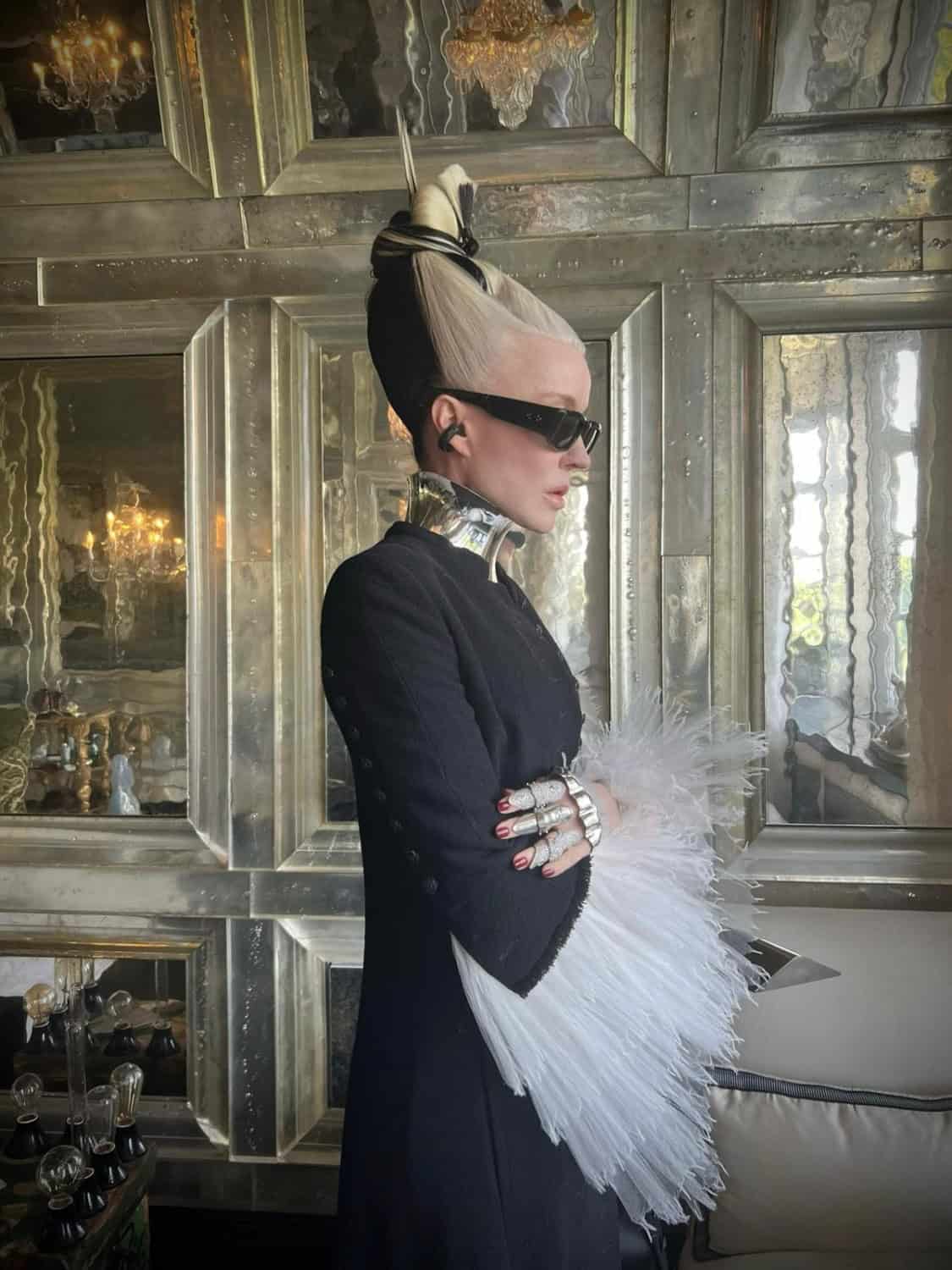
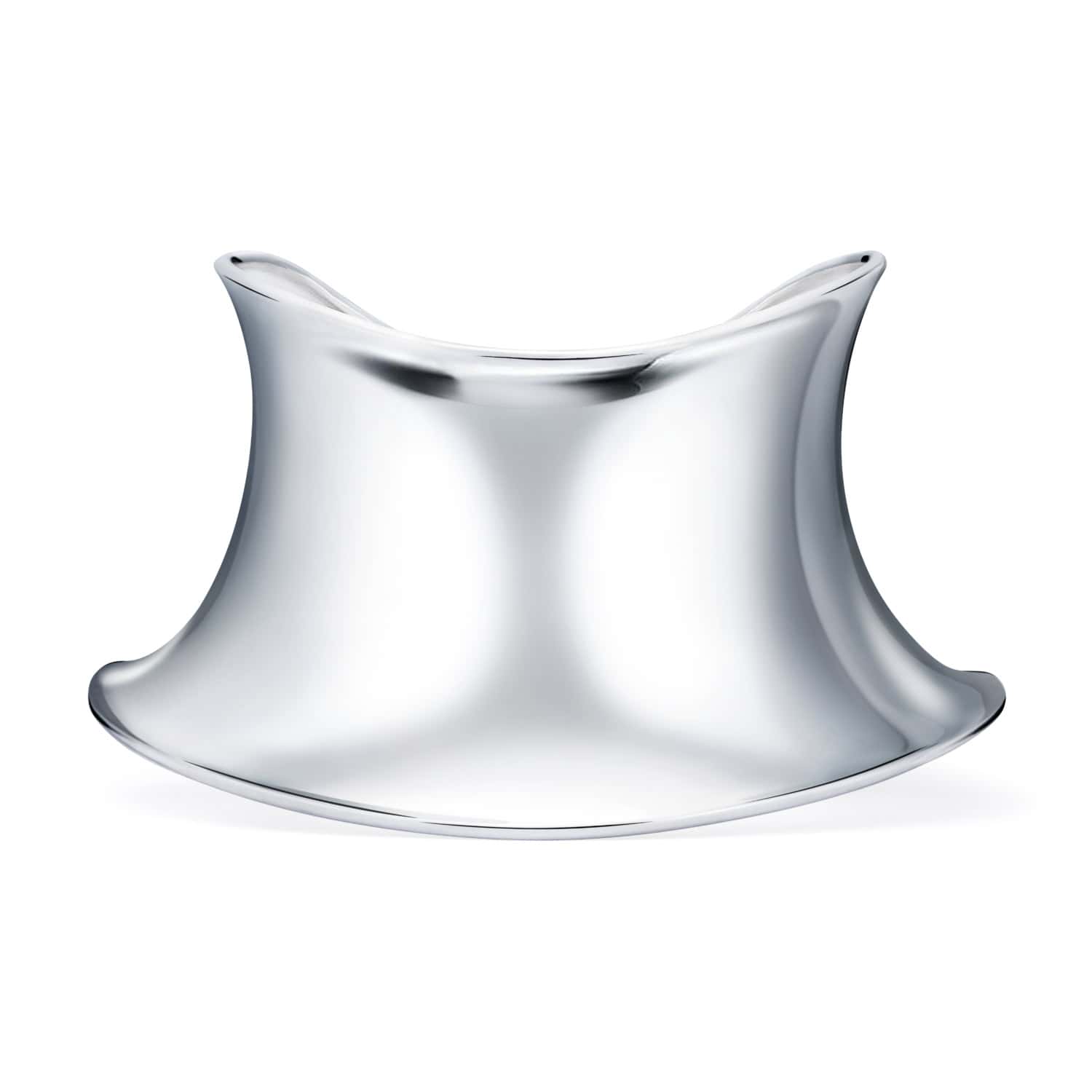
Daphne has always understood what jewelry can be pushed to do. We’d talked for a long time about making her something that wasn’t a one-off event piece, something she’d actually live in day to day. The collar came out of that conversation: sterling silver, couture in its construction, built for her specifically rather than adjusted to fit her afterwards. Daphne wears pieces like it belongs to her rather than sitting on her, which is rare, and it’s exactly the kind of collector that 12 was built for.
- You would also work with artisans across the world. Where and how do you decide on the stones and technique?
Every commission starts with a conversation. I listen to what the collector wants the piece to hold, whether that’s a memory or simply a feeling, and the material and technique grow out of that. I work with gemologists and makers across London, Paris and Antwerp, people I trust with decades of craft behind them: goldsmiths, silversmiths, stone setters, engravers and polishers. The stones have to carry traceable provenance, that’s not negotiable, and every study, sketch and certificate is numbered and archived in a vault.
- Did you work with any other artisans for this McQueen collection?
I don’t change who I work with depending on the collector or the occasion. The standard and techniques are the same whether a piece is going into a private collection or onto a runway in front of six hundred people. Material wise, I was pleased to be able to use AgAIN silver which is reclaimed from X-rays by Betts Metals. Every material has a past, and a consequence. I choose partners who share my values, from fellow artisans to my entire supply chain. It transforms waste into something beautiful while returning vital funds to NHS Trusts. That is responsible creativity – and it’s exciting.
- How do you make sure your artistic vision is rightfully expressed while realizing the client’s purpose of the jewelry without overshadowing it?
The collector sets the purpose. I decide how far the craft can take that purpose. Those two things have never fought each other in my experience. The pieces that feel most like me are usually the ones where I understood the client best and we aren’t constrained by a medium.
- What’s it like being back at McQueen and working with Seán?
It’s hard to describe. It’s the same energy, but also different — being back doesn’t feel like nostalgia though. Seán isn’t trying to recreate anything, and neither am I. He’s serious about craft in a way I recognize, he wants things made properly and he isn’t afraid of scale or difficulty.
- It’s magical that you are literally the bridge between Lee and Seán at McQueen, and you carried this time-travelling conversation. Is there anything in this collection that felt nostalgic?
There was a moment in the workshop, raising the collar section of the harness, where my hands knew what to do before I’d worked it out on paper. Seeing “Joan” and “Pantheon ad Lucem” come back into this show alongside the new work meant more to me than I expected. Those two pieces were made with Lee nearly thirty years apart, and now they’re standing in the same room as something entirely new.
- At McQueen, you’ve created so many iconic pieces of art that would transform the body. Was it any different to making the pieces for today’s show?
The instinct is the same. I still think about a piece as something that has to move with a body, not sit on it. What’s changed is the intention behind it. Those early pieces with Lee were often built for confrontation, to make people look and sometimes to make them question and to provoke. This harness isn’t trying to shock anyone. It’s built to hold a woman the way she’d want to be held, formidable but still hers to move in.
- Seán mentioned “London is about being free”, but I’ve also heard the story that jewelry was first created as torture, to restrain the body. There’s an interesting paradox here, what’s the relationship between the body and jewelry?
I think about that tension constantly, it’s the reason this collection interested me. A collar can restrain a body, or it can be the most sensual thing on it, and the difference is entirely in how it’s made. This harness has hinges and buckles, the vocabulary of restraint, but it’s built to follow the woman rather than hold her still. Seán’s right that London is about freedom, but London jewelry has always known that freedom and restraint sit closer together than people admit. This piece works because it holds both at once.
- Why did you choose jewelry making? It can be a very conventional industry with a lot of tradition in design and craft, but the way you think about it was never typical or conventional.
I saw jewelry as sculpture that happened to move and could be worn – and that’s what pulled me in as a teenager on Hatton Garden, watching the old masters teach me to raise metal by hand. It’s also what Lee and I built a whole language around. Much of the industry still treats it as decoration, something added at the end. I’ve spent 44 years treating it as structure, as architecture for a person, and that means there’s no obvious ceiling on what it can be. A necklace can be a corset. A collar can be a harness. Once you stop thinking of jewelry as small and decorative, the possibilities open up infinitely.