Spring 2027 proves that independent and emerging brands are men’s fashion week secret weapon.
by Giulio Solfrizzi
For all the conversations about heritage, quiet luxury and the return of tailoring (again), Milan men’s fashion week continues to prove that its most valuable resource is neither a fabric mill nor a historic archive. It’s young talent. Away from the blockbuster shows and the front-row frenzy, a new generation of designers is using the city not simply as a stage but as a testing ground for ideas. Their collections are less concerned with feeding the insatiable content machine and more interested in exploring identity, memory, migration, performance, and cultural exchange. These emerging names offer something rare: perspective, albeit in very different forms. Some looked inward, transforming personal histories into contemporary wardrobes. Others used fashion as a multidisciplinary language, blurring the boundaries between clothing, art and performance. Together, they offered a reminder that menswear’s future may not be found in the endless debate between slim and oversized silhouettes, but in the stories that clothes are capable of telling.
Martin Quad
Among the most intriguing voices was Copenhagen-based designer Martin Juncker, founder of Martin Quad. Making his international runway debut at Fondazione Sozzani, the young creative presented Woodman Pt.2, a collection inspired by the haunting visual universe of photographer Francesca Woodman. Rather than simply referencing her imagery, Juncker translated her fascination with mirrors, fragmentation, and disappearance into garments that appeared doubled, inverted and subtly distorted. Classical tailoring became a site of experimentation, while broken mirrors, suspended drapery, and an original operatic score transformed the show into something closer to performance art than a conventional runway presentation. In an industry obsessed with immediacy, Martin Quad proposed something refreshingly demanding: fashion that asks to be experienced rather than merely consumed.
PRONOUNCE
If Martin Quad explored introspection, PRONOUNCE looked outward. Celebrating its tenth anniversary, the Chinese brand founded by Yushan Li and Jun Zhou presented Tiny Voyager, a collection built around the idea of travel—not as tourism, but as a state of curiosity. Drawing inspiration from traditional Chinese dress without falling into the trap of costume or nostalgia, the designers reinterpreted historical references through contemporary tailoring, technical fabrics, and fluid proportions. Horse-face skirts informed new wrapped silhouettes, Ming Dynasty details resurfaced in shirts and outerwear, while the Zhongshan suit was softened and lightened for a modern wardrobe. The result was a collection that embodied PRONOUNCE’s greatest strength: its ability to create a dialogue between East and West without reducing either to cliché. Ten years in, the brand still approaches growth with the enthusiasm of a newcomer—a surprisingly rare quality in fashion.
GARCIAS
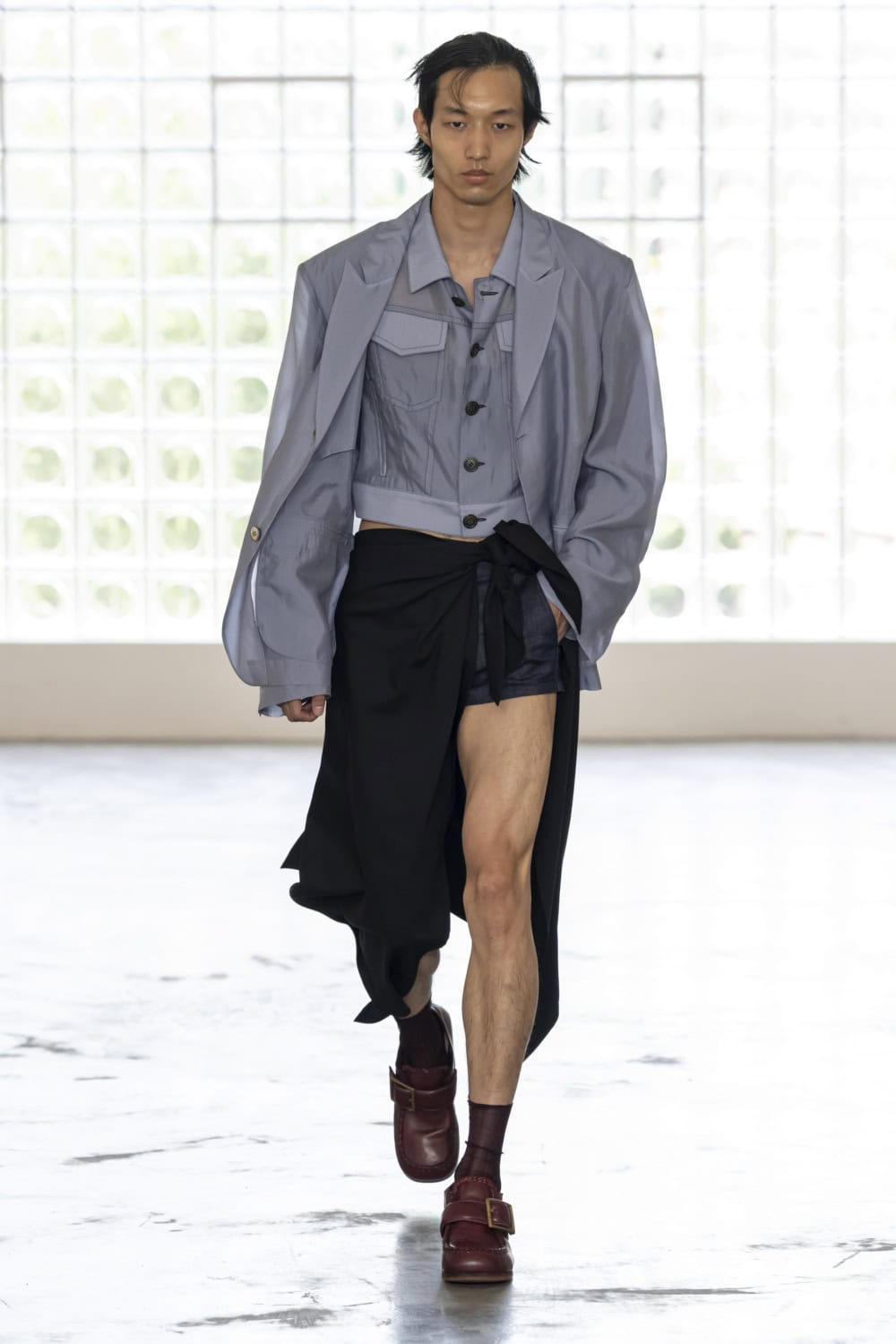
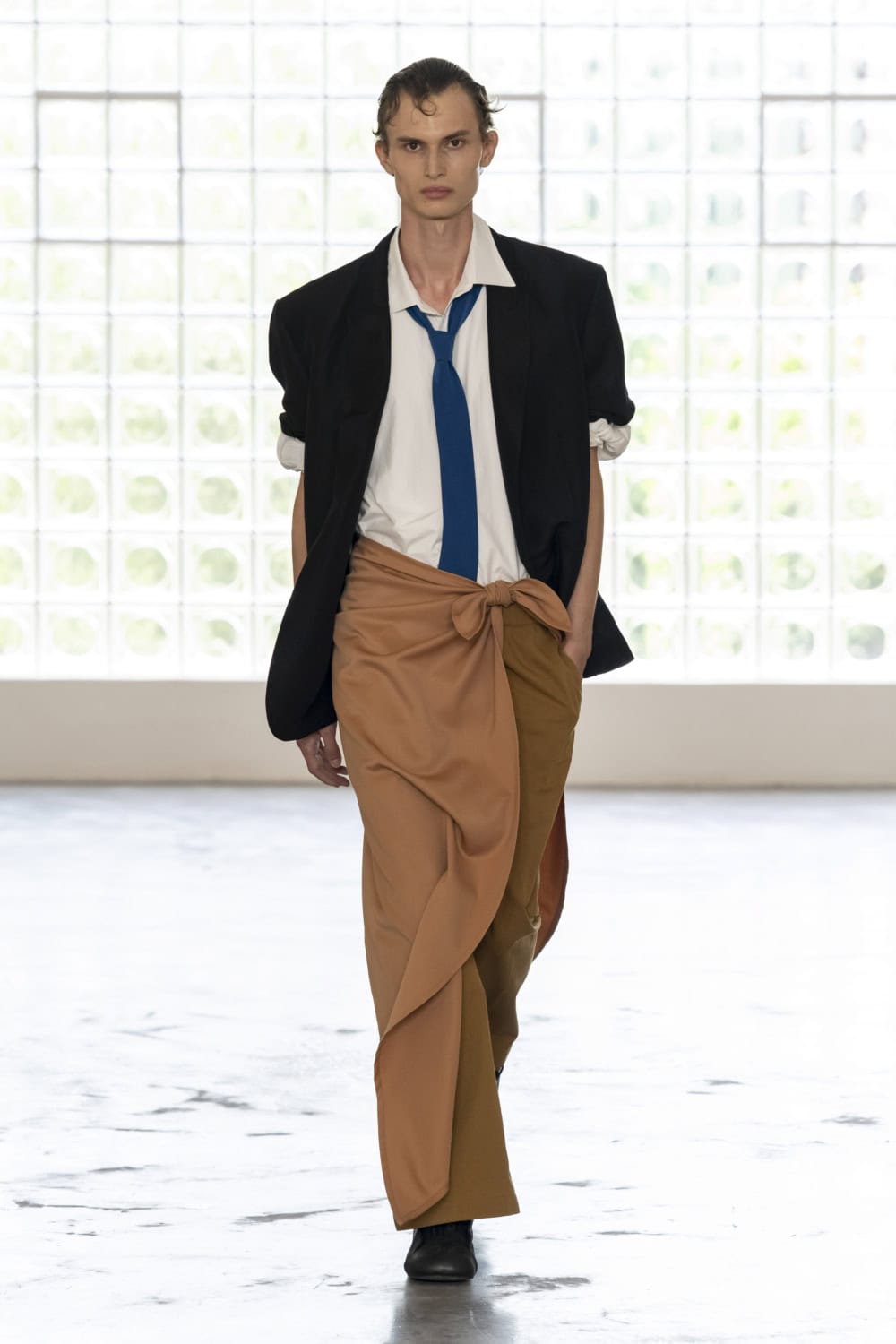
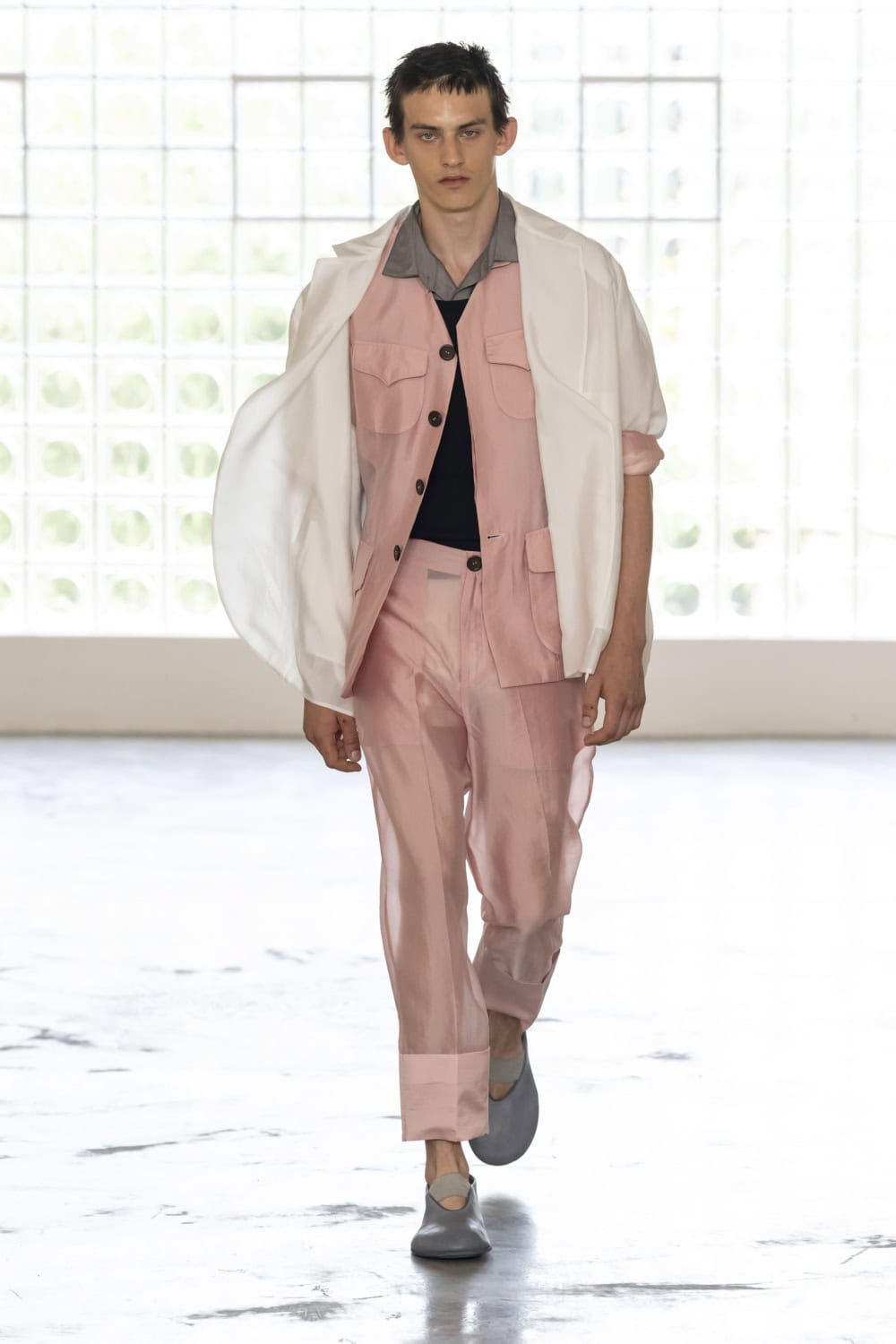
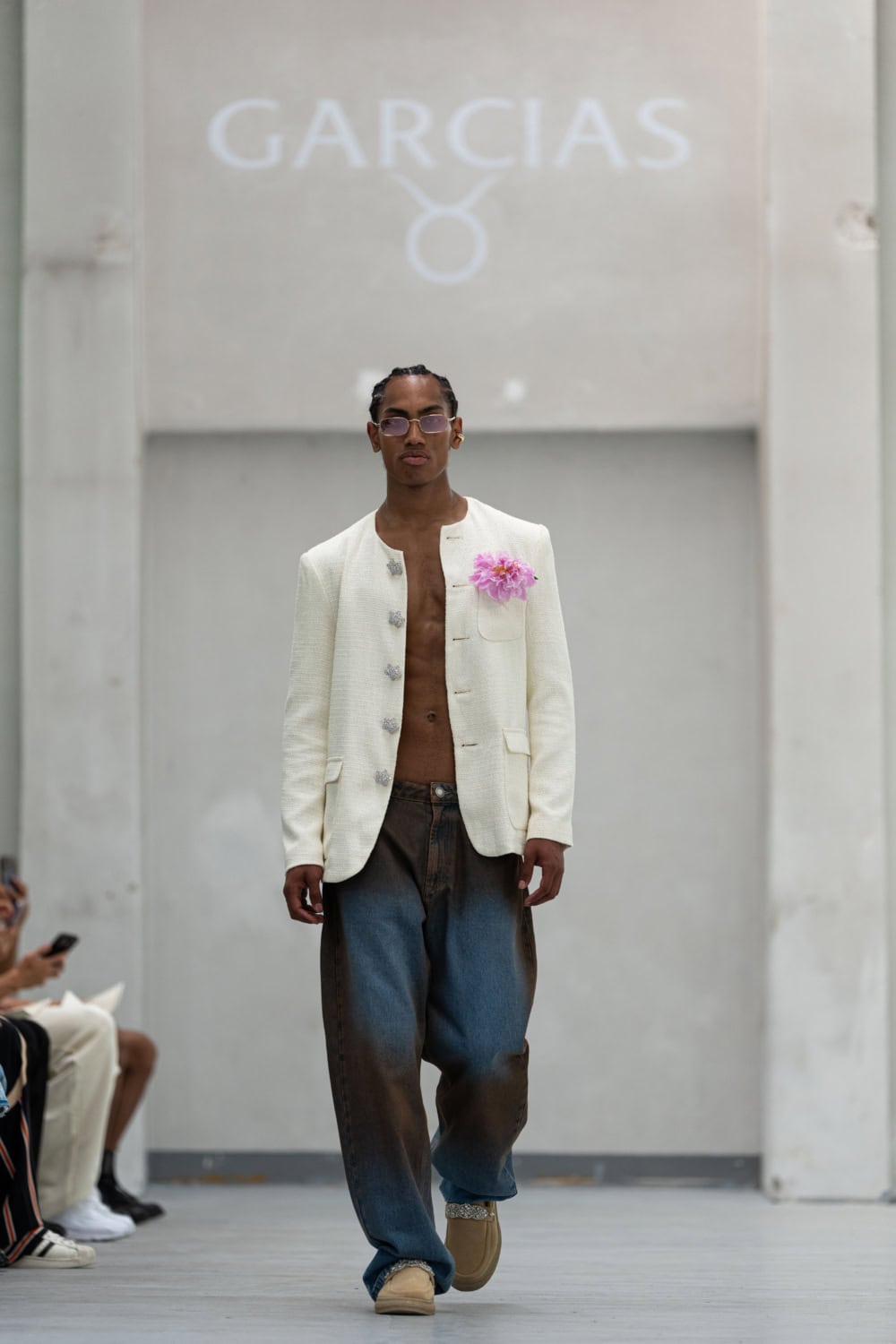
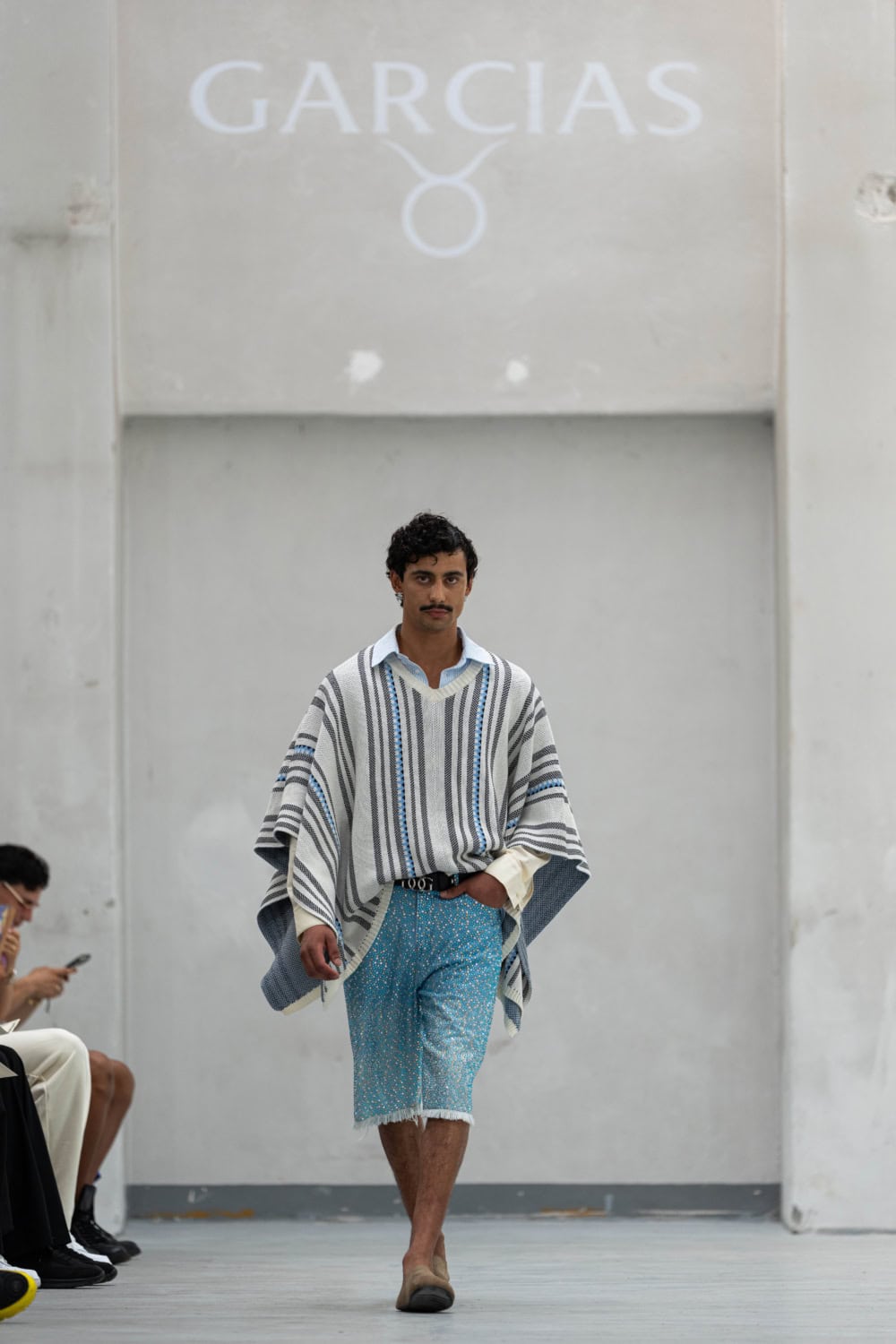
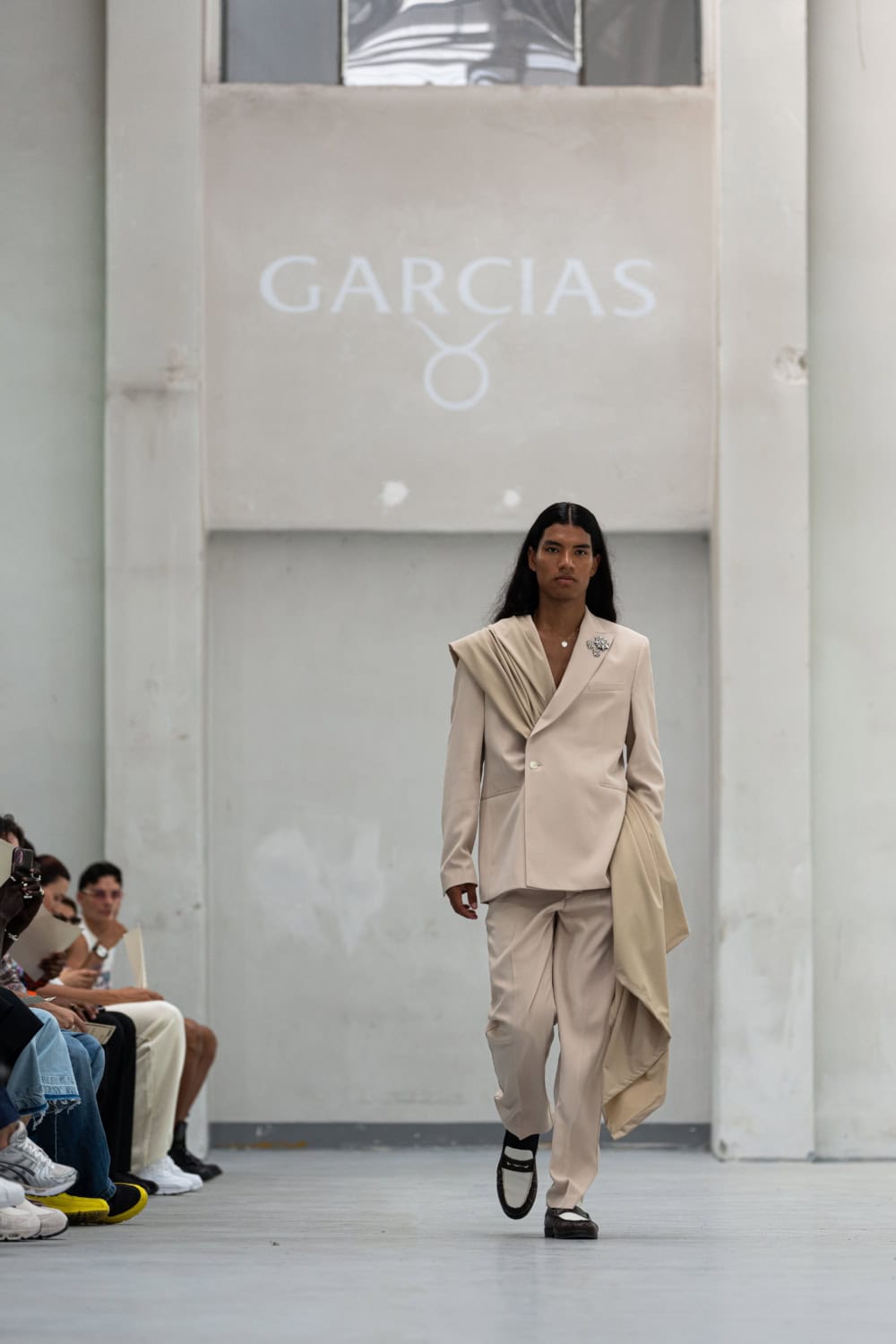
Then there was GARCIAS, whose Milan debut felt less like a fashion show and more like a declaration. With Si lo crees, lo creas – Latin Dreamers, Colombian-born, Italy-raised designer Nicolás Martín Garcia became the first Colombian designer to enter the official Camera Nazionale della Moda Italiana calendar. Yet the significance of the moment extended far beyond a personal milestone. Through a collection inspired by migration, belonging and the Latin diaspora, Garcia transformed the runway into a celebration of cultural hybridity. Colombian textile traditions met Italian craftsmanship; crochet, ruana-inspired motifs, and washed denim coexisted with refined tailoring and luxurious fabrics. The clothes were compelling, but so was the broader narrative: a vision of luxury rooted not in exclusivity but in memory, community and shared experience. The show’s reconstruction of a Latin American neighborhood—complete with musicians, street vendors and dancers—added a layer of emotional authenticity rarely seen on contemporary runways.
Domenico Orefice
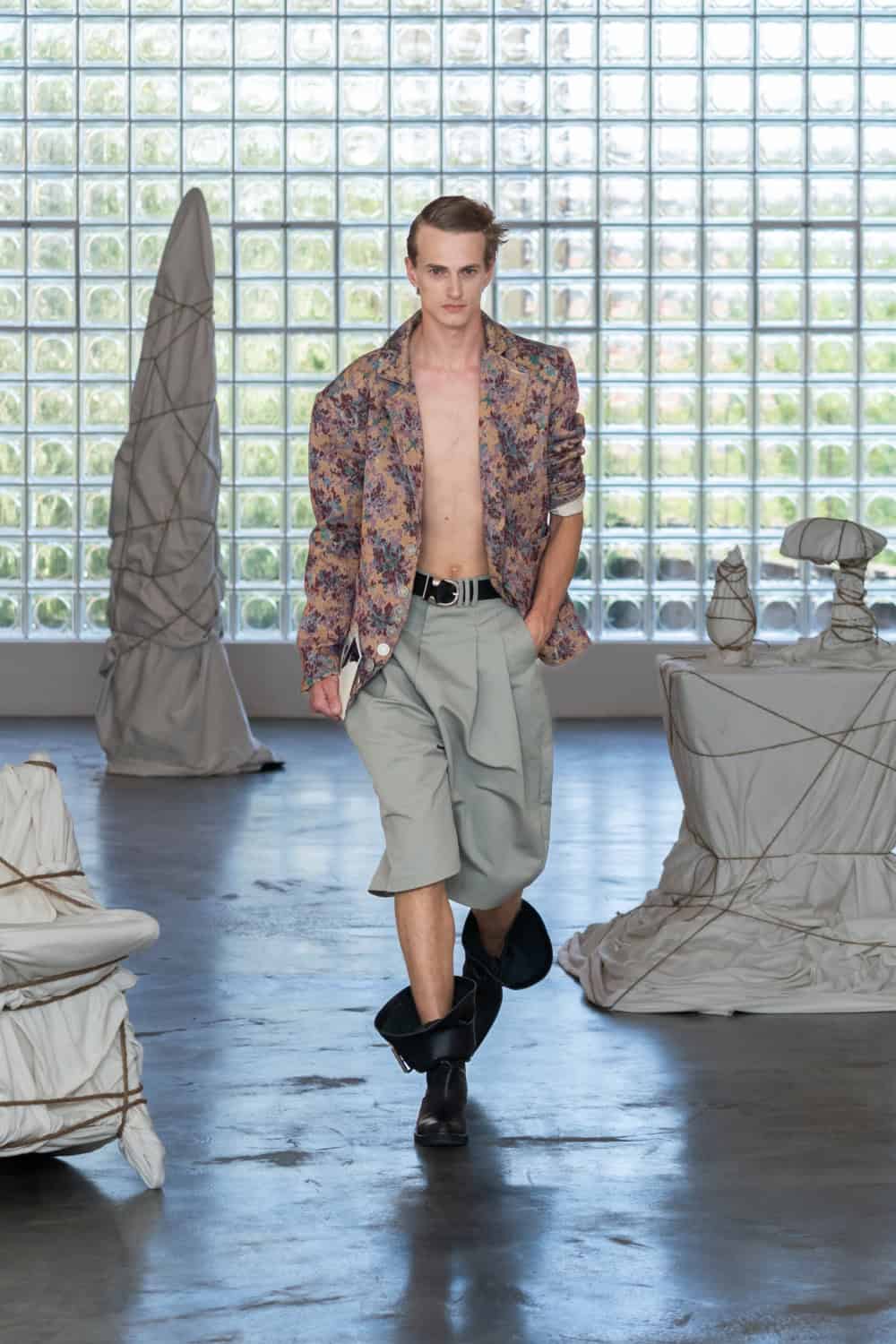
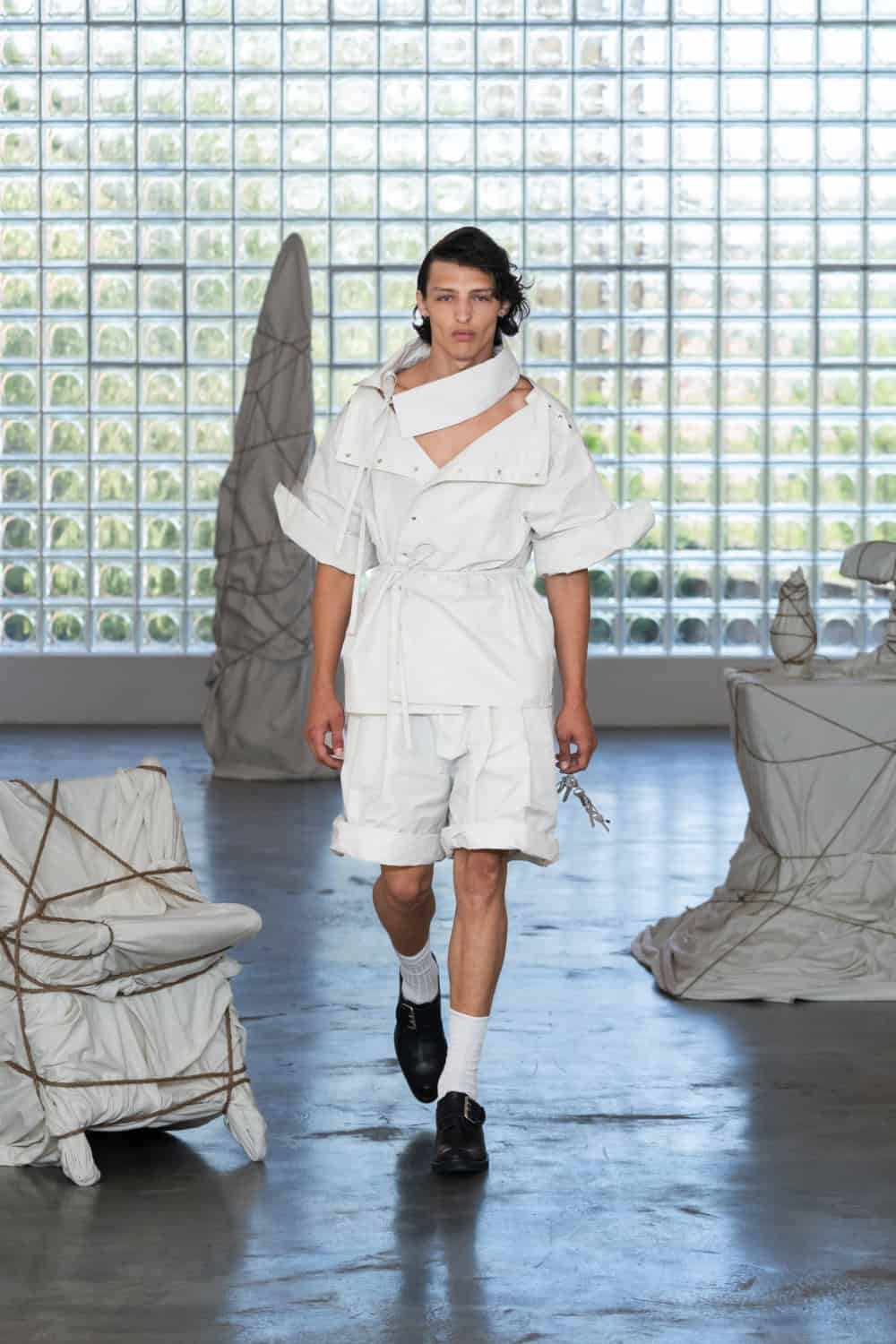
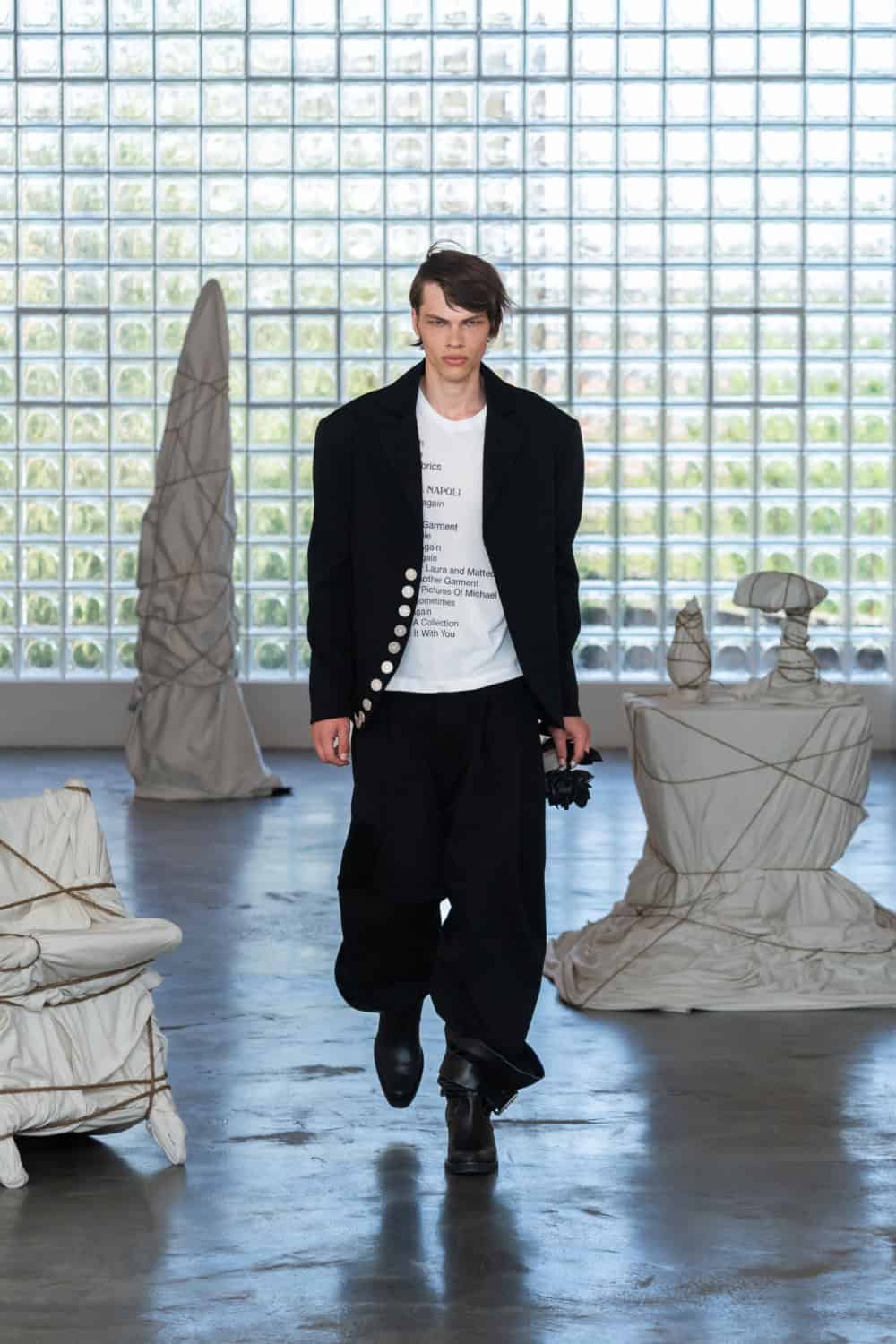
Domenico Orefice approached spring 2027 as an exercise in inhabitation. Titled Habitat, the collection marked a subtle but significant evolution for the Neapolitan designer, who for several seasons has been constructing a recognizable universe built on protection, ritual, and personal memory. This time, however, the focus shifted from building the house to living inside it. Familiar codes returned—kilts, utilitarian outerwear, generous silhouettes—but appeared softened, almost domestic. Fabrics echoed the interiors of Orefice’s childhood, coats borrowed the comfort of bathrobes and garments seemed increasingly concerned with intimacy rather than armor. Presented within a scenography resembling a residence in transition, complete with furniture shrouded beneath white sheets, the collection explored the relationship between clothing and belonging. In a season obsessed with novelty, Orefice proposed something quieter: the idea that evolution often happens not through reinvention, but through learning to feel at home in one’s own language.
Saul Nash
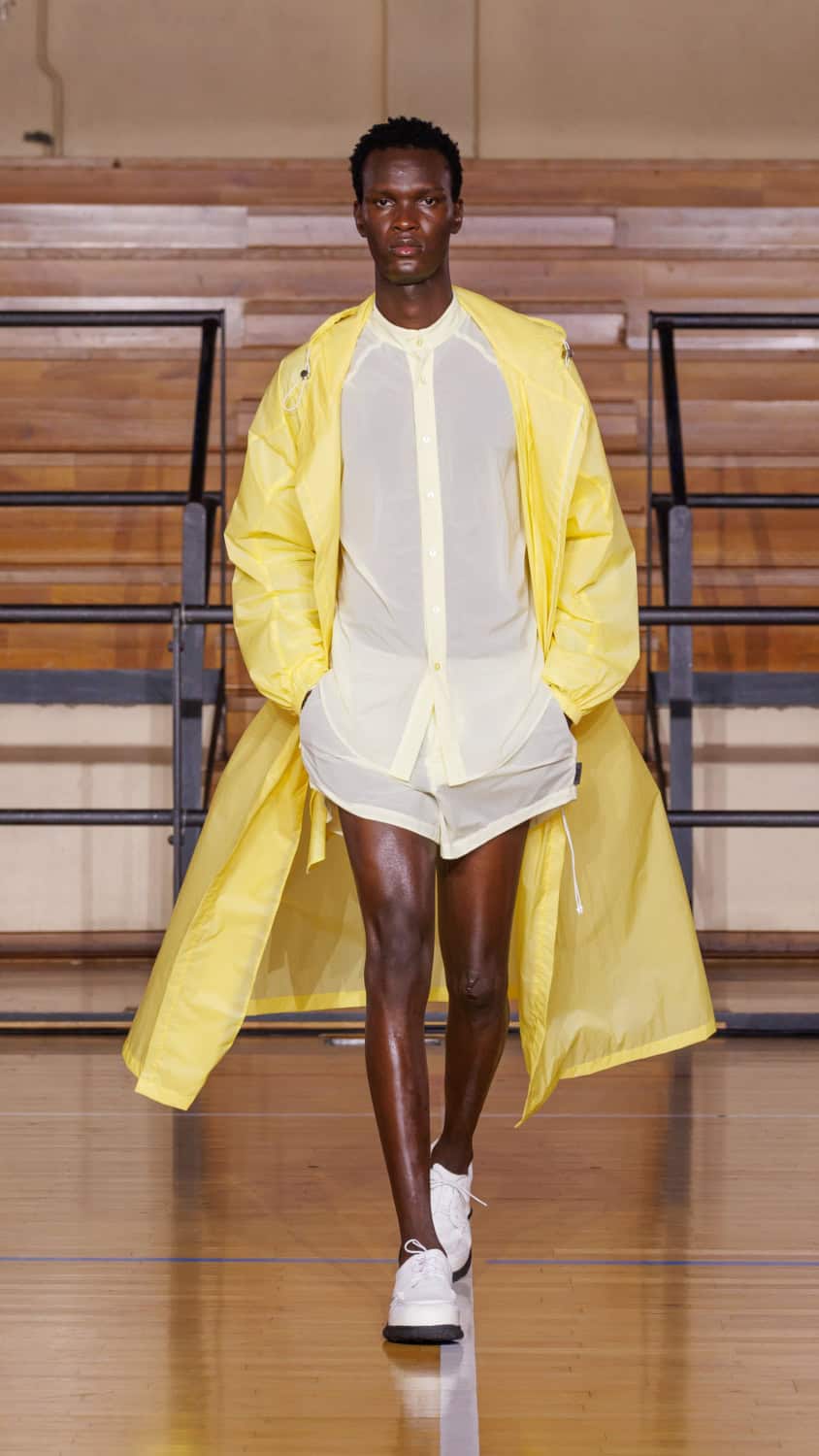
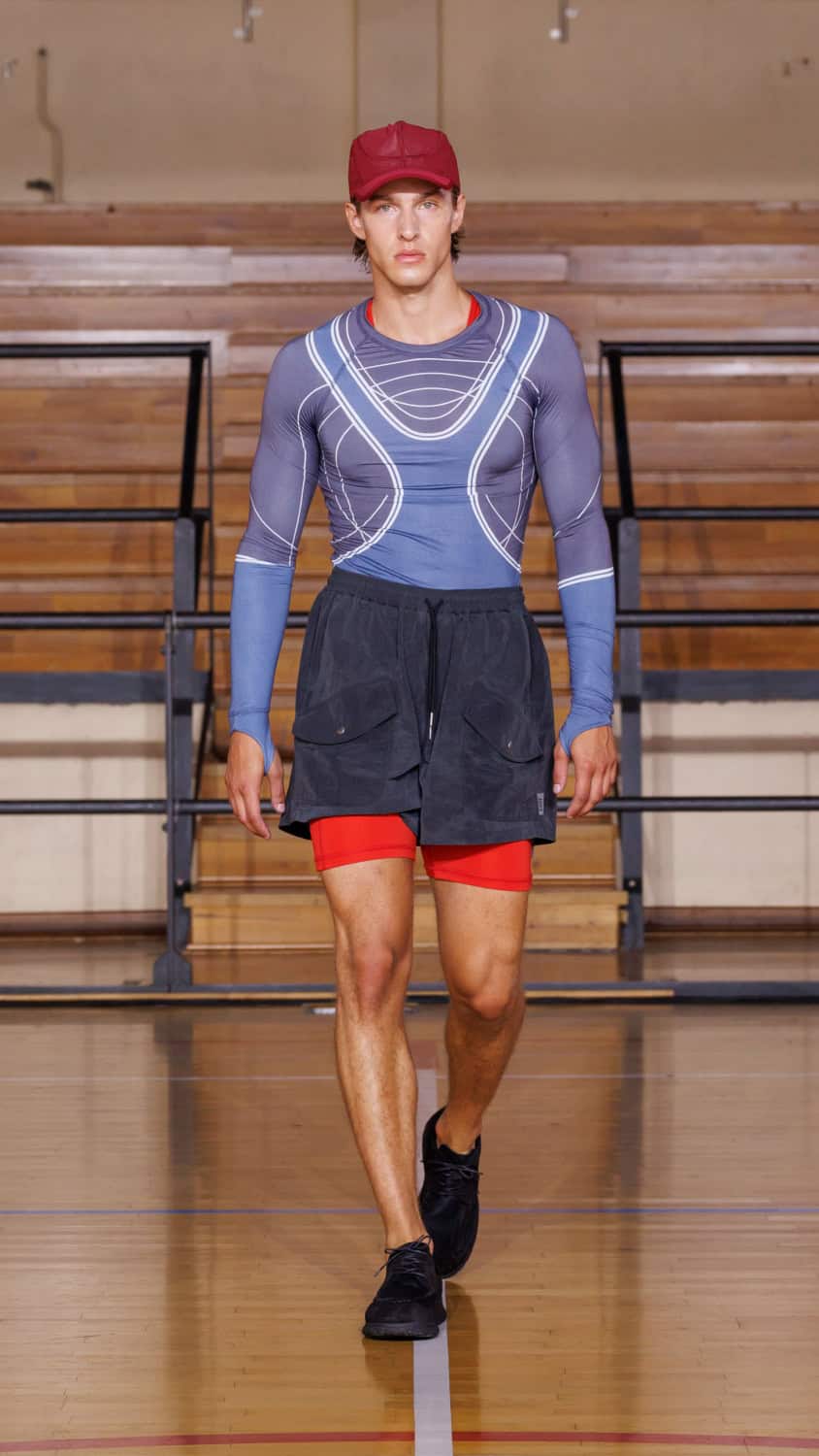
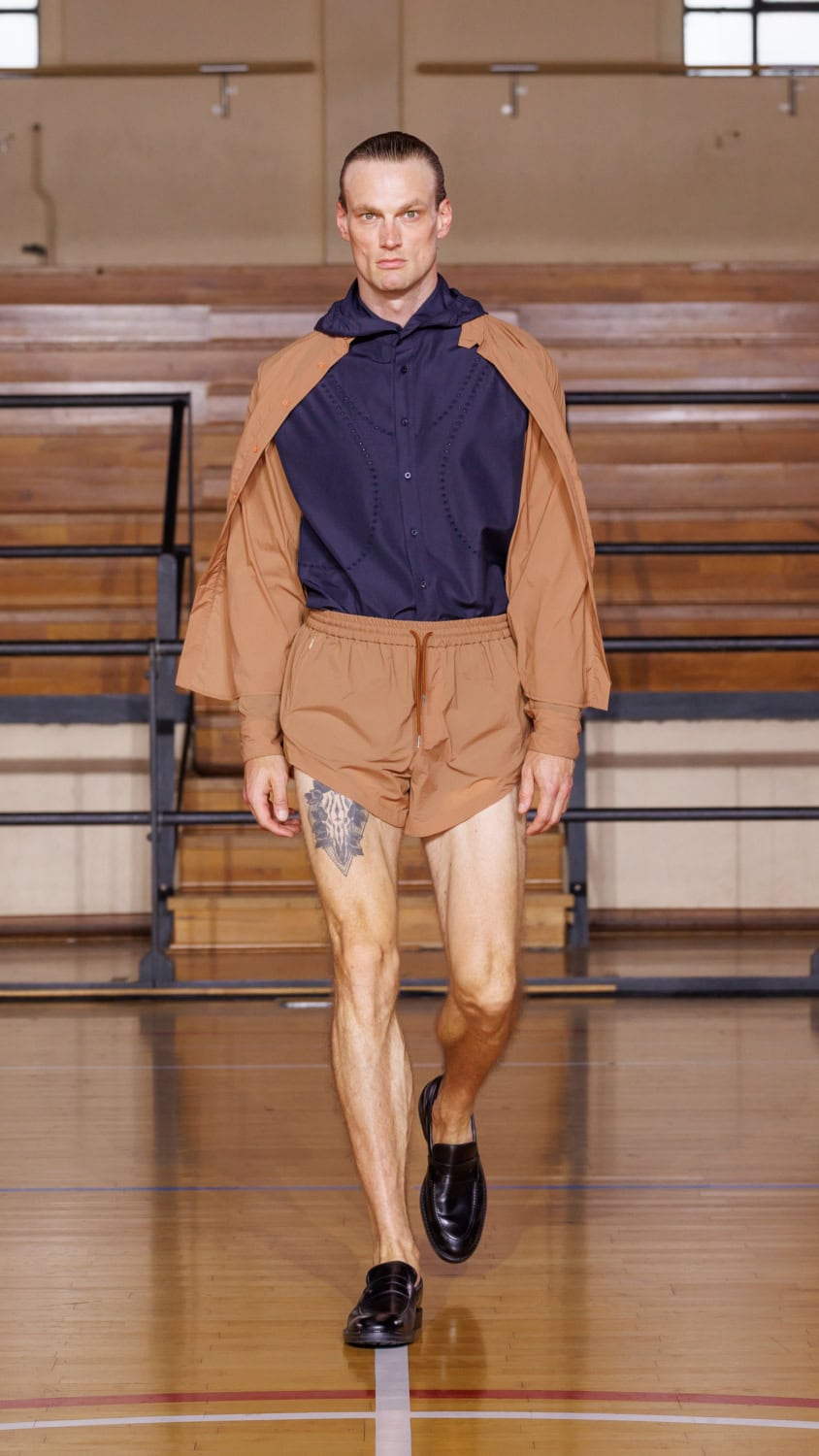
Saul Nash has always understood that clothing is never truly static. For STANCE, presented inside one of Milan’s oldest sporting societies, the London-based designer continued his exploration of movement, masculinity, and performance through a wardrobe suspended between tailoring and sportswear. Wrestling singlets, athletic uniforms, and archival images of male pin-ups informed garments designed to simultaneously reveal and conceal the body. Mesh knits, stretch fabrics, and engineered constructions followed the body’s movement with almost architectural precision, while jackets borrowed details from equestrian and fencing uniforms without losing their contemporary ease. What makes Nash’s work particularly compelling is his refusal to treat functionality and sensuality as opposites. Here, technical innovation became a vehicle for vulnerability, turning the male body itself into a site of expression rather than display. Few designers working today understand movement as deeply as Nash—and even fewer manage to make it look so effortless.
Shinyakozuka
If many collections this season looked outward, Shinyakozuka turned inward. The Japanese designer’s presentation unfolded as a meditation on memory, nostalgia and the imperfect nature of perception, inspired by moments spent navigating the world without glasses or contact lenses. Rather than pursuing clarity, he embraced blur. Familiar landscapes, childhood streets, old friendships and half-forgotten emotions became the foundation of a collection that questioned fashion’s relentless pursuit of the new. Through soft silhouettes, gentle repetition, and an atmosphere suspended somewhere between dream and recollection, Shinyakozuka proposed a different understanding of innovation: not the search for constant disruption, but the rediscovery of something already known. In an industry that often mistakes novelty for progress, this was one of the season’s most poetic statements.
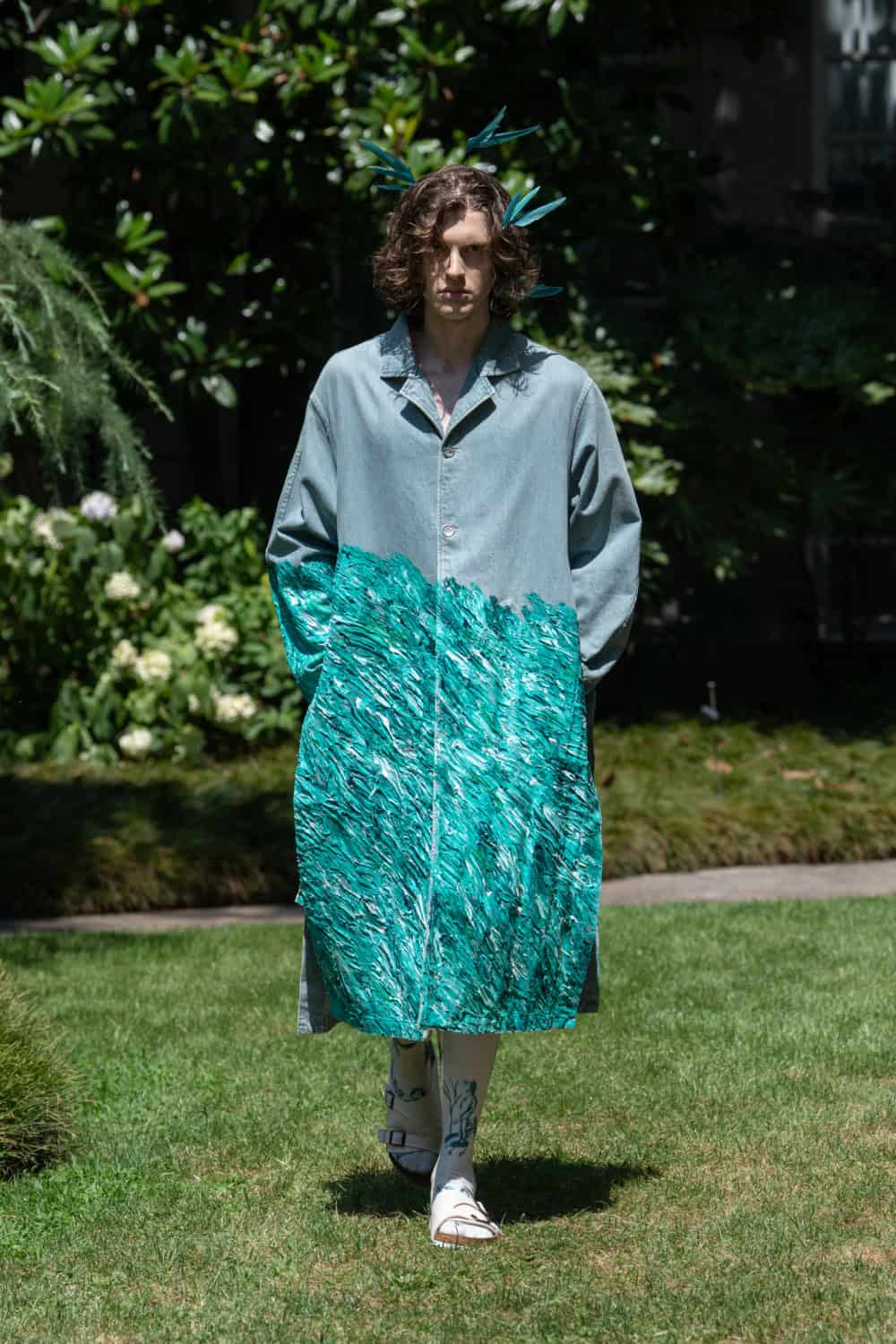
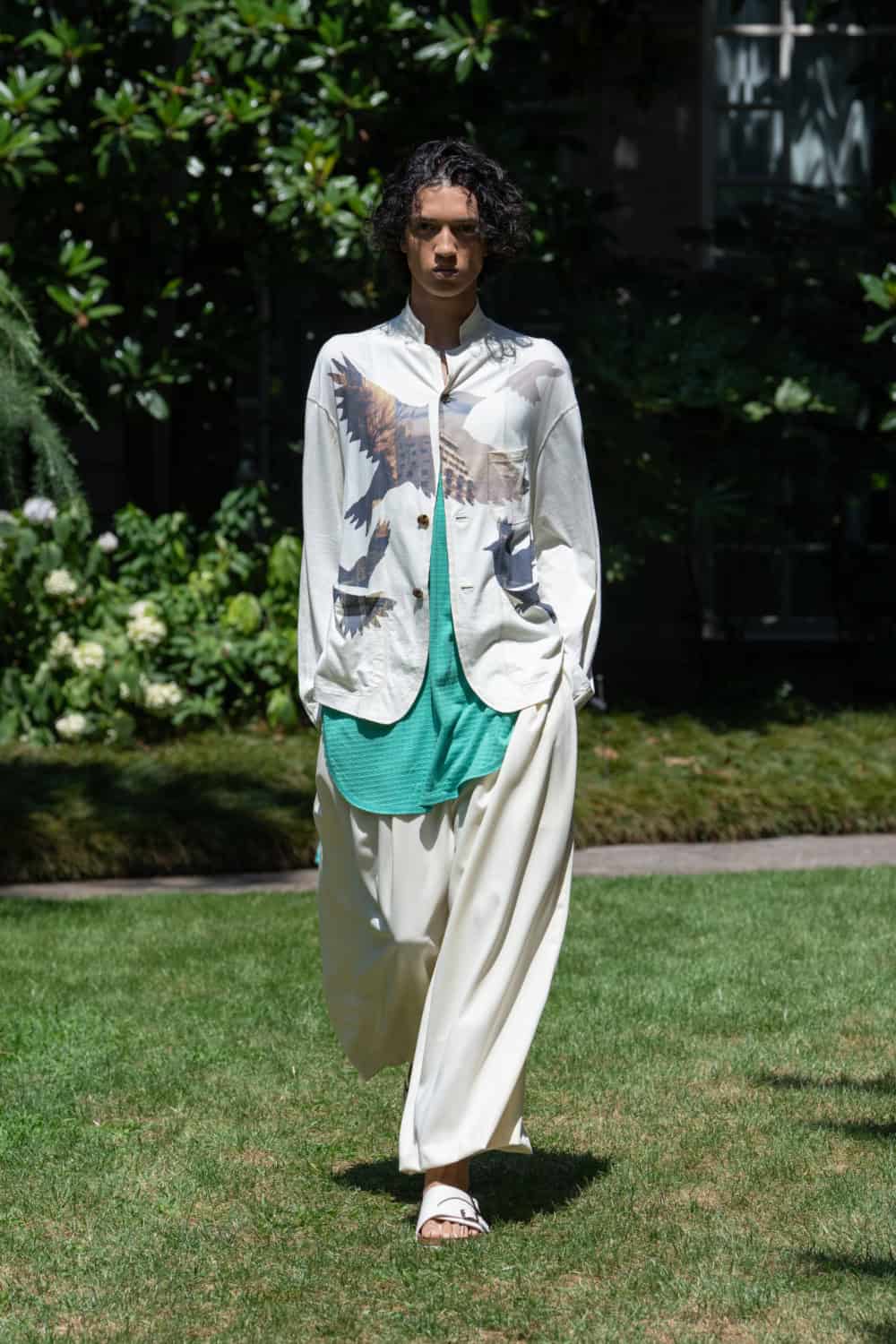
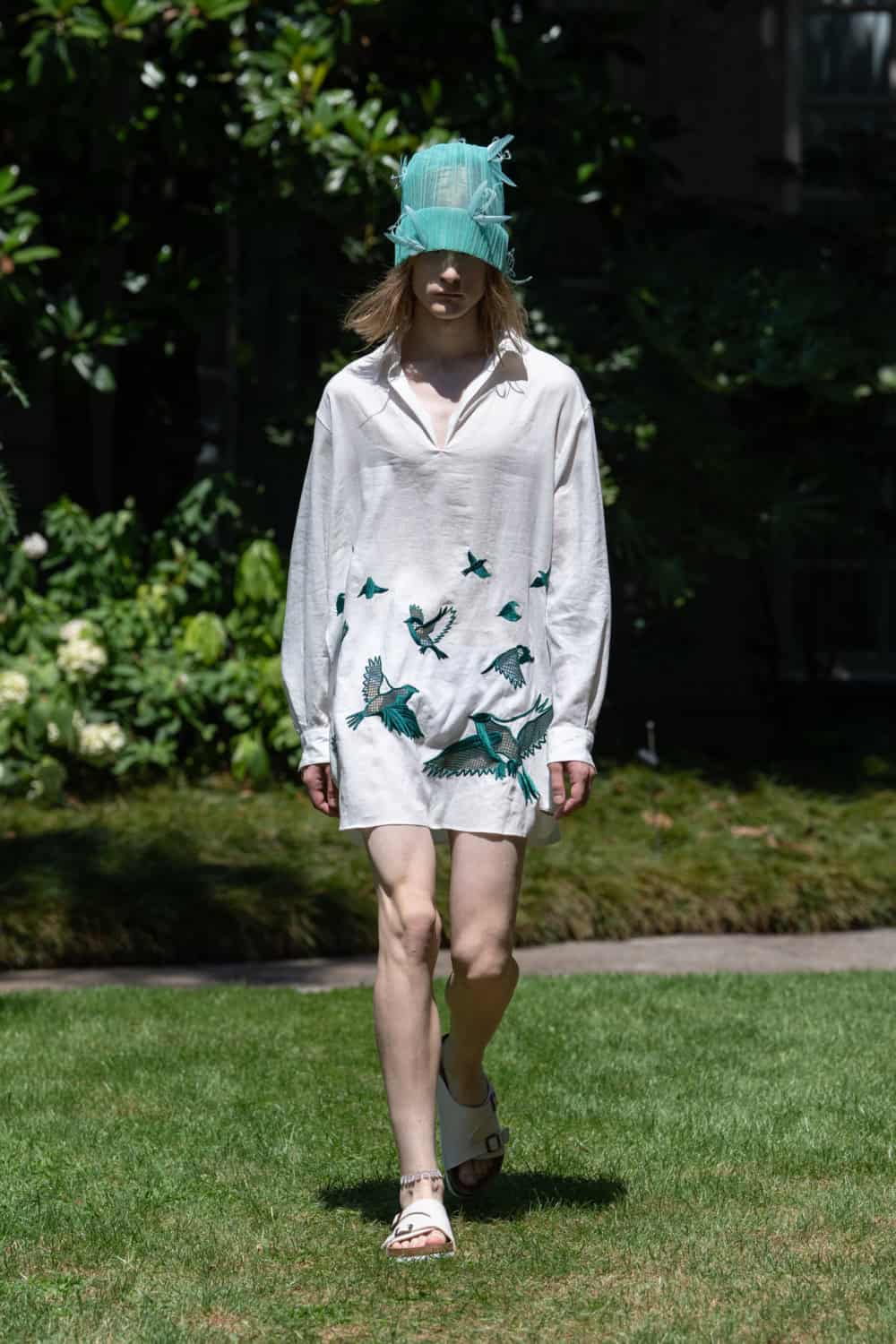
Milan, often perceived as fashion’s most pragmatic capital, sometimes receives less credit than it deserves for nurturing this kind of experimentation. Yet season after season, many of the industry’s most interesting emerging voices continue to find space here. Perhaps because beneath the luxury conglomerates, the celebrity ambassadors and the social media metrics, the city still understands a simple truth: fashion remains at its most exciting when new generations are allowed to challenge the old ones.